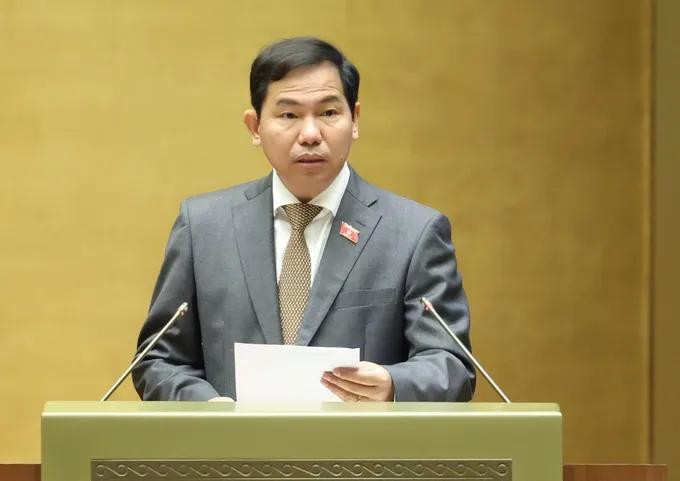
On December 10, with 442 deputies (93.45 percent of the total) voting in favor, the National Assembly passed a resolution on the results of the thematic supervision “Implementation of policies and laws on environmental protection since the 2020 Law on Environmental Protection took effect".
Presenting the revised draft resolution before the vote, Secretary General and Chairman of the Office of the National Assembly Le Quang Manh stated that the resolution emphasizes the principle that spending on the environment is an investment in development and environmental security. It also rejects the notion that environmental protection hinders economic growth.
A notable addition to the resolution is the inclusion of a low-carbon growth indicator in the national development and socio-economic planning system. It also specifies that a Law on Climate Change will be developed to institutionalize policies on climate adaptation and carbon neutrality.
According to Le Quang Manh, the resolution identifies the amendment of the Law on Environmental Protection as an urgent task to unlock resources and promote socio-economic growth. In particular, revisions will focus on the timeline and implementation roadmap for household and individual solid waste classification policies to better align with real-world conditions.
Another key element of the resolution is the push to marketize environmental management, by introducing mechanisms for natural resource pricing, ecosystem service payments, and more effective environmental taxes and fees. These are based on the principle that those who benefit from the environment must contribute financially, while polluters must pay for damages and remediation.
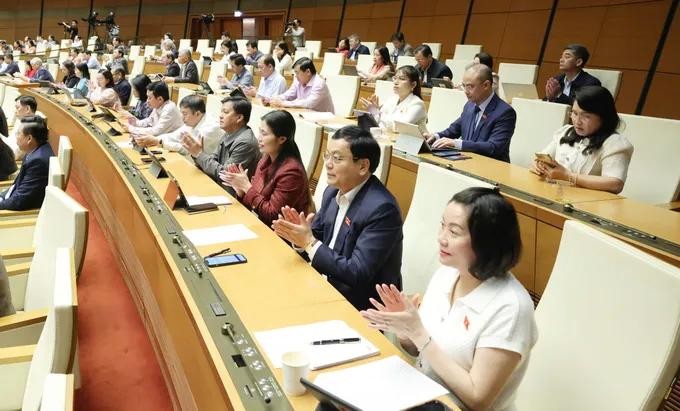
To ensure sufficient resources for environmental protection, the National Assembly resolved to allocate and manage environmental spending effectively, with a gradual increase in budget proportion in line with economic growth. By 2027, the share of the national budget for environmental protection must exceed that of 2025.
Specific urban environmental targets:
• By 2030, about 70 percent of domestic wastewater in Class-1 or higher urban areas will be collected and treated.
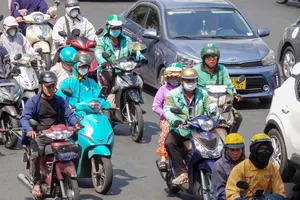
• By 2030, in Hanoi, the average annual PM2.5 concentration will decrease by about 20 percent compared to 2024 levels, and by at least 10 percent in neighboring provinces. The resolution also calls for immediate actions to control, prevent, and improve air pollution in Hanoi and Ho Chi Minh City.
• Advanced, eco-friendly technologies will be promoted for solid waste treatment, prioritizing recycling and energy recovery instead of landfilling. By 2030, the proportion of solid waste directly landfilled compared to collected waste should be reduced to below 50 percent.