The novel spatial paradigm empowers HCMC to harmoniously interconnect its formidable regional strengths:
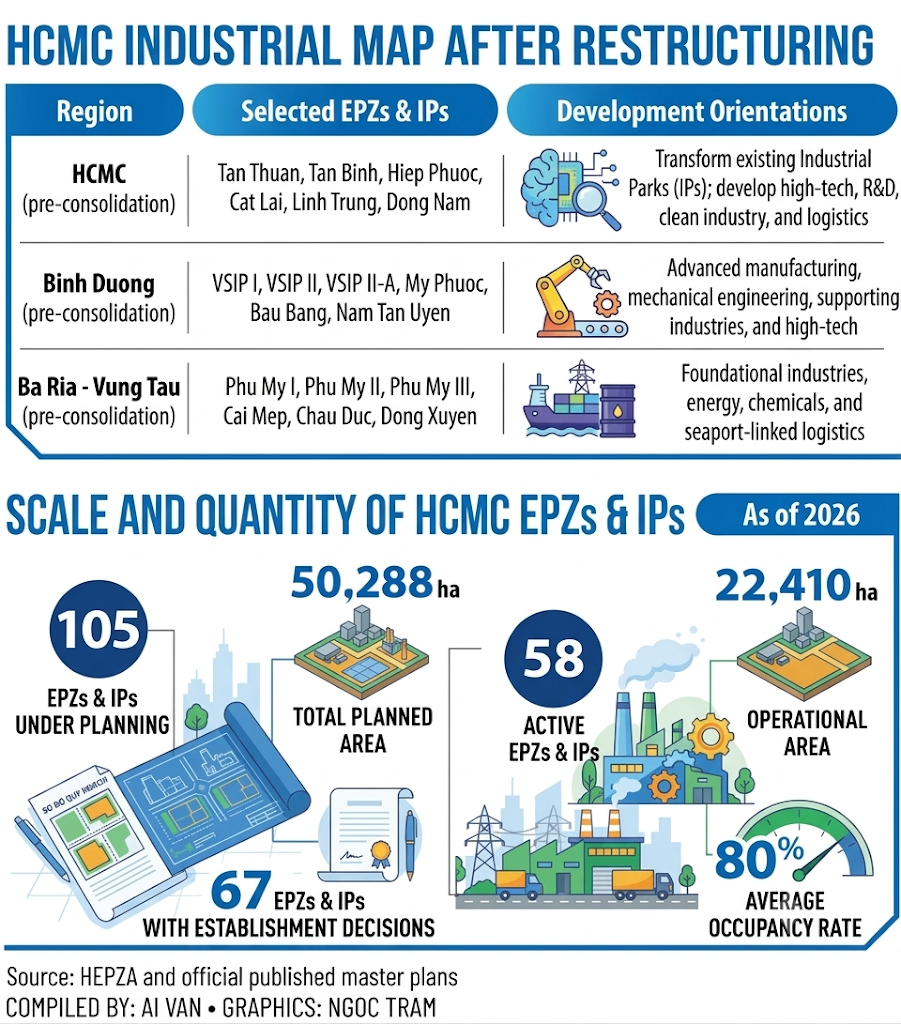
- The original HCMC core intensely focuses on high technology, R&D, and profound innovation;
- The former Binh Duong sector flexes its muscle in processing and supporting industries;
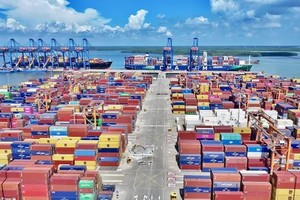
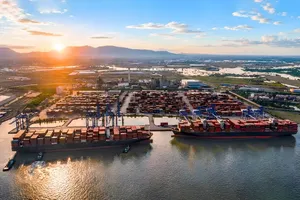
- The original Ba Ria - Vung Tau zone anchors energy, logistics, and the massive Cai Mep - Thi Vai port cluster.
Coupled with strategically developing the Can Gio transshipment port and the Cai Mep Ha free trade zone, the city unequivocally possesses the requisite conditions to forge a comprehensive value chain spanning from robust manufacturing to global export.
According to Dr Can Van Luc, Chief Economist at BIDV and member of the National Advisory Council on Financial and Monetary Policies, HCMC’s novel growth momentum inherently lies in profoundly leveraging these complementary advantages, thereby drastically elevating resource allocation efficacy.
Furthermore, research spearheaded by the HCMC Institute for Development Studies (HIDS) underscores the absolute imperative of clearly defining these manufacturing epicenters by linking high tech with R&D and academic training, binding processing and manufacturing with supporting industries, and connecting seaports with logistics alongside the broader maritime economy.
To optimally exploit structural advantages, the network of Export Processing Zones (EPZs) and Industrial Parks (IPs) must be orchestrated based on specialized supply chains rather than disjointed isolation.
HCMC currently boasts 58 operational EPZs and IPs, maintaining an occupancy rate hovering around 80 percent. As reported by Deputy Head Tran Viet Ha of the HCMC Exporting Processing and Industrial Zones Authority (HEPZA), these hubs have successfully attracted over 5,400 projects, amassing a staggering investment capital of roughly US$82 billion.
This serves as the robust bedrock empowering the city to decisively pivot from merely attracting location-based investments toward forging interconnected technological clusters. The metropolis is actively reorganizing its industrial network, where flagship projects essentially forge lucrative markets for supporting enterprises.
However, massive capital flows currently impose exceptionally stringent demands on industrial infrastructure. Throughout 2026, four massive high-tech projects boasting a combined capital exceeding $1.23 billion secured investment certificates, heavily focusing on data centers and biomedical technology.
Specifically, the Evolution DC VN HCMC project harbors approximately $508.78 million, boasting a massive capacity of 52MW IT Load, while STARMASON operates with roughly $480.26 million in capital and a staggering 60MW IT Load capacity. The triumphant emergence of these projects unequivocally affirms the magnetic allure of novel tech sectors, while simultaneously exposing an urgent imperative for robust power and data networks.
According to HEPZA, as of July 2026, the industrial land fund available for leasing merely stood at 1,155 hectares, alongside over 230,000m2 of readymade factory space. This land use gap demands that authorities rapidly accelerate site clearance and ruthlessly streamline investment protocols.
For Deputy General Director Vo Thanh Tung of Phuoc Hoa Rubber JSC, remarkably stable, low-emission power has unequivocally become the quintessential competitive criterion for modern IPs. At the Saigon Hi-Tech Park, where corporate titans like Intel and Samsung consume roughly 70 to 80 percent of total electricity demand, internal research estimates a capacity to mobilize approximately $280 million for shared energy infrastructure during the 2026-2028 phase.
Beyond mere infrastructure, the genuine ripple effect of these flagship projects is inextricably tied to domestic enterprises’ sheer capacity to actively participate in the broader supply chain. Deputy Head Tran Viet Ha noted they’re proactively assisting enterprises in relentlessly upgrading assembly lines and seamlessly connecting specialized expert teams.
Furthermore, HEPZA is coordinating with the HCMC Finance and Investment State-owned Co. (HFIC) to actively guide businesses in securing preferential capital for profoundly green manufacturing modalities.
For Dr Luc, actively pivoting the growth model toward robust productivity mandates simultaneously elevating sci-tech capacity and optimizing resource allocation. Once these distinct industrial hubs are flawlessly interconnected atop a synchronized technological foundation, the metropolis will secure the quintessential conditions to maximize the tangible value generated per hectare of industrial land, thereby forging powerful momentum for a novel rhythm of industrial growth.
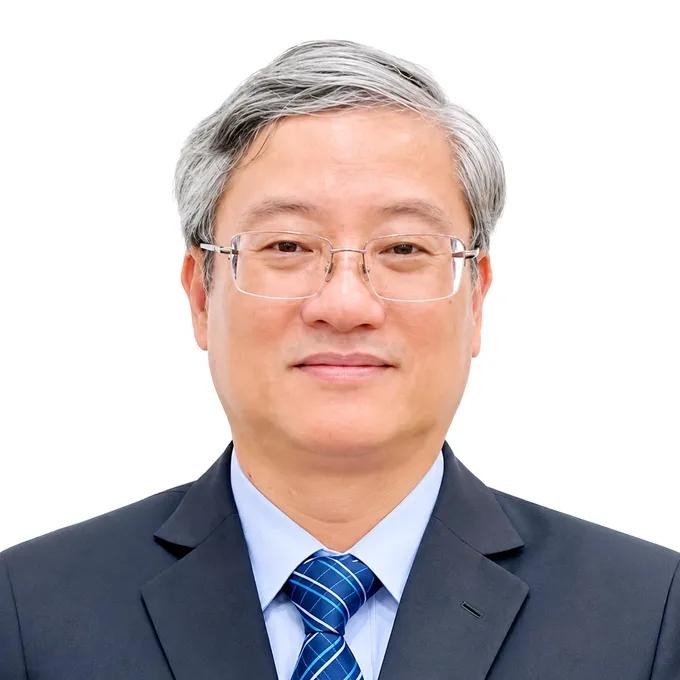
Former Deputy Director of the HIDS Pham Binh An voiced that strategic planning shouldn’t halt at individual IPs. Instead, authorities must meticulously organize manufacturing hubs based on bespoke functions. High tech must be inextricably linked with R&D, while processing inherently forges lucrative markets for supporting industries, and seaports connect directly with global logistics.
Both novel and transitional IPs must reside within a unified structure, ensuring capital and labor are efficiently allocated. The main objective isn’t merely churning out more IPs, but architecting a highly integrated industrial network to successfully elevate the entire supply chain’s tangible value.

According to Assoc Prof Dr Nguyen Huu Huan, Vice Chairman of the Executive Agency of the Vietnam International Financial Center in HCMC, transitioning IPs toward profoundly green models demands massive, long-term capital injections for clean energy and shared logistics. It’s necessary to pivot from financing individual enterprises toward mobilizing capital strictly for shared infrastructure at a sprawling IP scale.
If HCMC genuinely wants these capital flows to materialize, projects require crystal-clear green criteria alongside robust risk-sharing mechanisms. The State isn’t strictly required to foot the entire bill; instead, it must architect dynamic mechanisms empowering public funds and financial institutions, private enterprises to participate collaboratively. Organizing capital this way morphs expensive infrastructure into shared communal assets, simultaneously slashing painful transition costs.
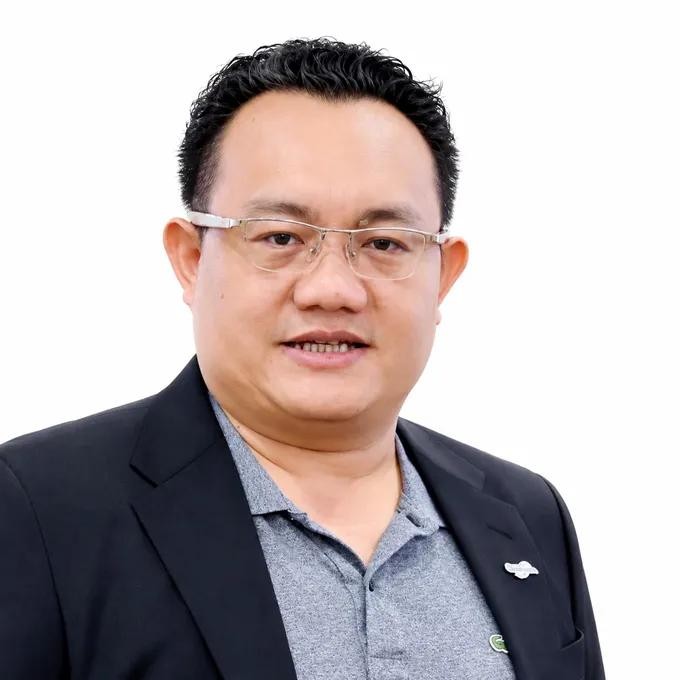
Deputy General Director Nguyen Ly Trung of Becamex Power JSC noted that international conglomerates aren’t merely fixated on land rental prices anymore. They pointedly demand guarantees regarding green electricity supply, inextricably tied to stringent demands for I-REC certificates and credible Net Zero roadmaps.
Consequently, IP infrastructure must undergo a radical metamorphosis. Comprehensive energy ecosystems must be supplied directly within the IP itself. Next-generation IPs simply can’t sell land; they must actively assist investors in achieving green manufacturing to penetrate deeper into global supply chains.