Holding a freshly purchased packet of soft-dried soursop at a booth within Phu Tho Indoor Stadium in Phu Tho Ward, Ms. Le Ngoc May, a resident of Trung My Tay Ward, shared her family’s experience. She explained that her child, notoriously a picky eater who dislikes fresh soursop, absolutely loves this dried delicacy due to its fragrant, mildly sweet, and low-sugar profile.
“Every time I visit these trade fairs, I consistently notice that businesses are paying much closer attention to refining their products,” she remarked. Echoing this sentiment, Mr. Le Van Thinh from Hoa Hung Ward noted that upon returning to the expo after a prolonged absence, he and his wife were pleasantly surprised. The merchandise wasn’t merely diverse. It boasted stunning designs, robust quality, and price tags that were substantially more reasonable than anticipated.
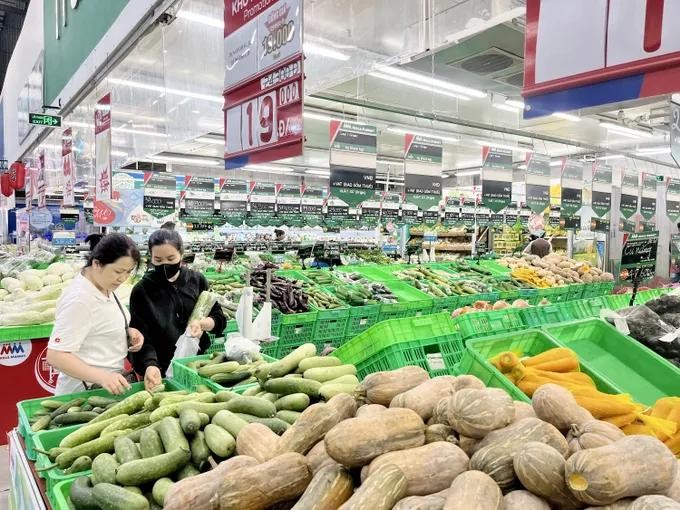
This palpable shift is being recorded across major distribution networks like Saigon Co.op, Satra, GO!, and Aeon Mall. Here, agricultural yields, processed foods, and regional delicacies are making an increasingly ubiquitous appearance.
Mangoes, pomelos, avocados, rice, fermented pastes, fish, and squid, and a plethora of goods originating from the Mekong Delta, Central Highlands, and Northwest regions significantly help to satisfy citizens’ shopping demands. Furthermore, online retail channels and door-to-door delivery services are smoothing the path for increasingly busy consumer demographics.
For Mr. Hoang Anh, representing an enterprise specializing in supplying fresh produce to retail outlets, contemporary consumers tend to leverage promotional waves to stock up on essentials. However, they’re still meticulously weighing their options and comparing price points before pulling the trigger on a purchase.
When it comes to regional specialties, an eye-catching aesthetic might grab initial attention. Yet, it’s the intrinsic quality, transparent ingredients and expiration dates, as well as attractive final retail price that ultimately dictate purchasing momentum. This model shift fundamentally compels businesses to fiercely compete based on tangible value, rather than merely leaning on superficial appearances or steep discount strategies.
Chairman Bui Thanh Van of the Board Members of Van Phat Trading Co. Ltd, a firm dealing in dried fruits at Hoc Mon Agricultural Products Wholesale Market, reported that alongside securing their export foothold, the enterprise heavily desires to ramp up brand promotion and actively broaden its domestic client base.
Operating a fruit jam processing facility down in the Mekong Delta, Ms. Oanh Nguyen explained that late-year orders typically spike by approximately 25 to 40 percent. This massive surge necessitates the enterprise to proactively stockpile raw materials, secure adequate manpower, and rigorously enforce quality control measures well in advance. Meanwhile, prominent retailers project to bump up their supply volumes by roughly 20 to 35 percent compared to this time last year, aiming to cater to the looming Tet holiday rush.
Consequently, the golden opportunity to expand market reach goes hand in hand with the mounting pressure to guarantee robust supply chains, uniform quality standards, and strictly punctual deliveries. It’s only when they flawlessly meet these rigorous demands that businesses can successfully retain their clientele long after the peak season fades.
At this current juncture, a massive wave of enterprises is scrambling to fulfill orders for the bustling year-end shopping climax, alongside preparations for the impending 2027 Lunar New Year (Year of the Fire Goat). According to several supermarkets, even though modern customers are generally shedding the habit of hoarding goods, businesses are still proactively bolstering their inventories. They’re fiercely striving to maintain highly competitive price points during this peak window.
For Communications Director Nguyen Thi Bich Van of at Central Retail Vietnam Group, domestically produced goods currently dominate, comprising over 90 percent of the product portfolio lining their system’s shelves. By strengthening strategic networking programs, the corporation heavily expects to diversify its supply of top-tier goods. This proactively caters to sharply surging shopping demands characterizing the year-end festive stretch and the fast-approaching Tet holiday.
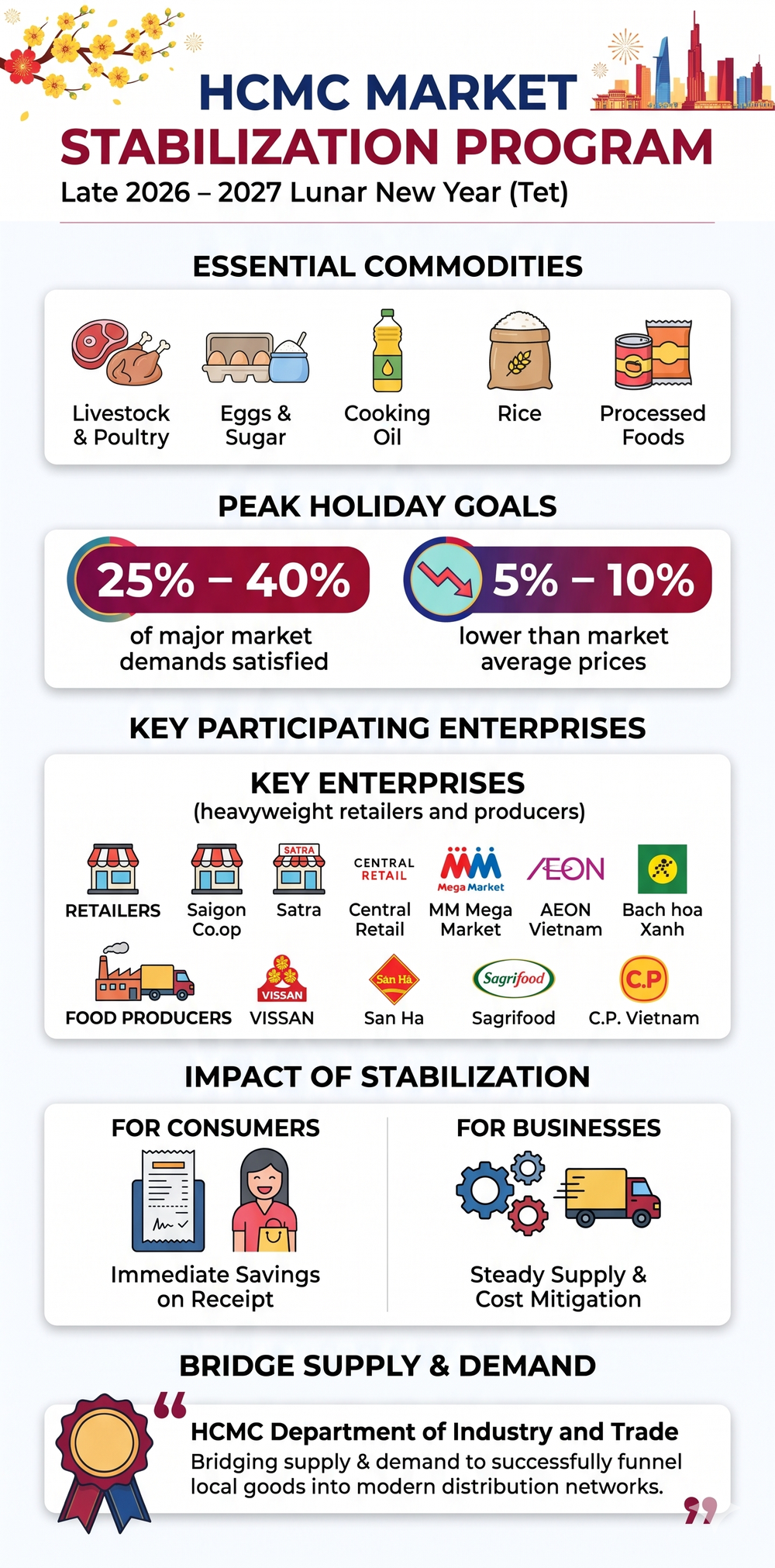
The Market Stabilization Program orchestrated by HCMC continues to hone its focus on essential commodity groups, spanning livestock meat, poultry, eggs, sugar, cooking oil, rice, and processed food staples.
This ambitious initiative, specifically catering to late 2026 and the 2027 Lunar New Year, features robust participation from a myriad of heavyweight retailers, manufacturers, and food processing giants.
Within this framework, corporate stalwarts like Saigon Co.op, Satra, Central Retail, MM Mega Market, AEON Vietnam, and Bach hoa Xanh are shouldering the distribution mandate. They ensure these price-stabilized goods actually reach end consumers. In the food category, heavy hitters such as VISSAN, San Ha, Sagrifood, and C.P. Vietnam are actively supplying livestock, poultry, and an array of processed provisions.
These enterprises are slated to drastically reinforce their supply lines during the Tet holiday peak, aiming to effectively satisfy approximately 25 to 40 percent of the major market demands. These price-stabilized commodities are firmly guaranteed to be sold at retail rates roughly 5 to 10 percent lower than prevailing market averages.
For everyday consumers, the profound efficacy of this stabilization effort is immediately reflected right on their checkout receipts. Conversely, for businesses, the true value of stabilization lies in their innate capacity to maintain a steady supply rhythm while successfully mitigating volatile cost fluctuations during these highly pressurized peak windows.
Deputy Director Nguyen Nguyen Phuong of the HCMC Department of Industry and Trade emphatically underscored the pivotal role of supply-demand bridging initiatives in successfully funneling localized goods into highly modernized distribution networks.
HCMC inherently remains a massive consumer market, harboring increasingly stringent requirements regarding overarching standards and tangible product quality. Once a product successfully clears the rigorous hurdles set by the city’s retail ecosystems, enterprises simultaneously gain a solid foundational springboard to confidently expand their market reach outward into other provinces and municipalities.