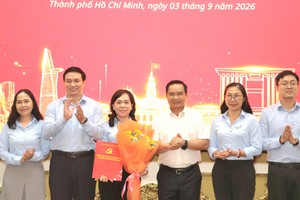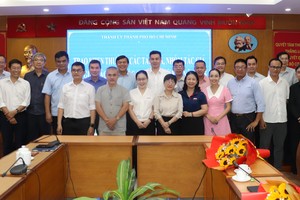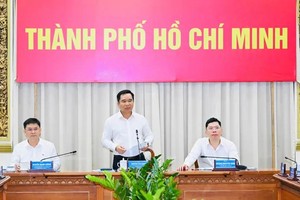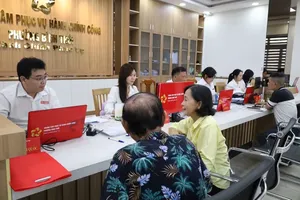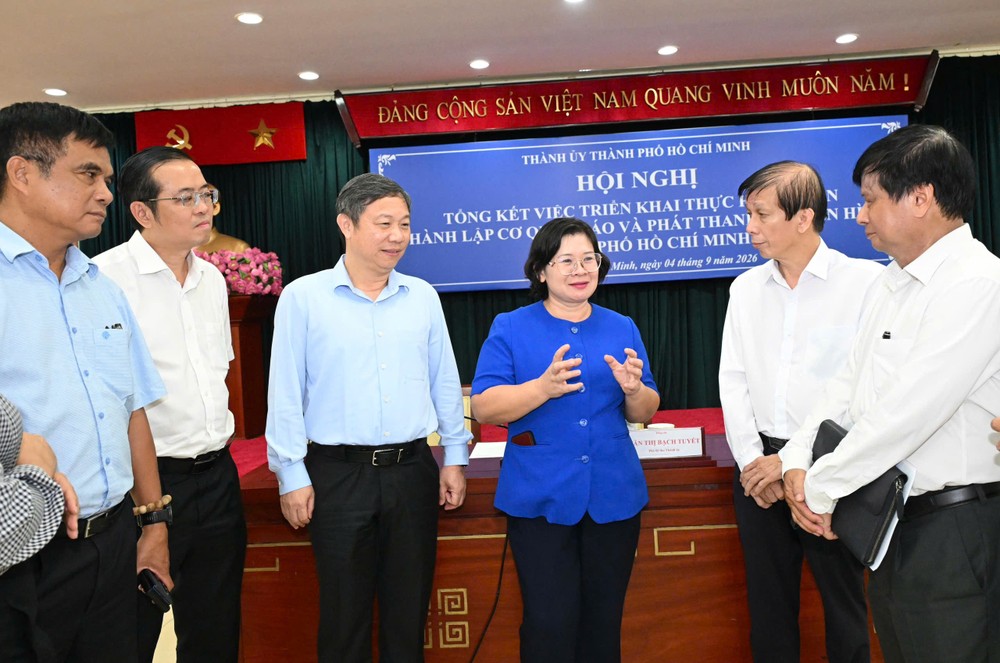
The Ho Chi Minh City Party Committee on Sep 4 reviewed progress on establishing the Ho Chi Minh City Press and Radio-Television Agency.
Attending the conference were Mr. Nguyen Huy Ngoc, Head of Department 3 for Local Affairs under the Central Commission for Information and Education, and Mr. Tran Trong Dung, Vice Chairman of the Vietnam Journalists Association in charge of Southern Vietnam.
The meeting was chaired by Ms. Van Thi Bach Tuyet, Deputy Secretary of the Ho Chi Minh City Party Committee; Mr. Nguyen Manh Cuong, Alternate Member of the Party Central Committee, Member of the Standing Committee of the Ho Chi Minh City Party Committee, and Vice Chairman of the Ho Chi Minh City People's Committee; and Mr. Duong Anh Duc, Head of the municipal Party Committee's Commission for Information and Education.
Other senior city officials also attended, including Ms. Vo Ngoc Thanh Truc, Member of the Standing Committee of the Ho Chi Minh City Party Committee and Deputy Head of the Ho Chi Minh City Delegation of National Assembly Deputies, and Mr. Ta Van Dep, Member of the Standing Committee of the Ho Chi Minh City Party Committee and Deputy Director of the Ho Chi Minh City Public Security Department.
Operations stabilize after restructuring
Reporting at the conference, Mr. Tang Huu Phong, Deputy Head of the municipal Party Committee's Commission for Information and Education, said the city had largely completed the organizational and personnel arrangements for the new agency after nearly three months of implementation.
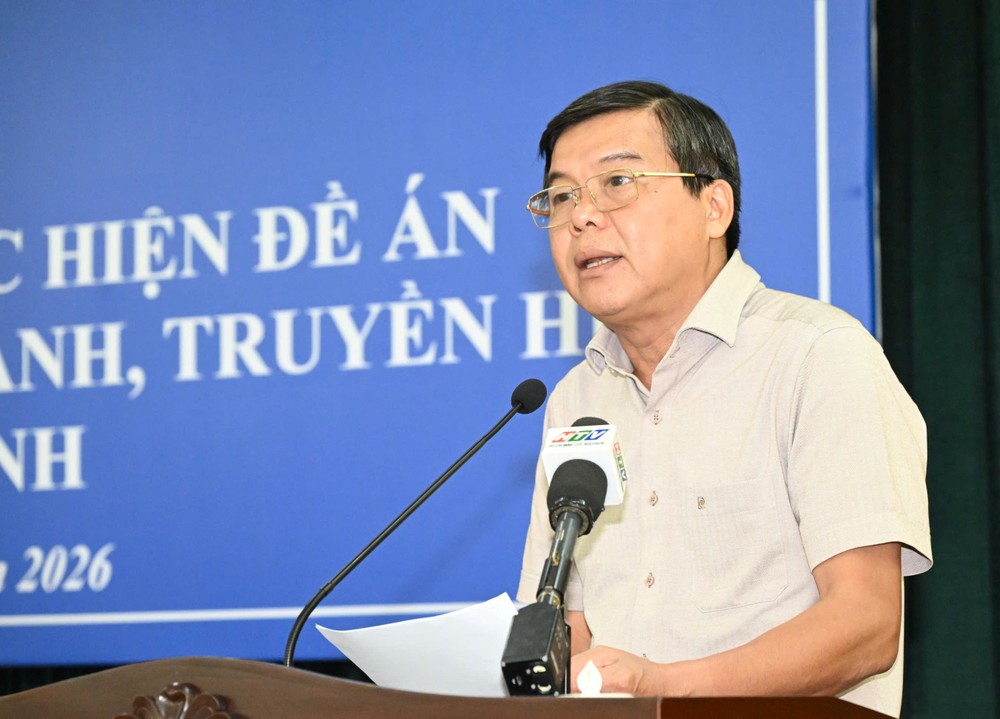
The city allocated 50 staff positions to the agency for 2026 and issued regulations defining its functions, responsibilities, organizational structure, and working relationships.
News organizations that ceased operations under the restructuring plan had also prepared dissolution proposals, submitted them to competent authorities, and completed the required decisions and procedures. Most of the work had been completed on schedule by Aug 31, 2026, Mr. Tang Huu Phong said.
The Ho Chi Minh City Press and Radio-Television Agency and its three affiliated news organizations moved quickly to begin operations, launching new publications from July 2 and taking over data and archives from eight news organizations that had ceased operating.
News and public information activities continued without interruption throughout the transition. The city's press organizations maintained timely and accurate coverage of Party policies, State laws and regulations, and the city's major political and development priorities, while seeking to provide authoritative information on issues of public concern.
Mr. Le Van Minh, General Director of the Ho Chi Minh City Press and Radio-Television Agency, said the organization had worked closely with municipal departments and agencies to resolve difficulties arising during the restructuring process.
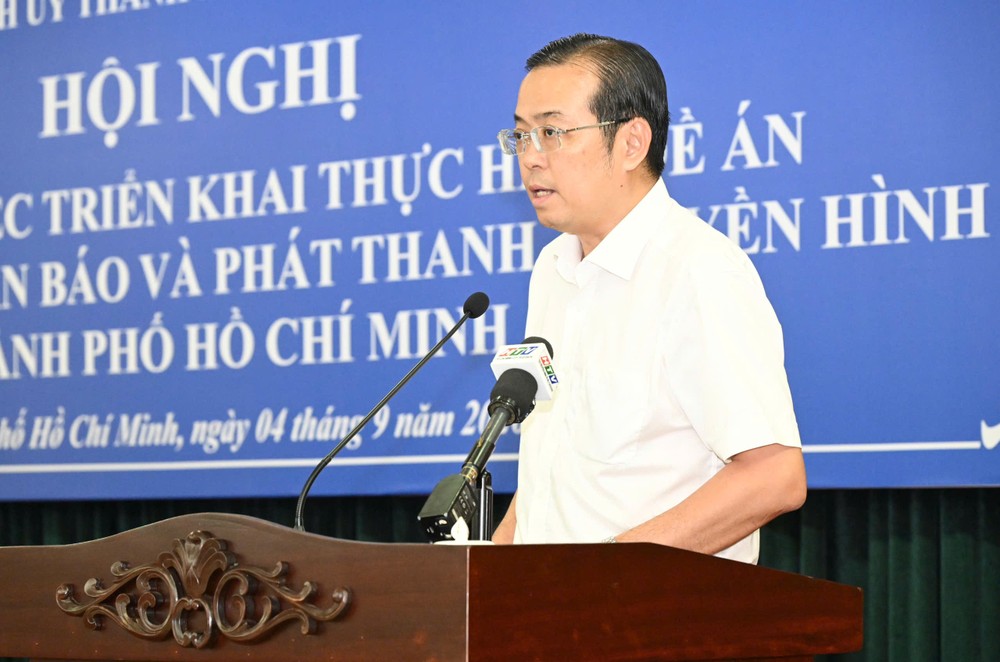
That coordination had helped operations gradually stabilize and ensured that routine work continued smoothly, he said.
The agency's board of directors and functional departments had also reviewed staffing needs and reassigned or appointed personnel based on professional qualifications, experience, and the requirements of individual positions.
Regular meetings between senior management and affiliated organizations had proved particularly important in identifying emerging problems, coordinating instructions, and ensuring consistent implementation, Mr. Le Van Minh said.
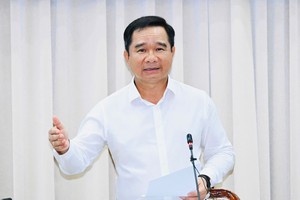
Mr. Duong Anh Duc, Head of the municipal Party Committee's Commission for Information and Education, called on the agency to quickly finalize its operating mechanisms and translate broad regulations into detailed procedures to ensure smoother and more effective coordination among the city's news organizations.
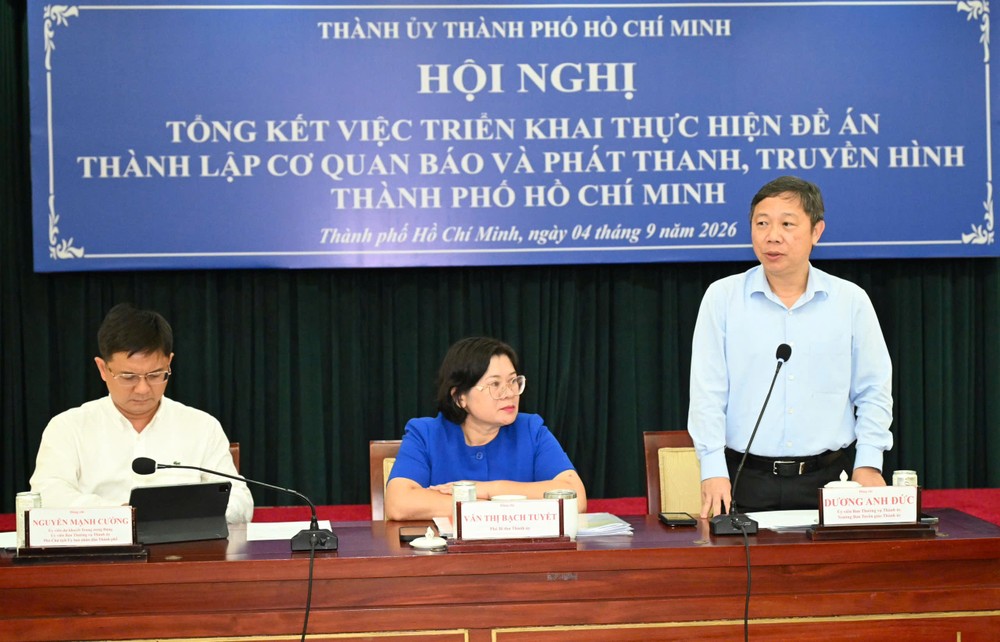
He said the new model must strike a balance between centralized management and the need to preserve the initiative and flexibility of individual news organizations.
Editorial autonomy and operational flexibility, he added, should be tied to the responsibility to provide timely, accurate, and effective information while better meeting the needs of officials, Party members and the wider public.
The city's mainstream press must also strengthen its competitiveness as audiences increasingly turn to social media platforms and other digital information sources, he said.
Review Urban Development Law for tailored mechanisms
Addressing the conference, Deputy Secretary Van Thi Bach Tuyet praised the agencies, management teams, journalists, editors, public employees, and other staff involved in carrying out the restructuring plan.
The newly established HCMC Press and Radio-Television Agency and its affiliated news organizations have largely stabilized their operations after nearly three months, maintaining uninterrupted news coverage and avoiding any information vacuum during the major restructuring of the city's press system, she said.
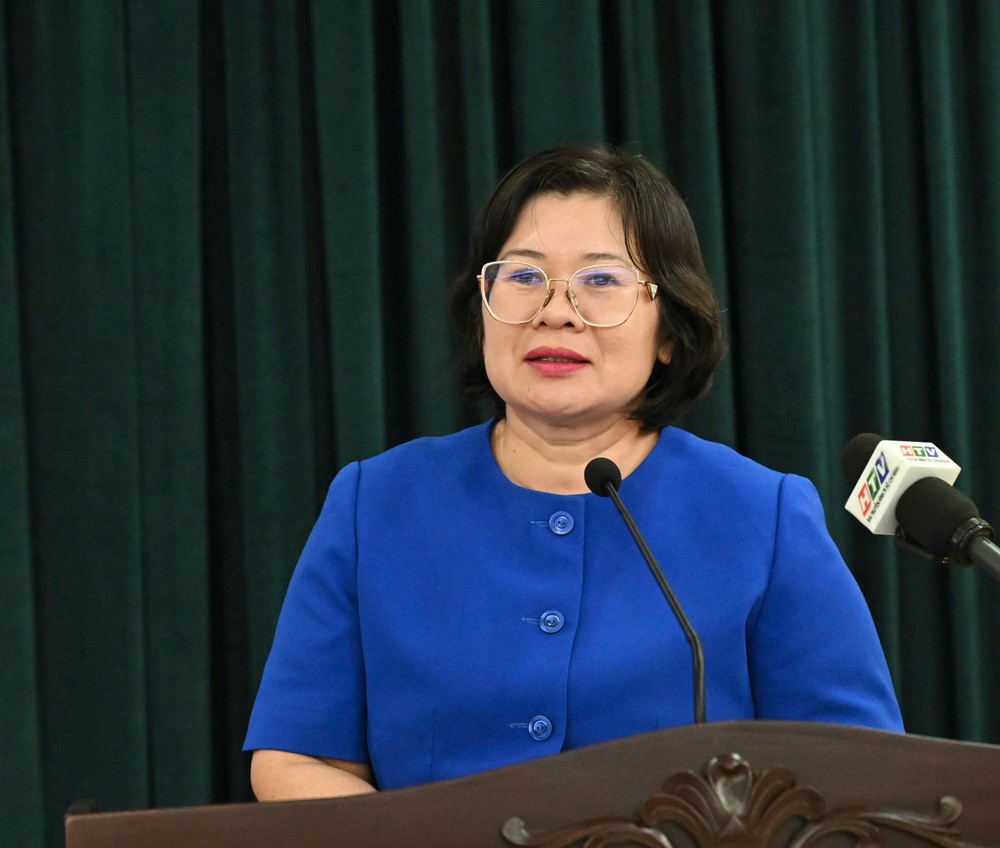
The next stage, however, would require the city to resolve remaining issues resulting from the reorganization.
The agency and its three affiliated news organizations were instructed to review staffing arrangements and consider recruiting additional journalists and editors from news outlets that had ceased operations.
They must also quickly complete legal procedures related to press operating licenses and establish clearer systems for governance, management, and content production.
Ms. Van Thi Bach Tuyet said those procedures should be streamlined and systematic, with clearly defined responsibilities and authority to ensure efficient and uninterrupted operations.
Improving the quality of journalism would be equally important, she said, calling for the new agency to become a central force in the city's communications and cultural landscape.
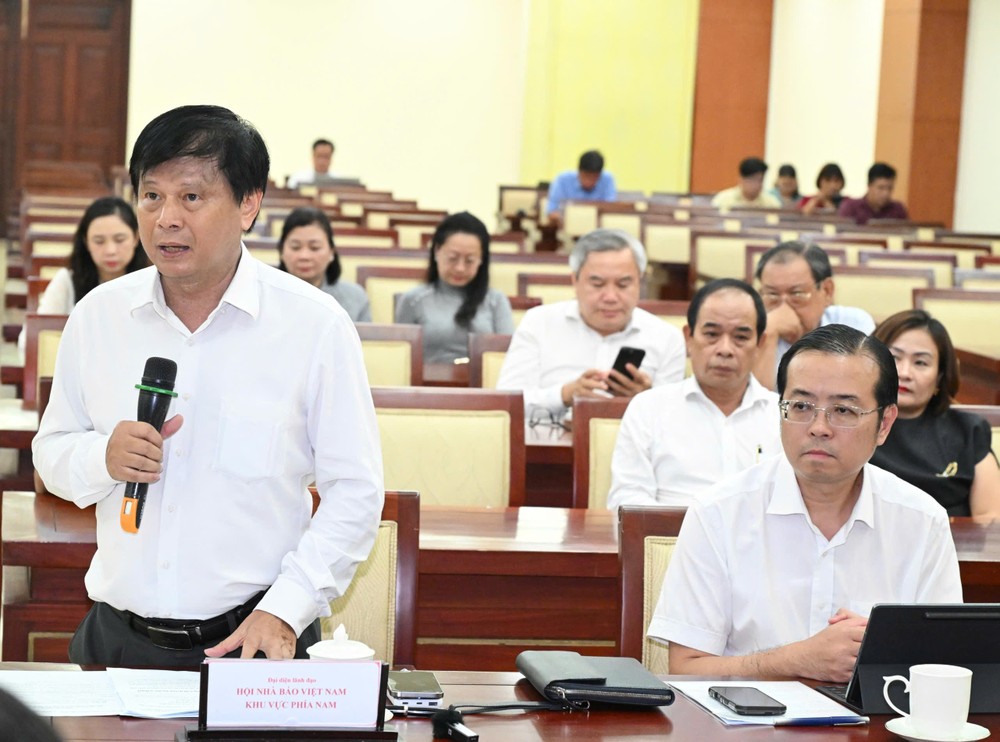
The Ho Chi Minh City Press and Radio-Television Agency should provide prompt coverage of Party policies, State laws, national policies, and municipal initiatives while strengthening its ability to address false, misleading, and harmful information circulating online, she said.
Ms. Van Thi Bach Tuyet described digital transformation and the development of multiplatform journalism as both an urgent priority and a long-term strategic task.
She called for greater investment in technology infrastructure, modernization of content production and distribution, and broader use of artificial intelligence and digital data to strengthen competitiveness and expand audience reach.
The city should also move quickly to explore a shared digital platform for its press system and submit a proposal to municipal authorities so that the necessary funding and other resources could be allocated.
The restructuring, she said, should go beyond merging organizations or administrative functions. It should create the foundation for a more modern press model capable of producing and distributing content efficiently across television, radio, print, websites, social platforms, and emerging digital channels.
Ms. Van Thi Bach Tuyet also called on the agency's management and the leadership of affiliated news organizations to strengthen internal unity while encouraging innovation and experimentation.
Officials, Party members, and employees should adapt proactively to new professional requirements and place the city's broader interests and political responsibilities above institutional or individual concerns, she said.
At the same time, the agency should pay greater attention to Party organization development, staff training, and professional capacity building.
Journalists and other employees would need stronger digital skills, political knowledge, and professional expertise to operate effectively in an increasingly technology-driven media environment, she said, adding that employment policies and benefits for staff affected by the restructuring must also be handled appropriately.
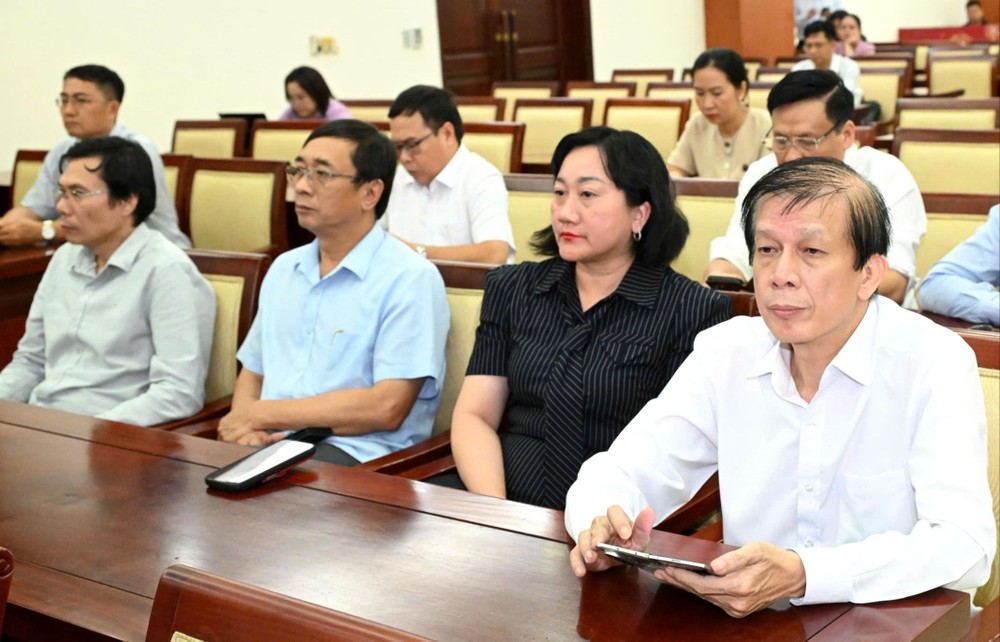
Ms. Van Thi Bach Tuyet also highlighted the Urban Development Law, which is due to take effect on Oct 1, 2026, describing it as a significant turning point that could remove institutional bottlenecks and create fresh momentum for Ho Chi Minh City's development.
She urged the Ho Chi Minh City Press and Radio-Television Agency to closely review the legislation and propose special mechanisms to support the long-term development of the agency and its affiliated news organizations.
She said such mechanisms could unlock new investment opportunities and lay the groundwork for a modern, professional multimedia organization.
The Ho Chi Minh City Party Committee's Standing Committee expressed confidence that, building on its strong tradition, professional experience, and spirit of innovation, the Ho Chi Minh City Press and Radio-Television Agency would harness its combined strengths to become an increasingly professional, modern, and influential flagship news organization for the city.
Ho Chi Minh City determined to make new model work
Emphasizing the significance of the restructuring, Ms. Van Thi Bach Tuyet said the municipal Party Committee's Standing Committee was determined to make the new model a success.
The agency must inherit and build on the achievements of Ho Chi Minh City's press.
Where central regulations have yet to provide detailed guidance, the city could consider pilot programs and experimental approaches, evaluate the results, and use the experience to propose appropriate policies and implementation mechanisms.