Meaningful dialogue, improved employee welfare, and the timely resolution of workplace concerns are among the key measures Ho Chi Minh City is promoting to build harmonious labor relations, maintain stable production, retain workers, and support the city's long-term growth objectives.
HCMC dialogue initiatives drive stable labor relations
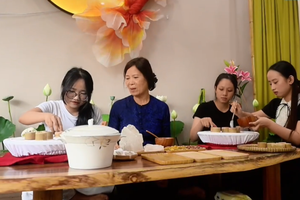
For several months, workers at Year 2000 Company in Linh Xuan Ward have met with company executives every Tuesday and Saturday through a program organized by the company's trade union.
During these meetings, employees raise concerns and make recommendations on working conditions, benefits, welfare, and other workplace issues. The program enables company leaders to hear workers' views directly, better understand their concerns, and promptly adopt measures to build harmonious, stable, and progressive labor relations while supporting the company's development.
Pham Thuy Duong, a worker at Year 2000 Company, said the initiative makes employees feel that management genuinely cares about them, giving them greater confidence to remain with the company.
A similar initiative, "Listening to Union Members", organized by He Vi Manufacturing and Trading JSC in Hoa Loi Ward, has become a regular and informal forum for dialogue. Workers have openly discussed issues such as flooding along National Highway 13 that affects their daily commute, inadequate street lighting in nearby alleys, and shortcomings in insurance policies.
Business owners and ward authorities attend the meetings together to identify solutions. When issues require more time to resolve, employees understand the circumstances, preventing frustrations from escalating into workplace conflicts.
This approach reflects the guiding principles of Ho Chi Minh City's Labor Relations Development Plan for 2026-2031, recently issued by the Ho Chi Minh City People's Committee.
The plan states that developing harmonious, stable, and progressive labor relations is essential to the city's socioeconomic development. It not only safeguards the legitimate rights and interests of both employees and employers but also creates a transparent and sustainable investment environment while contributing to political stability, public order, and social security.
Beyond wages: HCMC expands comprehensive worker welfare to drive growth
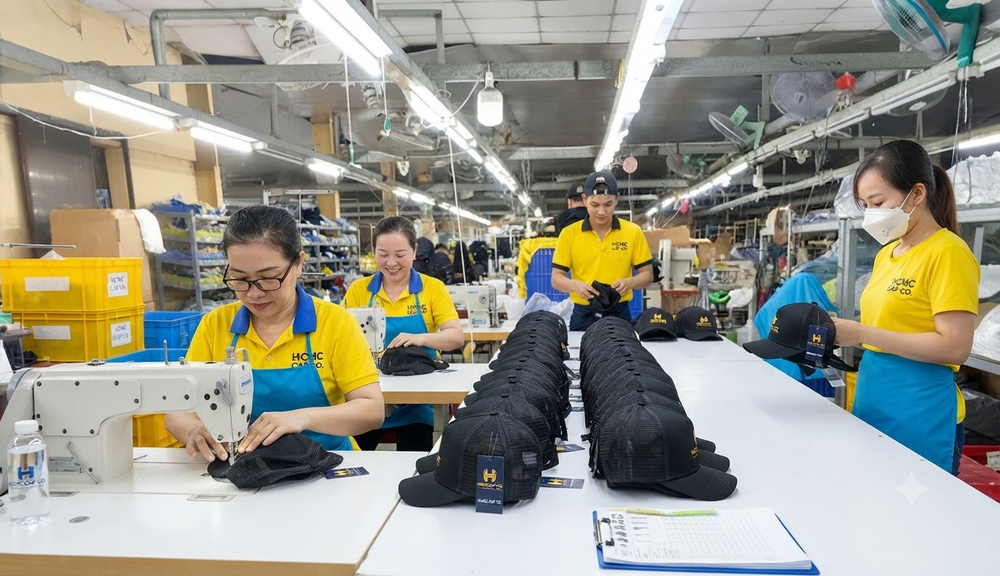
Under current conditions, businesses can no longer retain workers through wages and bonuses alone. Housing, healthcare, childcare, skills training, social security, and safe working environments have become the foundation of sustainable employee welfare. Delivering these benefits requires close involvement from company leaders and grassroots trade unions.
Recognizing this, To Nguyen Hai Dang, Party Cell Secretary and Chairman of the Inspection Committee of the trade union at Quang Viet Garment Company in Tan An Hoi Commune, actively gathers employees' opinions and concerns to propose practical welfare policies.
Based on his recommendations and the company's collective bargaining and monitoring activities, more than 4,500 employees have benefited from favorable provisions in the collective labor agreement, including housing assistance, transportation allowances, and attendance bonuses.
At PouYuen Vietnam Company in Tan Tao Ward, more than 35,000 female workers have recently received reproductive health examinations and cancer screenings through programs supported by company management. Similar initiatives are being implemented at many other businesses in cooperation with the Ho Chi Minh City Federation of Labor.
Over the past two months, the federation has organized the "Ho Chi Minh City Trade Union Accompanies Workers' Health" program on weekends. In addition to general health checkups, the program provides free reproductive health consultations and cervical cancer screenings for female union members and workers aged 18 to 45.
According to the federation, the health screenings have identified many cases of serious illnesses, including several with suspected signs of cancer.
The Labor Relations Development Plan for 2026-2031 identifies the expansion of sustainable, long-term welfare programs for union members and workers as one of its central priorities.
The plan focuses on improving access to social housing, preferential credit, healthcare, education, skills training, employment support, and essential public services, with priority given to disadvantaged workers, migrant workers, and vulnerable groups.
Ho Chi Minh City has nearly 7.49 million people employed across a wide range of sectors. The size and diversity of its labor market require increasingly effective state management and stronger labor relations within enterprises.
As the city targets average annual GRDP growth of 10 percent to 11 percent and average annual labor productivity growth of about 8 percent during the 2026-2030 period, maintaining stable labor relations is viewed as a key prerequisite for sustaining production, attracting investment, creating jobs, and improving productivity.