These have also been among the key priorities implemented by women's associations at all levels in recent years.
The 14th National Congress of Vietnamese Women for the 2026–2031 term is taking place in Hanoi from June 17 to 18. Looking back on the past term, women’s associations at all levels across the country have introduced numerous innovations in their operations, helping women develop their economic potential and enhance their standing within their families and society. As Vietnam enters a new stage of development, the women’s union system will continue to renew its content and modes of operation, creating more opportunities for women to achieve comprehensive development and contribute more actively to their communities and society at large.
From a local specialty to an OCOP-certified brand
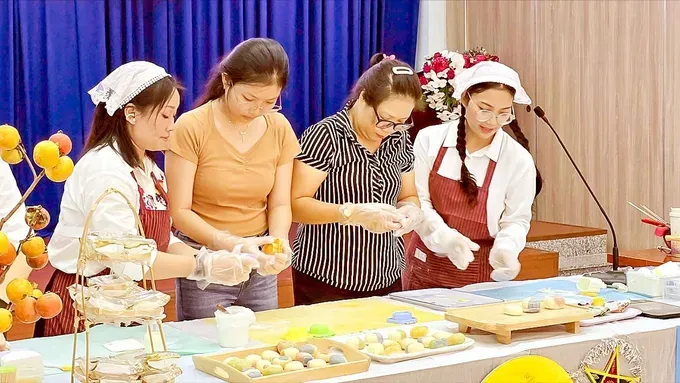
In Bac Kan Ward of Thai Nguyen Province, almost everyone knows Loc Thi Chanh, 35, a woman who built her business from making banh gio, also known as banh tro (rice cake with herbal ash), a traditional delicacy made from glutinous rice and ash derived from certain forest plants. Few would have imagined that this humble cake from Coc Muong Hamlet in the Northern mountainous region could one day reach a much wider market.
Ms. Chanh recalled that she initially promoted and sold the cakes through Facebook, receiving strong support from friends and relatives. Over time, she realized that Bac Kan’s distinctive triangular banh gio was highly popular and held significant market potential thanks to its unique flavor, attractive amber color, and ability to remain soft and fragrant for days.
In 2021, she established the Bac Kan Ash Cake Cooperative with nine members. Soon afterward, the cooperative’s product was recognized under the provincial One Commune One Product (OCOP) program. Today, the cooperative produces an average of around 2,000 cakes per day, with output reaching as many as 10,000 cakes daily during peak periods. It provides stable employment for five workers, whose average monthly income ranges from VND5 million (US$190) to VND6 million (US$228).
While the income may not be substantial, it is highly meaningful for many local women, helping ease financial pressures at a time when stable employment opportunities remain limited and family responsibilities, including childcare, continue to weigh heavily on their shoulders.
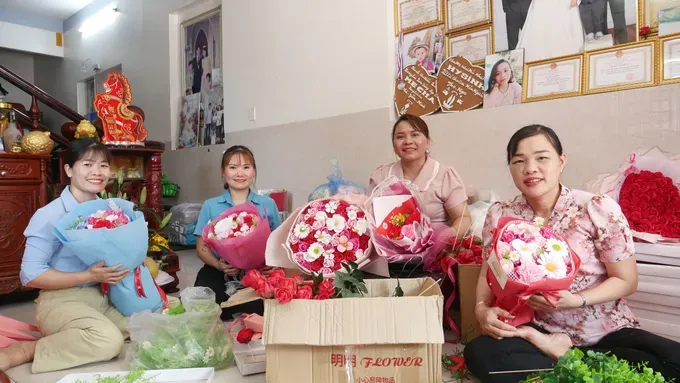
Stepping into the modest home of Tran Thi Nga in Tan Dong Hiep Ward, Ho Chi Minh City, the first thing that catches the eye is a vibrant display of handmade soap flower bouquets. Amid the colorful setting, Nga works diligently, carefully adjusting each petal, smoothing the wrapping paper, and skillfully tying delicate ribbons. Looking at the bouquets awaiting delivery, she reflects on her entrepreneurial journey—one marked by hardship, perseverance, and determination.
Leaving her hometown of Ha Tinh for Ho Chi Minh City at a young age, Nga took on various jobs to make a living. During her years as a street flower vendor, she developed a deep affection for flowers. After years of hard work, she decided to start her own business making soap flower bouquets. Through self-study and online tutorials, she learned every aspect of the craft, from color coordination and flower arrangement to bouquet wrapping, gradually turning her passion into a source of income.
To build trust with retailers, Ms. Nga boldly adopted a consignment sales model, allowing stores to sell her products before making payment. The strategy proved effective, helping soap flower bouquets gain wider market acceptance and attracting a steadily growing customer base.
What began as a passion-driven endeavor has gradually evolved into a small-scale business that provides a stable source of income. In 2024, with support from the local Women’s Union, a soap flower cooperative group was established, with Nga serving as its leader. She has since become a key figure in connecting members, providing technical guidance, and creating employment opportunities for women in the community.
To date, the cooperative group has provided regular work for five to seven women, including teachers, small business owners, homemakers, and middle-aged women with spare time. Those with flexible schedules can work directly at Nga’s home, while others who are busy caring for their families can take materials home for assembly.
Through this work, members are able to earn additional income, with earnings during peak seasons reaching several million Vietnamese dong per month.
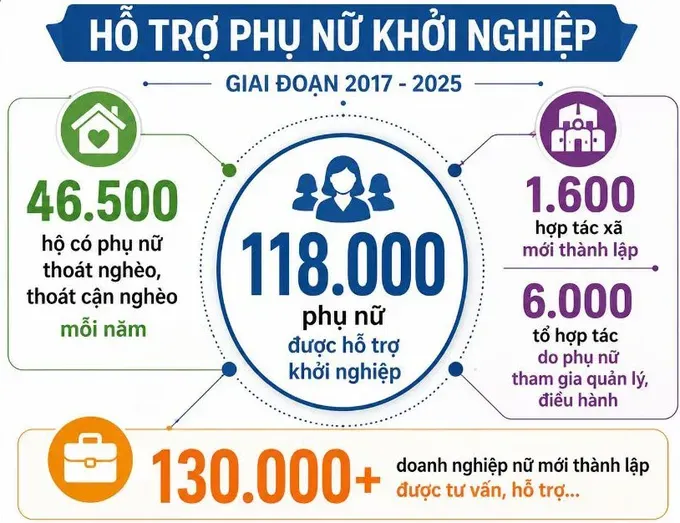
These are just two among many women across Vietnam who have improved their economic circumstances through their own determination, coupled with support from women’s associations and social organizations.
According to Vice President of the Ho Chi Minh City Women’s Union, Nguyen Thi Ngoc Linh, supporting women’s economic empowerment has consistently remained one of the organization’s key priorities.
Since the beginning of 2026, the Ho Chi Minh City Women’s Union has proactively partnered with reputable training institutions to offer free vocational courses, enabling members to acquire skills aligned with market demand and practical employment needs. Training programs have covered a wide range of fields, including hairdressing, nail care, makeup services, retail management, livestream sales, maternal and childcare services, and spa operations. Upon completing the courses, participants receive vocational certificates and are connected with employers through job placement and recruitment support programs.
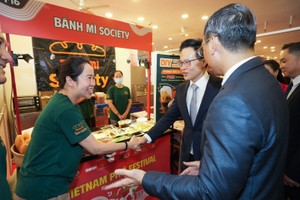
At the grassroots level, many commune- and ward-level Women’s Union chapters have organized women’s entrepreneurship festivals and business-startup events, creating opportunities for members to access financing, acquire business knowledge, and explore new avenues for enterprise development.
Building an entrepreneurial ecosystem for women
According to Vice President of the Vietnam Women’s Union Tran Lan Phuong, promoting women’s participation in the digital economy is among the key tasks and strategic priorities, as it can create new opportunities for women to enhance their professional skills and improve their livelihoods.
Therefore, in the coming term, women’s unions at all levels will focus on supporting women’s engagement in livelihood models that are aligned with local conditions and development orientations. Priority assistance will be directed toward women from poor and near-poor households, ethnic minority communities, and those living in remote and disadvantaged areas, disaster-prone regions, border areas, and island communities.
Through these efforts, the organization aims to help more women gain access to economic opportunities, strengthen their capacity to adapt to the digital era, and contribute more effectively to local socio-economic development.
Emphasizing the specific measures to be implemented during the next term, Deputy Head of the Women's Affairs Department under the Central Committee of the Vietnam Women’s Union, Tran Thi Thu Ha, said that the organization will work to build the most enabling entrepreneurial ecosystem possible for women.
The Women’s Union will intensify efforts to support women in transitioning from household businesses to women-owned enterprises. It will also pilot the “One Woman – One Family – One Livelihood Development Model," aimed at harnessing the strengths and resources of individual households and communities.
One of the key orientations for the coming term is to help products made by women become more deeply integrated into green supply chains and sustainable value chains, thereby enhancing their competitiveness and market access.
In addition, the union will continue to accompany women in developing collective economic models, household-based businesses, and participation in other sectors of the economy. By the end of the 2026–2031 term, it aims for 34 provinces and centrally governed cities to establish clusters of livelihood development projects managed and operated by women.
The Central Committee of the Vietnam Women’s Union for the new term will be expanded to include a greater number of women entrepreneurs, creating a network of “leading forces” that can connect, mentor, and support women in developing their businesses more effectively.
The Vietnam Women’s Union will also further leverage the role of organizations that bring together female intellectuals and entrepreneurs, such as the Vietnam Association of Women Intellectuals and the Vietnam Women Entrepreneurs Council, in mobilizing resources, sharing expertise, and assisting members in expanding production and business activities.