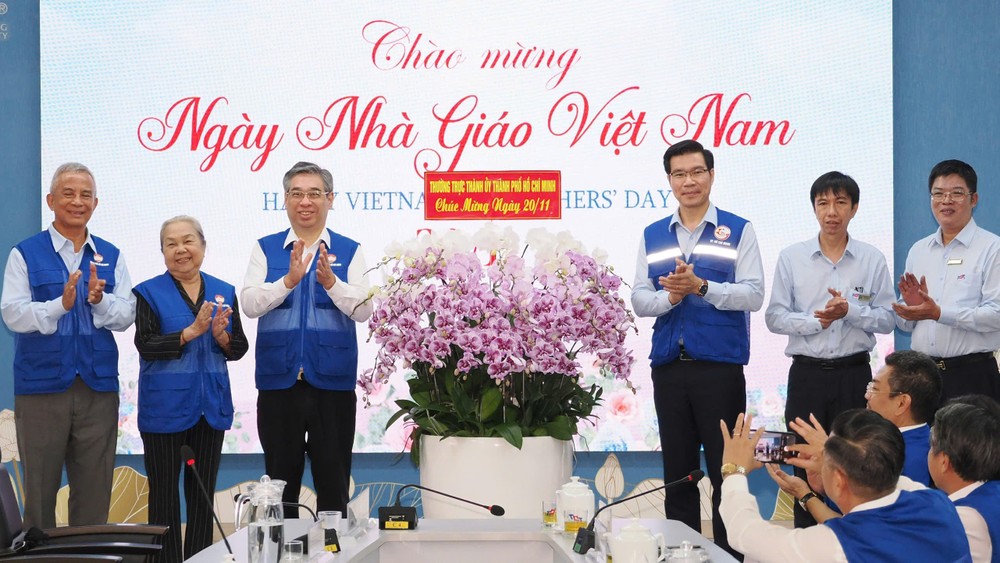
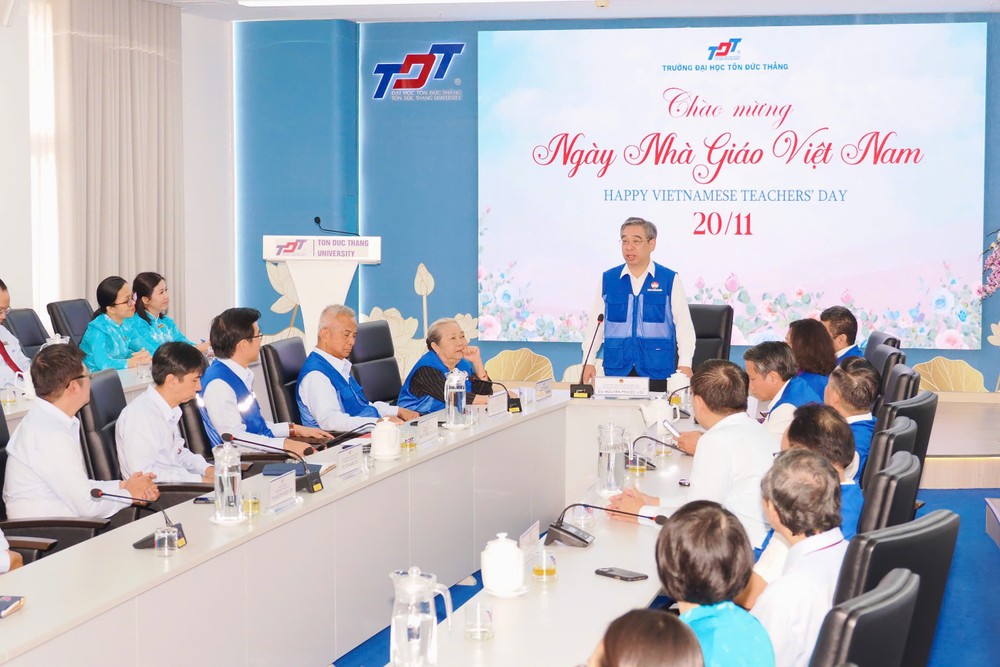
Mr. Nguyen Phuoc Loc, Deputy Secretary of the Ho Chi Minh City Party Committee and Chairman of the Vietnam Fatherland Front Committee of Ho Chi Minh City, visited Ton Duc Thang University (TDTU) on November 16 to extend greetings ahead of Vietnamese Teachers' Day on November 20, participate in a tree-planting event, and discuss the university's development priorities with its faculty and staff.
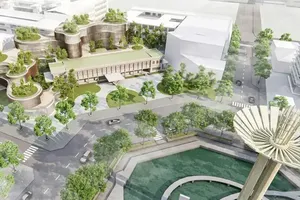
The visit also featured the inauguration of the Solidarity Garden, a new green space on campus, as part of efforts to strengthen ties between the university, local authorities, and the surrounding community.
Attendees included Mr. Dang Ngoc Tung, former Member of the Party Central Committee and former President of the Vietnam General Confederation of Labor, who serves as an adviser to the university; Ms. Hoang Thi Khanh, Chairwoman of the university's Founding Council; representatives of the local authorities in Tan Hung, Tan My, Phu Thuan, and Tan Thuan wards; and university officials, lecturers, and students.
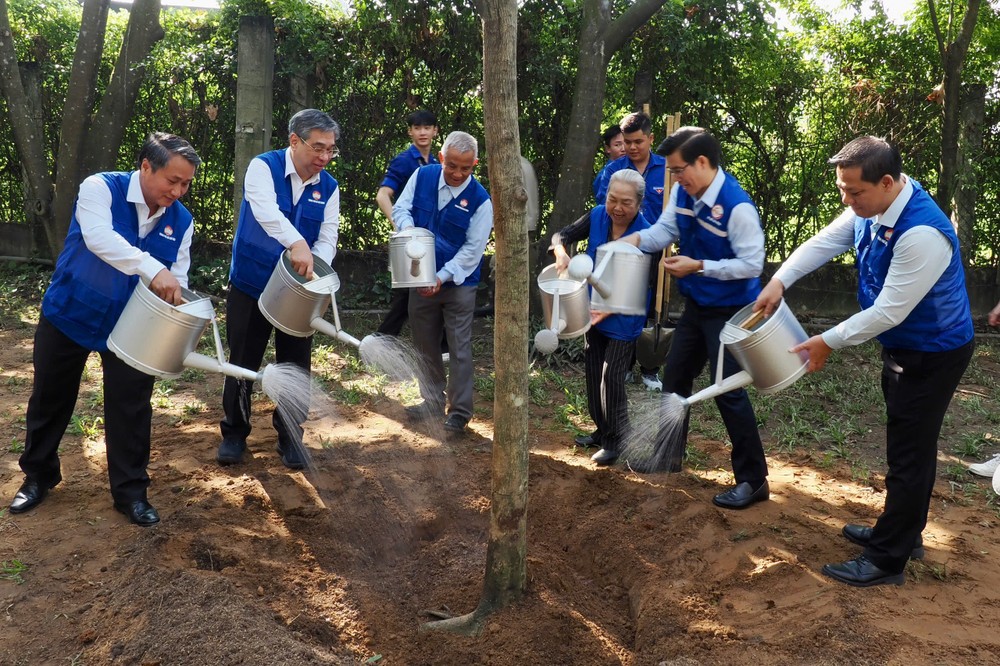
Green spaces promote environmental awareness and community solidarity
At the Solidarity Garden, participants joined in a tree-planting event. Mr. Nguyen Phuoc Loc and Assoc. Prof. Dr. Tran Trong Dao, Secretary of the university's Party Committee and Rector, joined representatives from the four wards in officially inaugurating the garden.
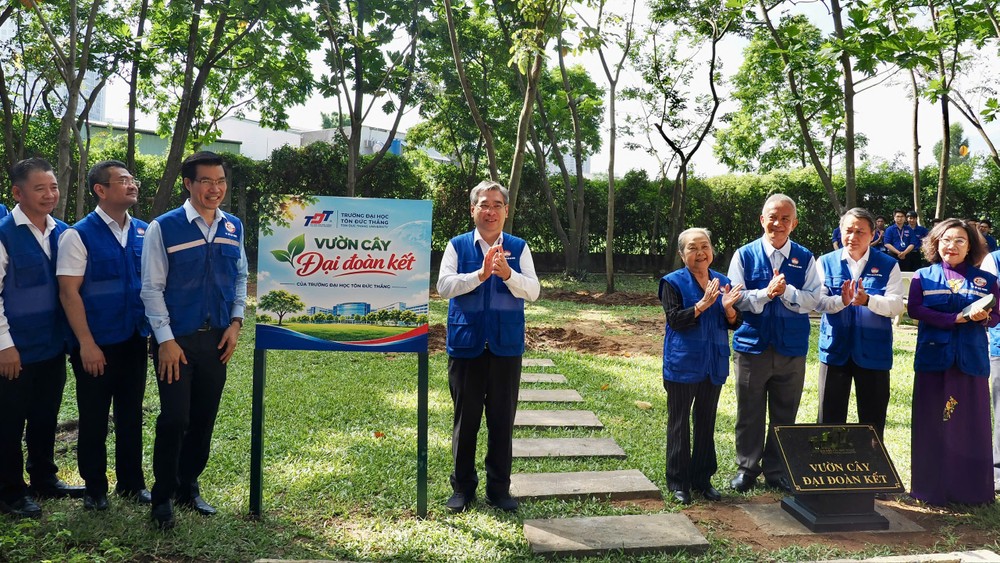
The initiative marked the 96th anniversary of the founding of the Vietnam Fatherland Front (November 18, 1930–2026) and the 44th anniversary of Vietnamese Teachers' Day (November 20, 1982–2026). It also supported the city's "A City of a Thousand Flowers" campaign, which seeks to expand green spaces and promote sustainable educational environments.
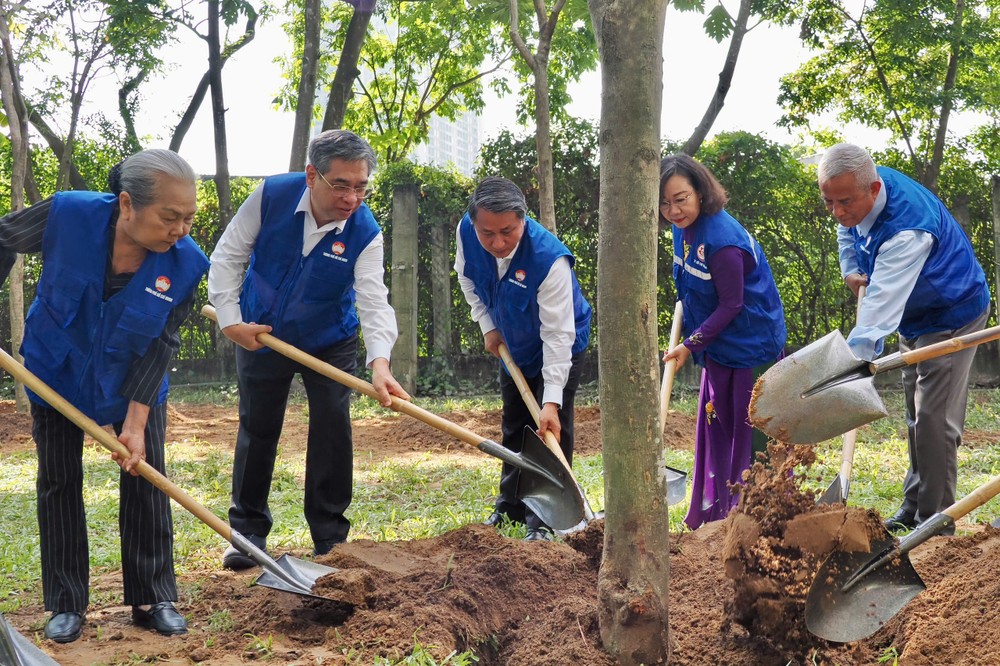
Mr. Nguyen Phuoc Loc praised the university's active participation in tree planting and environmental protection, emphasizing that expanding green spaces and increasing tree coverage would help improve the urban environment and residents' quality of life.
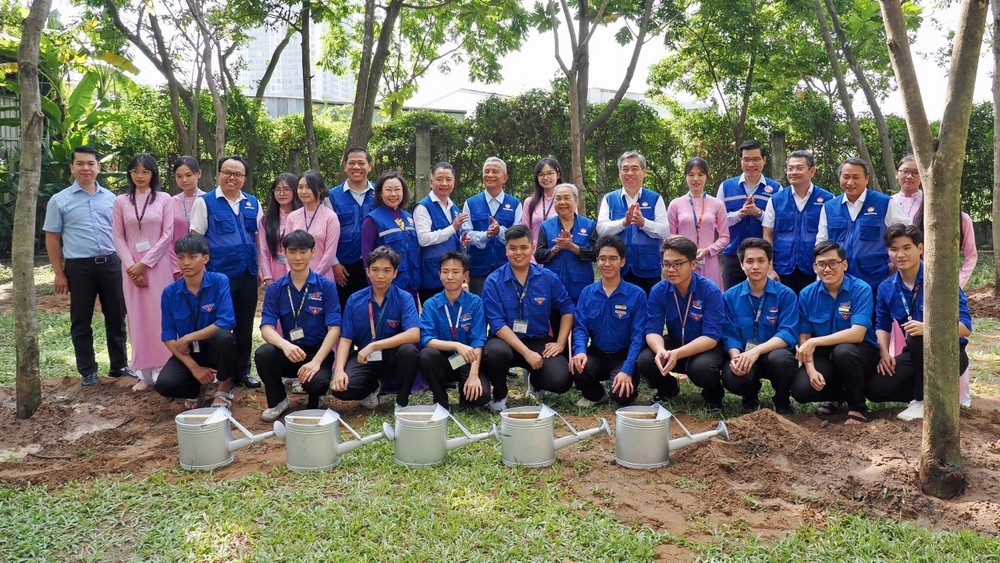
University representatives said the Solidarity Garden symbolized the partnership between the university, local authorities, and the community, while promoting solidarity, civic responsibility, and environmental awareness among students. The university pledged to maintain the garden and encourage faculty, staff, and students to help preserve the campus's green spaces.
University urged to address city's development challenges
At a meeting with university officials and faculty members, Assoc. Prof. Dr. Tran Trong Dao said that nearly three decades of development had laid a strong foundation for TDTU to further improve education, scientific research, and international integration.
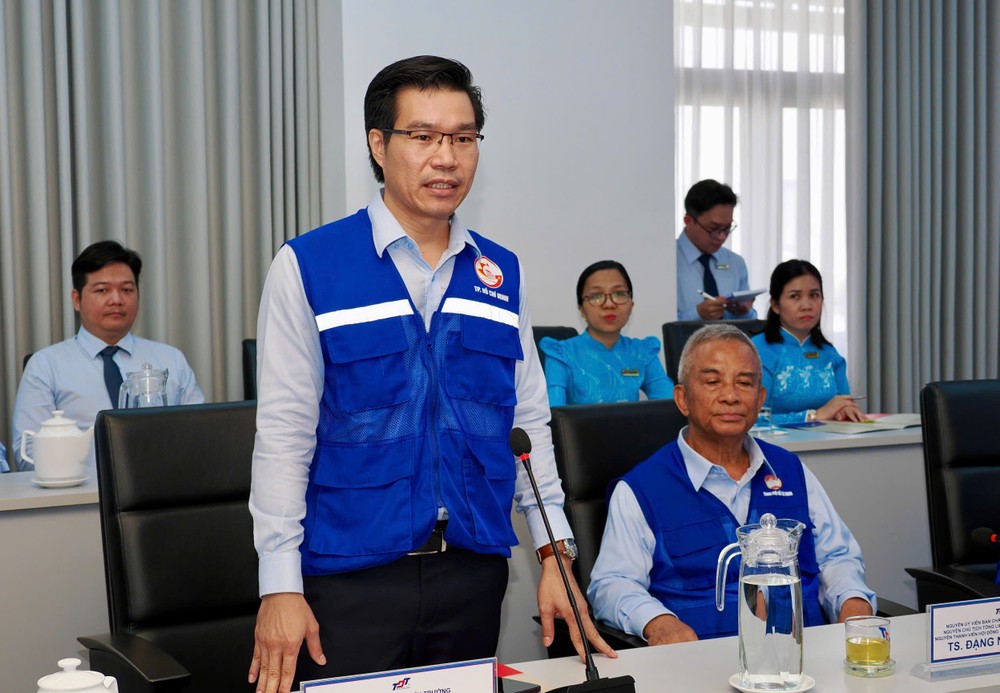
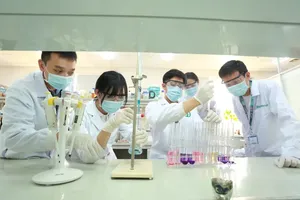
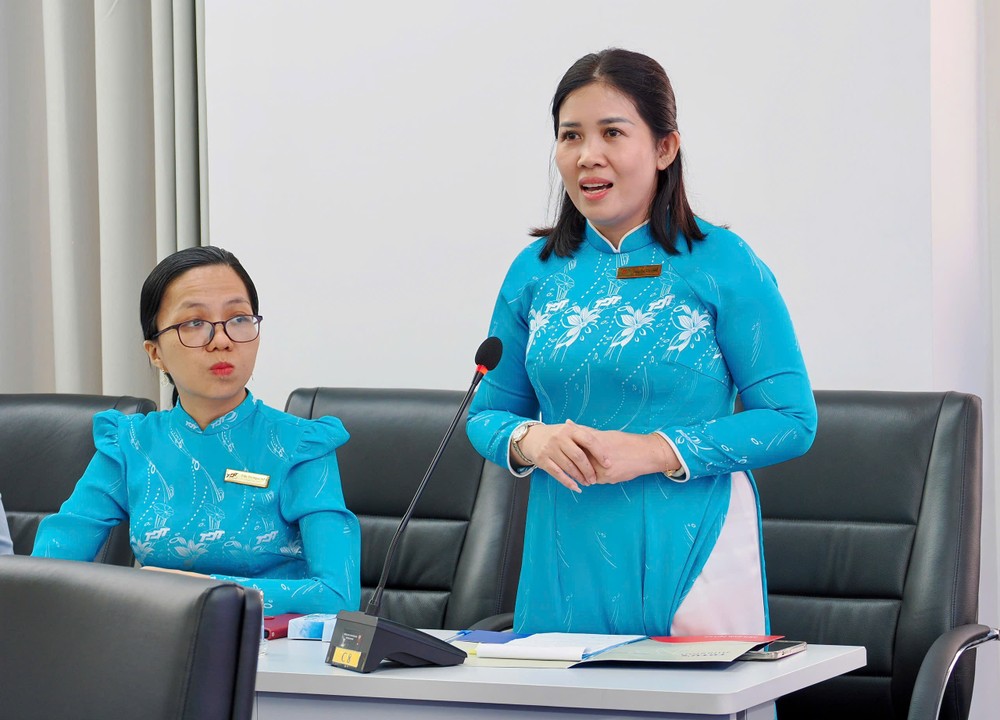
Representatives discussed student and employee welfare, practical training, internships, and business partnerships. The Faculty of Pharmacy highlighted the importance of hands-on training and cooperation with employers in improving students' job prospects.
The university has also partnered with local authorities to address practical challenges and mobilized AI experts to support digital transformation. Faculty members called for greater cooperation with the city and ward administrations through commissioned research and technology projects to better align academic activities with practical needs.
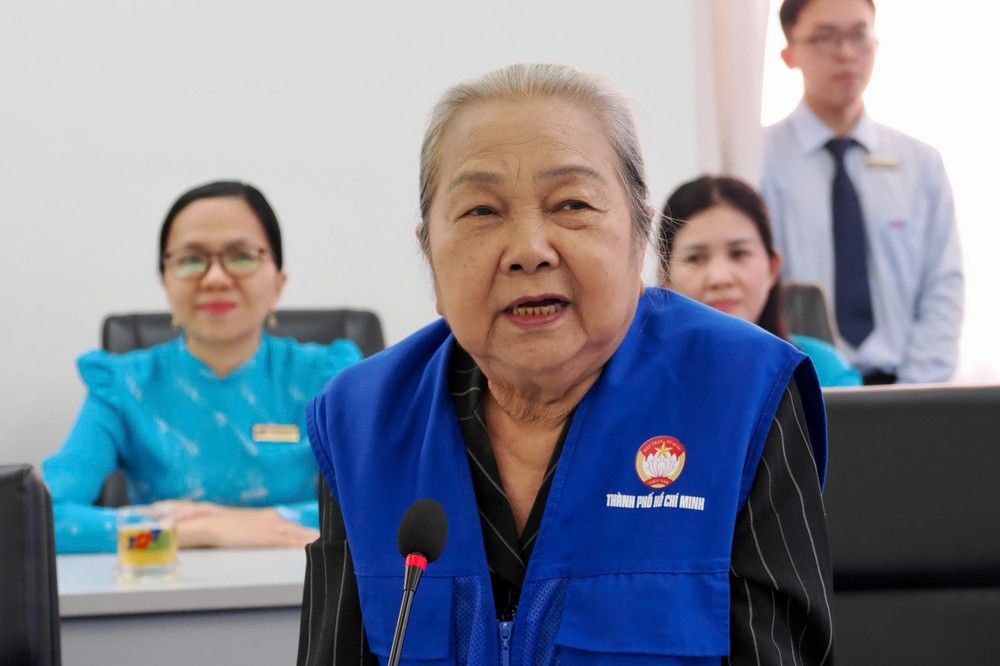
Former university leaders urged authorities to resolve outstanding institutional and land-related issues to facilitate the university's continued development.
Acknowledging the contributions of successive generations of university leaders, lecturers and employees, Mr. Nguyen Phuoc Loc commended TDTU for its role in developing human resources, particularly highly skilled professionals for Ho Chi Minh City.
Ahead of Vietnamese Teachers' Day, he extended his best wishes to educators and encouraged them to remain committed to professional development, innovation and the creation of new value in education and training.
He urged the university to set annual targets for improving quality indicators and maintaining international standards. Its development strategy, he said, should be closely aligned with the city's socioeconomic priorities, as well as its requirements in national defense, security and external relations.
Mr. Nguyen Phuoc Loc stressed that education and training must respond directly to labor market demand. He called on the university to conduct in-depth research into workforce requirements, employment trends and labor relations to develop appropriate training programs and policy recommendations.
He also encouraged TDTU to take the initiative in proposing institutional and policy solutions and participating in research and training projects commissioned by local authorities.
Priority areas should include emerging growth drivers such as the digital economy, semiconductor technology, logistics, biotechnology, high-quality health care, and cultural industries, he said.
The university should also expand international partnerships and leverage education as a channel for people-to-people diplomacy, connecting international partners and mobilizing resources for practical cooperation programs in Ho Chi Minh City.
"We need to conduct in-depth research into the labor market and labor relations to develop appropriate training solutions and recommend that local authorities support the university's contributions through scientific research and education," Mr. Nguyen Phuoc Loc said.
He further called for student volunteer activities to be more closely integrated with academic disciplines and professional development, producing tangible outcomes for local communities.
Community service, he said, could help students strengthen practical skills, develop initiative and creativity, and become better equipped to adapt to the labor market.
Mr. Nguyen Phuoc Loc also encouraged lecturers and students to take pride in their affiliation with TDTU and act as ambassadors for the institution wherever they go.
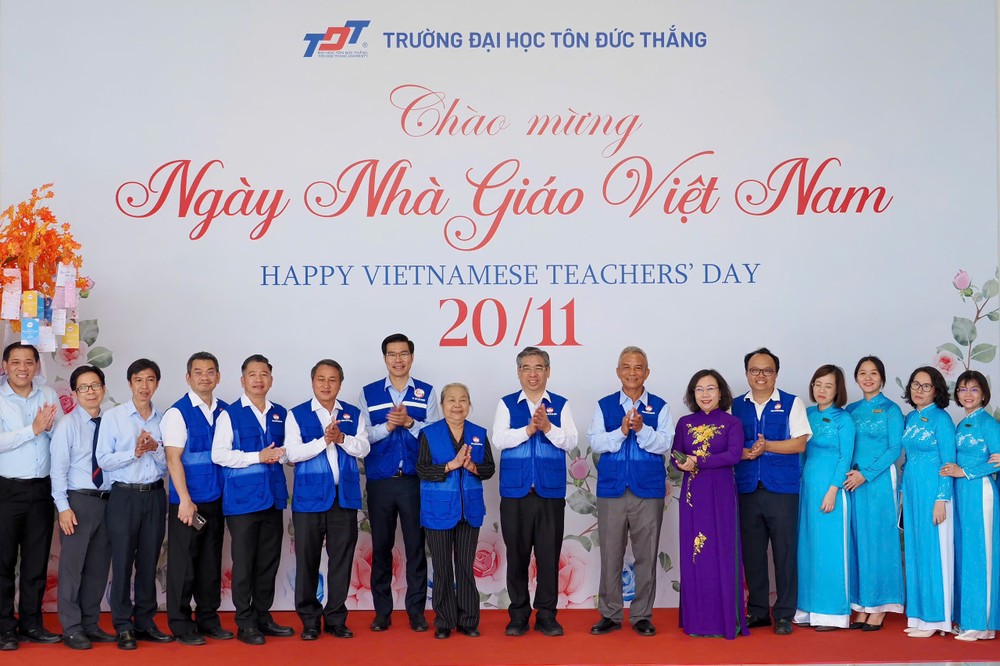
"I hope that every time they leave the university campus, wherever they go, they can proudly say: 'I am a lecturer at Ton Duc Thang University' or 'I am a student at Ton Duc Thang University,'" he said.
In response, Assoc. Prof. Dr. Tran Trong Dao said the university would translate the suggestions into concrete programs and initiatives, continuing to improve the quality of education, research and community service.