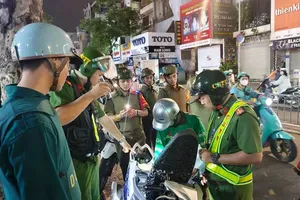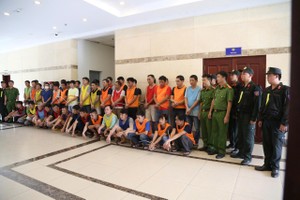
To preempt crimes and social evils, commune- and ward-level police have intensified patrols, residency inspections, and unannounced rapid drug tests at rental complexes.
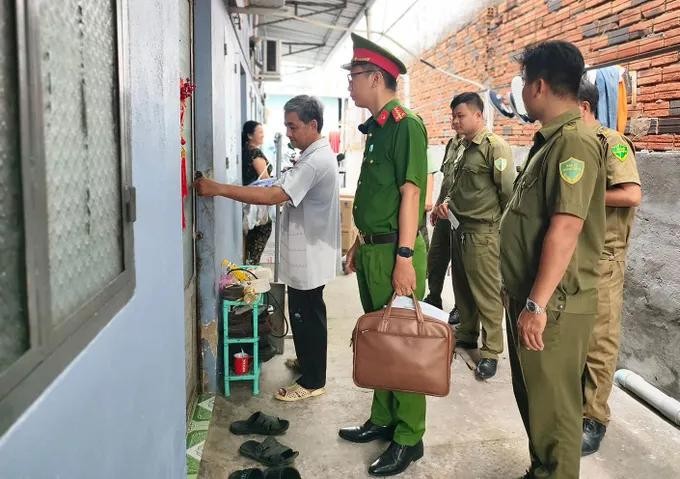
In early September 2026, the Binh Chanh Commune Police reportedly inspected temporary residency registrations and administered rapid drug tests at two rental zones situated along Vanh Dai Street and the An Phu Tay – Hung Long route. Through these spot checks, functional forces reminded one visiting guest who hadn’t declared their stay; concurrently, they conducted rapid drug tests on approximately 10 individuals, all yielding negative results.
Encouraged by local authorities, several landlords have taken the initiative to purchase drug test kits, priced at approximately VND1 million (US$38.5) per box, keeping them readily available at their premises.
For Mr. Phan Van Cong, a landlord managing a rental complex on Vanh Dai Street, his tenant demographic primarily consists of manual laborers working at Binh Dien Wholesale Market. They typically work night shifts and meticulously adhere to the rules. Whenever new renters arrive, Mr. Cong proactively requests a drug test, and the vast majority of tenants willingly cooperate. According to him, the approximate cost of VND60,000 ($2.3) per test strip isn’t a massive burden when weighed against ensuring security and safety for the boarding house.
“Tenants must comply, as it’s a strict regulation of this rental facility,” he explained. “Once it’s properly explained, everyone happily agrees because they’re working-class people who desperately need a safe, orderly environment to stabilize their lives.”
Over in Khanh Hoi Ward, local police are routinely conducting drug tests at 10 boarding houses currently piloting the “Safe, Orderly, Drug-Free Rental Housing” model. These inspections are rigorously carried out on both current residents and incoming tenants right before they sign their lease agreements.
To date, authorities haven’t detected any cases testing positive for narcotics. The stringent management of these rental areas fundamentally helps to proactively preempt malicious actors from gathering, hiding, or orchestrating the illicit use of drugs. The unit is currently scrambling to coordinate with the Ward People’s Committee and mass organizations to replicate this model across 100 percent of boarding houses in the locality.
Beyond tightening inspections, local jurisdictions are actively developing safe, drug-free rental models, weaving them into residency management and fire prevention advocacy.
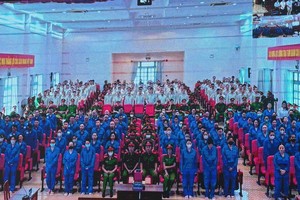
Recognizing the looming threat of drugs penetrating boarding houses in areas densely populated with workers, the HCMC Public Security Department has teamed up with the HCMC Export Processing and Industrial Zones Authority to strongly ramp up legal dissemination.
According to Steering Committee No.26 of the HCMC Public Security Department (the unit executing Resolution No.02-NQ/TU of the HCMC Party Executive Committee), approximately 675,000 workers were successfully reached through drug prevention campaigns during the first half of 2026.
In Binh Tan Ward, a major hub for renting laborers, several models are being deployed tailored to specific neighborhood characteristics. These include “Safe Boarding Houses – Joining Hands to Repel Drug Crimes” in Neighborhood No.6; “Safe Boarding Houses for Women and Children” in Neighborhood No.34; and “Drug-Free Veteran Member Boarding Houses Preserving Security and Order” across the neighborhoods of 26 and 30.
These dynamic models seamlessly blend advocacy, urging tenants to abide by the law, with the cultivation of a robust self-management principle within the rental zones.
The Binh Tan Ward Police routinely collaborate with accommodation owners to disseminate critical regulations regarding residency management, fire safety, and drug prevention. They also actively encourage landlords to sign binding commitments and display propaganda posters in highly visible spots.
Alongside this, boarding houses undergo cyclical reviews and spot checks. Upon detecting any individuals exhibiting suspicious behavior, functional forces immediately conduct rigorous checks, administer rapid drug tests, and subsequently verify and handle the violations in strict accordance with the law.
Over in Binh Thanh Ward, the “Safe Boarding House for the Visually Impaired and Children” on Bui Dinh Tuy Street was carefully designed to accommodate this highly specific demographic. The facility houses 47 residents, comprising 21 visually impaired individuals alongside a few deaf tenants and other people facing severe hardships.
For Ms. Tran My Chi, the boarding house manager, caution is a collective effort. She noted that all tenants here proactively heighten their guard, stubbornly refusing to let strangers exploit their home as a haven for doing or stashing drugs.
According to Chairwoman Cao Thi Hien of the Binh Thanh Ward Women’s Union, mass organizations frequently coordinate to advocate and mobilize citizens, especially women, children, and vulnerable groups, to profoundly elevate their awareness regarding drug and social evil prevention. Whenever unusual signs are spotted, residents are explicitly instructed on how to relay the information so authorities can swiftly intervene.