On June 24, City International Hospital announced the successful treatment of a 23-year-old Canadian man who developed complications from shingles despite being previously healthy and having no underlying medical conditions.
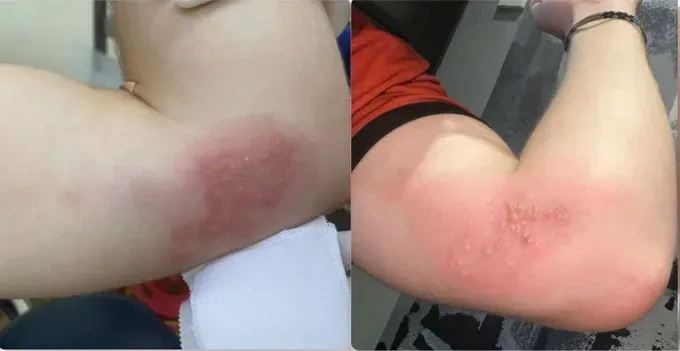
According to his medical history, the illness began with red spots on the lower third of the inner left upper arm, accompanied by mild itching. The patient reported no pain or burning sensation. On the second day, blisters and fluid-filled lesions appeared on the reddened skin. By the third day, a red halo developed around the affected area, along with a red streak extending from the blistered region toward the left armpit, causing pain when pressed. The patient had no fever, chills, or history of chronic illness.
During examination, doctors observed clusters of blisters and fluid-filled lesions on an erythematous base in the lower third of the inner left upper arm. The surrounding area showed a clearly defined red patch that was painful on palpation, along with a streak-like erythematous lesion extending toward the armpit. Laboratory tests showed a normal white blood cell count. The patient was diagnosed with shingles accompanied by a localized infection around the lesions and was prescribed outpatient treatment. Doctors noted that the case was unusual because the patient was young, physically fit, and had no underlying health conditions.
However, after nearly 48 hours of outpatient treatment, the skin condition failed to improve. The erythema continued spreading to the upper third of the left upper arm, the left elbow, and the upper third of the left forearm. Pain in the affected area increased, although the patient still did not experience fever, chills, or fatigue.
Dr. Nguyen Bao Hoa, a specialist at the Department of Dermatology and Internal Medicine for Musculoskeletal Disorders at City International Hospital, said the infection had progressed from a localized stage around the shingles lesions to extensive cellulitis accompanied by acute lymphangitis. The patient was admitted for monitoring and treatment.
Following hospitalization, the patient received antiviral medication combined with intravenous antibiotics and was closely monitored. After three days of inpatient treatment, redness in the affected skin had decreased significantly, pain improved markedly, and the patient was discharged to continue outpatient treatment under medical guidance.
According to Dr. Nguyen Bao Hoa, people with shingles should have a follow-up examination or visit a medical facility if they experience any of the following signs:
● Rapidly spreading red skin area,
● Increasingly painful lesions,
● Red streaks spreading beyond the initial lesion area,
● Swelling, warmth, or pain upon touch,
● Rapid changes in the condition of the lesions in a short period of time.
Closely monitoring the disease progression helps doctors detect complications promptly and provide appropriate treatment.