On June 12, Deputy Secretary of the Ho Chi Minh City Party Committee and Chairman of the Vietnam Fatherland Front Committee of Ho Chi Minh City Nguyen Phuoc Loc held a working session with the Department of Health on the allocation of surplus office premises for the city’s healthcare facilities.
Expanding the healthcare service network

Reporting at the working session, Deputy Director of the Ho Chi Minh City Department of Health, Nguyen Hoai Nam, stated that following the restructuring, a number of public offices and facilities have been prioritized for use by the health sector. Many previously underutilized facilities have been converted into secondary campuses of major hospitals, helping expand the healthcare network and reduce overload at tertiary hospitals.
After the reorganization of 168 commune-level health stations under the People’s Committees of wards, communes, and special zones, several former medical centers have also been repurposed into new healthcare facilities.
Notably, the former District 10 Medical Center has been handed over to People’s Hospital 115 for reception and renovation, with operations expected to begin in September. Ho Chi Minh City Ear Nose Throat Hospital has put the first two floors of the former District 3 Medical Center into use for emergency care and several specialized departments, while continuing renovations on the remaining floors to further develop in-depth specialties. Meanwhile, the facility at 56 Hai Ba Trung Street, formerly under the city's Health Care Protection Board for Cadres, has been put into operation by Ho Chi Minh City Eye Hospital, contributing significantly to reducing the burden on its main facility.
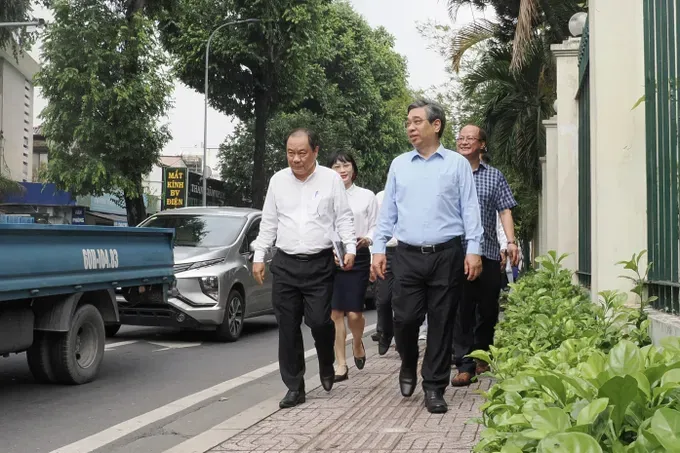
The city’s health sector is continuing to review its existing land and property fund to serve the strategy of developing specialized healthcare clusters.
Pham Ngoc Thach University of Medicine in Ho Chi Minh City has relocated to a new large-scale campus in Tan Kien. Its former premises on Duong Quang Trung Street consist of three zones, A, B, and C. Among them, Zone C is planned to be handed over to People’s Hospital 115 to form an integrated hospital complex. Zones A and B are being studied for expansion of the Ho Chi Minh City Infectious Diseases Institute and the development of a medical research center.
According to long-term development orientation, Ho Chi Minh City is gradually completing specialized healthcare clusters in the city center, Tan Kien, and Thu Duc areas, while also studying the expansion of additional clusters in the Ba Ria and Binh Duong areas,” Dr. Nguyen Hoai Nam said.
Selecting appropriate models to ensure long-term effectiveness
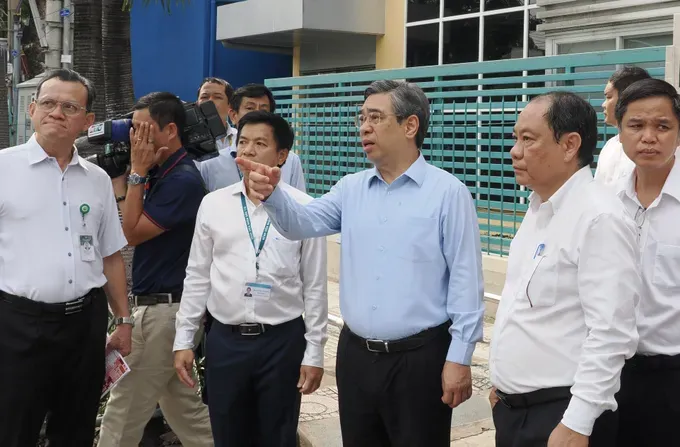
Speaking at the working session, Deputy Secretary of the Ho Chi Minh City Party Committee Nguyen Phuoc Loc emphasized that the reception, renovation, and utilization of surplus public facilities present a valuable opportunity for the city’s health sector to enhance its service capacity for the people.
With additional space, hospitals will have more favorable conditions to improve the healthcare environment, strengthen infection control, ensure patient safety, enhance service quality, and build a modern, civilized healthcare system.
He acknowledged and highly appreciated the proactive efforts of the Department of Health, relevant departments, local authorities, and hospitals in coordinating the review, proposal, and implementation of effective plans for the use of surplus offices. He also commended units that have actively advised and accelerated the progress of healthcare facility expansion projects in recent times.
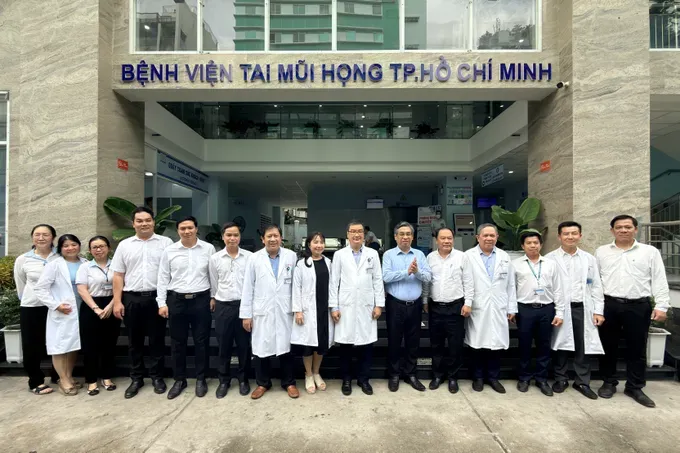
The units, after receiving new facilities, must urgently complete necessary work to put them into operation as a unified whole, meeting all professional standards and operational requirements, he requested.
In the coming time, the city’s leadership will continue working with relevant departments and agencies to review surplus public facilities located near tertiary hospitals.
Suitable facilities will be further proposed to the competent authorities for consideration of transfer to the health sector for management and use. The objective is to reduce the burden on higher-level hospitals, improve working conditions for healthcare staff, and, at the same time, enhance the quality of medical examination and treatment services, as well as patients’ access to healthcare services.