
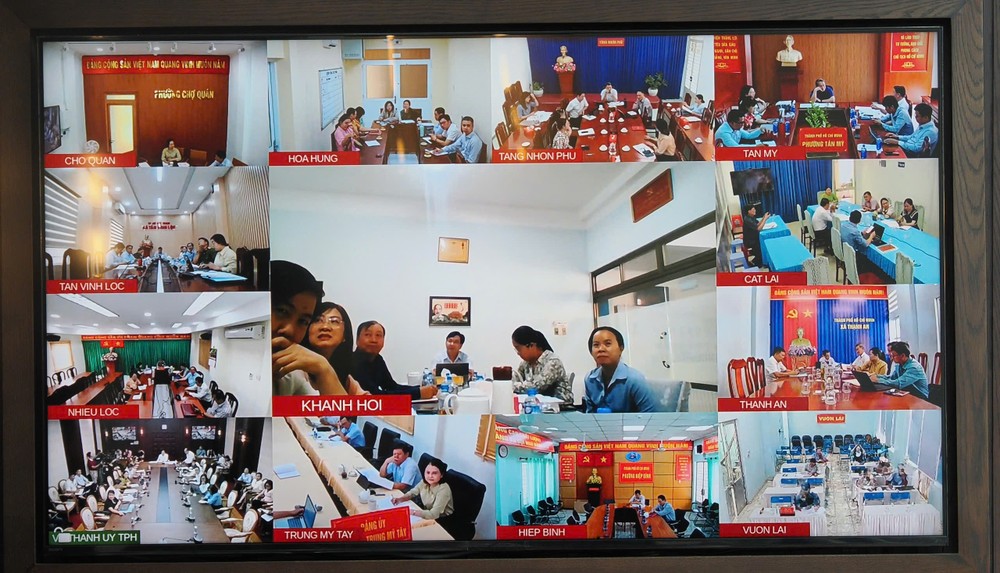
At a meeting on June 16, chaired by Mr. Nguyen Phuoc Loc, Member of the Party Central Committee, Deputy Secretary of the HCMC Party Committee, and Chairman of the Vietnam Fatherland Front Committee of HCMC, city authorities reviewed preparations with the Department of Health and representatives of 102 wards and communes. The meeting was held in person at the HCMC Party Committee headquarters and connected online to local administrations across the city.
Toward digital personal health management
According to Associate Professor Dr. Nguyen Anh Dung, Deputy Director of the HCMC Department of Health, the city had conducted health examinations for 182,554 residents as of June 15.
Of the total, 120,995 people underwent routine health checkups, while 61,559 received screening examinations. More than 51,800 elderly residents were examined, along with over 44,000 children under six years old, more than 20,300 adults aged 18 and above, and nearly 4,800 children between six and 18 years old.

Several localities achieved particularly strong results, including An Nhon Tay Commune, Ba Diem Commune, Tan Tao Ward, Hiep Phuoc Commune, Thanh An Commune, and Tan Nhut Commune. The outcomes demonstrate that when local authorities actively engage in public outreach and mobilization efforts, residents are willing to participate in regular health screenings.
Despite encouraging initial results, the implementation process has faced several challenges. Authorities cited shortcomings in population reviews, beneficiary identification, and data management, as well as pressure on healthcare personnel and growing demands related to digital transformation.
Public awareness also remains an obstacle. Many residents still seek medical attention only when they become ill and have yet to view routine health examinations as an essential component of disease prevention and long-term health protection.
To improve implementation, the Department of Health has urged ward, commune, and special-zone authorities to strengthen their role in reviewing and compiling resident lists, while coordinating closely with police agencies to standardize population and residency data. Local governments have also been asked to develop health-screening plans tailored to local demographic conditions.
The department called for the mobilization of the entire political system, including mass organizations, residential groups, population collaborators, and community health workers, under the principle of “going door to door, household to household, and reviewing every eligible individual” to ensure that no resident entitled to free health screening is overlooked.
At the same time, health authorities recommended continued investment in information technology infrastructure and stronger data connectivity between healthcare databases and those of population management, social insurance, education, and other sectors. Such integration is expected to reduce administrative procedures and improve the quality and effectiveness of health data management.
Health outcomes as the key performance indicator
Addressing the meeting, Mr. Nguyen Phuoc Loc praised the proactive efforts of the city government, the Department of Health, relevant agencies, and local authorities in organizing health examinations and screening activities across the city.
He noted that recent screening campaigns had enabled healthcare providers to identify numerous cases of non-communicable diseases and health risk factors at an early stage, allowing timely consultation, monitoring, and treatment.
According to Mr. Nguyen Phuoc Loc, the city's plan to provide annual health examinations for all residents beginning in 2026 is not merely a healthcare initiative but a major social policy with profound significance.
The program represents a transition from a treatment-centered approach to proactive healthcare management, emphasizing early detection, early intervention, and continuous health monitoring at the grassroots level.
He stressed that the objective extends far beyond meeting statistical targets or carrying out a short-term campaign.
Through the screening program, local authorities are expected to gain a more accurate understanding of residents' health conditions, identify disease risks at an early stage, and establish long-term systems for monitoring and managing public health.
“This is the core objective and the true measure of implementation effectiveness,” Mr. Nguyen Phuoc Loc said.
He emphasized that local governments cannot rely solely on administrative procedures or wait for residents to visit healthcare facilities. Instead, authorities must proactively reach out to communities and maximize the role of neighborhood organizations, residential groups, Fatherland Front committees, socio-political organizations, and grassroots collaborators in identifying, encouraging, and assisting residents to participate.
Particular attention should be given to vulnerable groups, including senior citizens, people with meritorious services to the nation, poor and near-poor households, people with disabilities, patients with chronic illnesses, and other disadvantaged residents.
To accelerate progress toward universal health screening, Mr. Nguyen Phuoc Loc called on the Party Committee of the municipal People's Committee to continue directing city agencies and the healthcare sector to ensure synchronized implementation throughout HCMC.
He stressed the need to guarantee adequate human resources, professional expertise, medical equipment, information technology systems, and physical infrastructure to support the program.
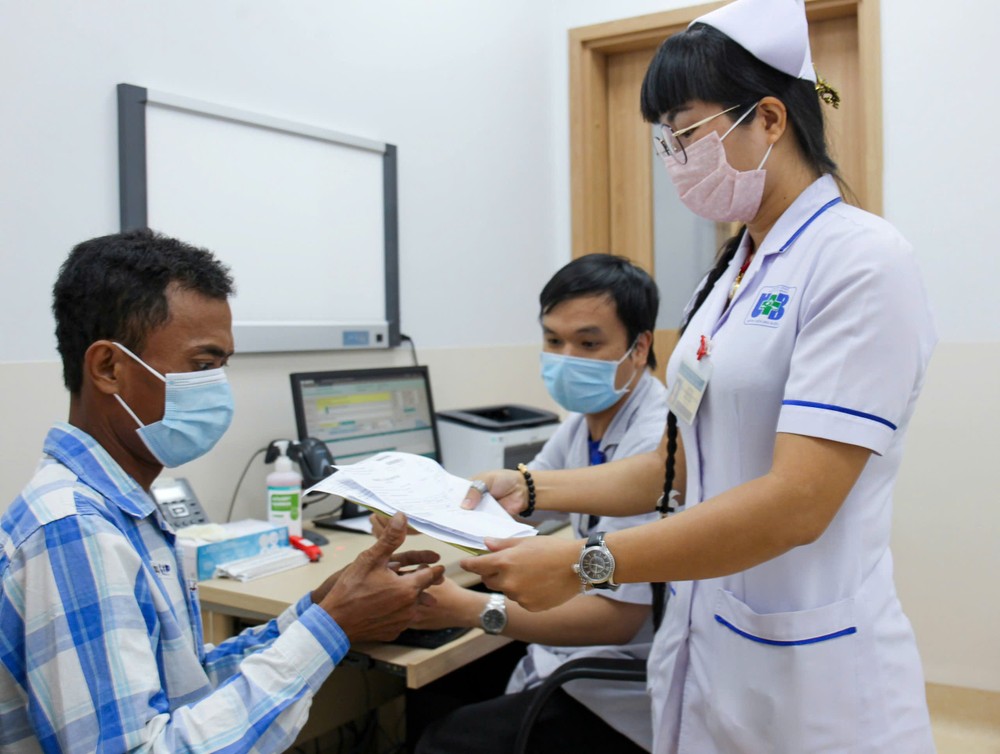
The Department of Health was instructed to strengthen its role as the lead coordinating agency by providing technical guidance, conducting inspections, and supporting local healthcare facilities. It was also tasked with ensuring effective management of residents' health data so that examination results are accurately updated and can serve long-term healthcare needs.
For the Party committees of the city's 102 wards and communes, Mr. Nguyen Phuoc Loc described universal health screening as a critical political task directly linked to improving people's well-being.
Local authorities were urged to coordinate closely with the healthcare sector in implementing the 2026 screening campaign, develop detailed action plans, assign clear responsibilities, mobilize available resources, and create favorable conditions for residents to receive annual health examinations.
The city aims to ensure that every resident receives at least one health checkup each year, has an electronic health record established, and gains access to primary healthcare services.
Mr. Nguyen Phuoc Loc emphasized that implementation results should become one of the key criteria for evaluating the effectiveness of grassroots political systems and the accountability of local leaders.
The Deputy Party Secretary also highlighted the need for local governments to adapt to the increasingly visible trend of population aging in HCMC.
Alongside universal health screening efforts, authorities were asked to strengthen healthcare services for senior citizens, particularly those living alone, facing economic hardship, or suffering from chronic illnesses.
He further called for closer coordination with the healthcare sector in public communication campaigns aimed at raising awareness of disease prevention, routine health examinations, and participation in screening programs.
Special emphasis should be placed on cancer screening and the early detection of serious diseases. Localities were encouraged to actively support the city's pilot cervical cancer screening program for women, which is expected to contribute to better women's health, improved population quality, and higher overall living standards.
Mr. Nguyen Phuoc Loc cautioned local administrations against pursuing health-screening targets merely for appearances or performance metrics.
He stressed that success should be measured by tangible benefits delivered to residents, including the number of diseases detected early, the number of individuals placed under regular health management, and levels of public satisfaction with healthcare services and local governance.
“The focus must be on real outcomes rather than completion rates,” he said.
Localities commit to meeting deadlines
During the meeting, numerous wards and communes pledged to complete health examinations for residents by the third quarter of 2026.
These included Binh Phu Ward, Xuan Hoa Ward, Tan An Hoi Commune, Binh Tay Ward, Hiep Phuoc Commune, Binh Thanh Ward, Tan Dinh Ward, Chanh Hung Ward, Binh Thoi Ward, Linh Xuan Ward, Tan Son Hoa Ward, Tan Phu Ward, Binh Hung Hoa Ward, An Lac Ward, Duc Nhuan Ward, Go Vap Ward, Hoc Mon Commune, and Nhuan Duc Commune.
Other localities, including Thu Duc, Dong Hung Thuan, Tam Binh, Cat Lai, and Binh Chanh, acknowledged that high population density and limited healthcare manpower could pose challenges to implementation. Despite these constraints, they committed to completing the program by the fourth quarter of 2026.







)