For a "sandbox" to truly be a launching pad, it needs a clear corridor to nurture technology, coupled with clearly defined risk boundaries to protect the market.
Opening regulatory pathways, defining the sandbox boundaries

The rapid emergence of technology-driven business models such as digital assets, blockchain, fintech, and artificial intelligence is creating an urgent need for more adaptive regulatory oversight. These are all fast-evolving sectors that can generate risks beyond the scope of traditional legal frameworks. As such, regulatory sandboxes have become an essential environment in which new business models can be tested under controlled conditions before being deployed and scaled up in the real world.
Building on the direction set out in Resolution No. 57-NQ/TW, Vietnam is entering a period of significant institutional reform. The Law on Science and Technology, together with implementing decrees under the Law on Digital Technology Industry, is gradually translating policy orientations into concrete procedures and mechanisms, thereby providing a legal foundation for businesses to confidently pursue innovation and experimentation.
However, a gap remains between policy and practical implementation, and narrowing this gap is crucial. According to Dr. Tony Tran, Director of Policy and Innovation at the Global On-Chain Economy Alliance (GOE Alliance), the most pressing requirement for International Financial Centers (IFCs) and regulatory sandboxes in the coming period is clear and comprehensive regulatory guidance.

The framework may not be perfect from the outset, but it must provide a clear roadmap so that businesses understand where they are headed, what requirements they need to meet, and how they will be evaluated, Dr. Tony Tran said.
Beyond its regulatory function, the strength of a sandbox also lies in the synergy within the ecosystem. Ms. Tiffany Hoang, Chapter Lead of the Stellar Vietnam fund, commended the Government’s clear commitment to action and its proactive efforts to foster an environment conducive to testing innovative business models.
When an ecosystem accepts the possibility of startup failure, it creates room for emerging technologies to be refined and improved. More importantly, close collaboration among stakeholders within this environment can help prevent promising startups from failing prematurely, she said.
Risk governance in innovation
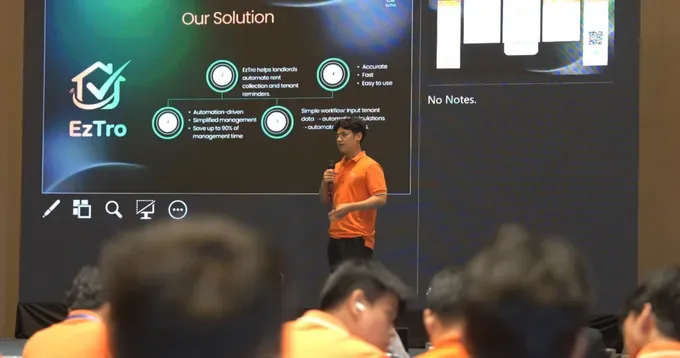
Opening the door to innovation does not mean loosening regulatory oversight. A regulatory sandbox must be accompanied by robust risk-control mechanisms from the outset to safeguard users and investors.
Mr. Oscar Njuguna, Head of Membership at the Executive Agency of the Vietnam International Financial Center in Da Nang City, said that the sandbox framework has already established a foundational structure. Nevertheless, further refinement is needed to ensure that the framework adequately covers all relevant stakeholders and clearly defines acceptable risk boundaries.
To operationalize these boundaries, effective oversight throughout the testing process is essential. According to Mr. Tran Manh Truc, Investment Director at Do Ventures, each project participating in the sandbox should be subject to a defined testing period and a set of periodic review criteria. Such a mechanism would help determine which projects are eligible to proceed, which require adjustments, and which should be discontinued altogether.
Risk transparency is particularly critical. Businesses must disclose potential risks to investors and users from the outset, rather than waiting until problems arise to address them. In the innovation process, failures resulting from immature technologies or markets that are not yet ready are an accepted part of experimentation. However, any attempt to exploit the testing environment for fraudulent or deceptive purposes must be clearly distinguished from legitimate business risks and dealt with firmly. This is the defining line that enables a sandbox to remain true to its purpose as a “safe testing environment” rather than becoming a loophole in the market.
From a pilot mechanism, Vietnam’s regulatory sandbox is now entering a stage that demands substantive implementation. This launchpad will only generate real momentum when businesses are free to innovate within a transparent regulatory framework, supported by a market that possesses the capacity to identify, manage, and eliminate risks effectively.