Following the implementation of Circular 08/2026/TT-BKHCN by the Ministry of Science and Technology, approximately 10.6 million subscribers from Viettel, VinaPhone, and MobiFone had their outgoing services suspended as of June 15 for failing to verify their identities via the VNeID application.
Specifically, Viettel Telecom restricted outgoing services for over 5 million unverified accounts. VinaPhone suspended services for nearly 3 million customers, while MobiFone reported approximately 2.6 million affected subscriptions.
The suspension of outgoing calls and SMS is a mandatory measure to protect user information and assets. While a significant portion of these affected subscribers are located in remote or mountainous areas, officials emphasize that users should not panic. The roadmap for compliance is designed to provide ample opportunities for customers to restore their connectivity.
Those restricted since June 15 retain the ability to receive incoming calls and messages. Customers have a 60-day window from the date of the initial suspension (expected by August 15, 2026) to complete verification before a full two-way lockout occurs. If no action is taken within five days following the two-way suspension, operators will officially terminate the contract and reclaim the SIM number as per regulations.
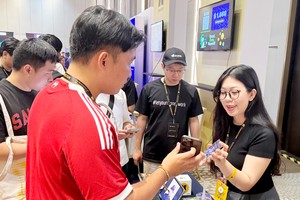
To assist users, telecom providers have launched a major support campaign. On June 15, Viettel Telecom reported a 40 percent increase in foot traffic at transaction points, prompting the company to extend operating hours from 7:00 a.m. to 8:00 p.m. system-wide. At industrial parks, staff committed to remaining open until the final customer was served. Viettel also maintains a network of 50,000 support points and a dedicated hotline (18008098, press 0) for home-visit assistance for the elderly and people with disabilities.
Similarly, VinaPhone has deployed over 1,000 transaction points and 4,000 mobile verification units nationwide, with a focus on remote regions. MobiFone has encouraged customers to utilize online channels, such as the My VNPT app or the 18001091 hotline, to update information in minutes and alleviate pressure on physical service centers.
Telecoms expand in‑person and home support for SIM verification under Circular 08/2026
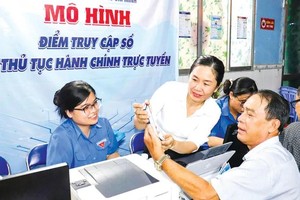
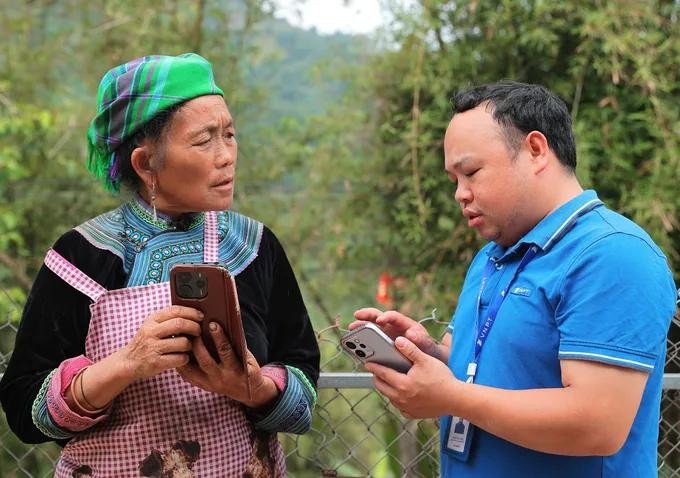
For users who do not use smartphones when verifying their SIM card ownership via VNeID, mobile network operators have implemented various direct support methods to ensure customers can verify their subscriptions in accordance with Circular No. 08/2026/TT-BKHCN. Users can go directly to stores, supermarket chains, or transaction points of mobile network operators nationwide to receive guidance and complete the verification process in person.
For the elderly, those with poor health, or people with disabilities, mobile network operators provide free in-home support services. Viettel customers can call the hotline 18008098 (press 0) to provide their address, and staff will come to their location to provide support. VinaPhone customers can contact the customer service hotline 18001091 for guidance and answers to their questions. Mobile network operators recommend that users who do not use smartphones or have limited technological skills should proactively contact the call center or visit the nearest support point to avoid communication disruptions.
SIM security tightened through biometric verification under Circular 08/2026
While the current suspension addresses existing unverified accounts, the new biometric authentication requirement for changing devices is designed to create a sustainable, secure digital environment.
Under Circular 08/2026/TT-BKHCN, effective June 15, users must re-authenticate their identity within two hours of inserting their SIM into a new device. Failure to do so results in a one-way service suspension. Users have 30 days to provide the necessary information before a two-way lockout and potential account termination.
Verification involves taking a real-time facial scan, which is then cross-referenced with the National Population Database, the ID database, or legitimate biometric data stored by the telecom operator. This process mirrors the stringent standards of the banking sector, replacing traditional, vulnerable passwords with biometric security.
This initiative is intended to prevent "SIM swapping"—a dangerous exploit where bad actors hijack a SIM to access bank accounts and e-wallets. Requiring every phone number to be linked to a verified individual and confirmed via facial recognition effectively halts the mass trade of garbage SIMs.
Furthermore, the system automatically detects if a SIM is moved to a new device, blocking outgoing services within two hours if the user fails to authenticate, thereby minimizing fraud risks if a phone is lost or stolen.
"Circular 08/2026/TT-BKHCN requires high technical standards for authentication systems, capable of detecting sophisticated frauds like printed photos, pre-recorded videos, or 3D masks. This is a significant upgrade from visual 'human' verification to true biometric technology, ensuring near-absolute accuracy and giving me greater peace of mind," said Tan Tuan, a resident of An Dong Ward, Ho Chi Minh City, while re-authenticating his identity during a device upgrade.
With over 10.6 million mobile subscriptions now under restriction, telecom operators urge users to quickly complete their biometric verification. This is not only a state-mandated directive but a vital tool to close security gaps and contribute to the development of a transparent and safe digital society.