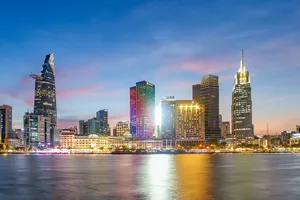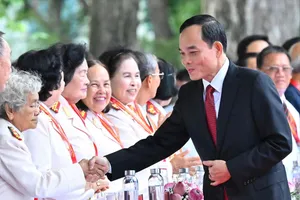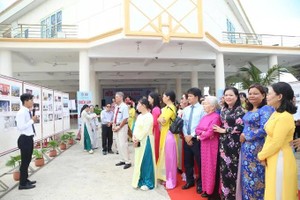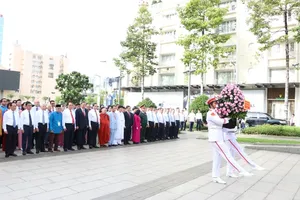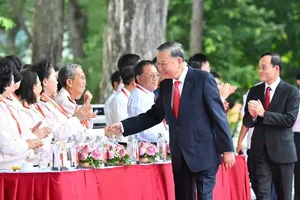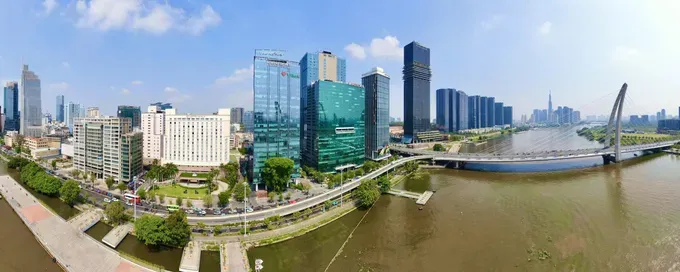
The directives delivered by Party General Secretary and State President To Lam at the ceremony marking the 50th anniversary of Saigon–Gia Dinh being honored with the name of President Ho Chi Minh conveyed not only confidence and high expectations but also set forth clear requirements for the city's Party Organization, authorities, and people.
Ho Chi Minh City must continue to foster great aspirations, pursue bold action, and uphold a strong sense of responsibility while transforming its potential, competitive advantages, and new policy mechanisms into concrete, measurable outcomes.
Over the past half century, Ho Chi Minh City has repeatedly demonstrated the mettle of a pioneering city. Following national reunification, it persevered in restoring production and stabilizing people's livelihoods. During the renewal (Doi Moi) process, the city boldly explored new approaches and piloted innovative initiatives, contributing valuable practical experience to the refinement of the country's institutional and policy framework. It was this spirit of daring to think, acting decisively, and taking responsibility for the common good that gave Ho Chi Minh City its distinctive dynamism, shaping it into a vibrant, innovative and compassionate metropolis capable of continuously reinventing itself to meet the demands of changing realities.
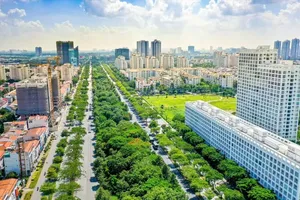
Following the integration of its development space, Ho Chi Minh City now enjoys a range of unique advantages. The synergy between its urban, financial, commercial, and service hub and its dynamic industrial base, together with its strengths in seaports, logistics, the marine economy, and tourism, has elevated the city's development to a new scale. However, broader development space and greater advantages will not automatically translate into stronger growth drivers unless they are matched by renewed thinking, more effective approaches, and stronger implementation capacity.
What must be candidly acknowledged today is that inertia in implementation persists. Sound policies are sometimes translated into action too slowly; enabling mechanisms have not always been fully utilized; and matters that fall within existing authority are, in some cases, still delayed pending additional approvals. Such shortcomings can undermine the effectiveness of governance, impose unnecessary costs in time and effort on both citizens and businesses, and ultimately slow the city's development.
For this reason, reforming the way work is carried out must begin with clearly defined accountability. Every task should have a designated person in charge, a clear timeline, well-defined deliverables, and measurable outcomes. Every level of government must assume full responsibility for matters within its jurisdiction, remaining accountable to both the people and the city's development.
The decisive factor remains the cadre contingent. Ho Chi Minh City must build a team of officials with firm political resolve, a development-oriented mindset, strong implementation capacity, and the courage to act in the public interest. Efforts to prevent and combat corruption, wastefulness, and other negative practices must go hand in hand with mechanisms that protect proactive, innovative, and responsible officials who dare to take initiative and assume responsibility, provided their actions are consistent with Party guidelines and the law.
Ultimately, improvements in governance should be measured by the quality of public services and tangible outcomes, because every mechanism, policy, project, and development initiative must, in the end, contribute to improving the quality of life of the people.
Ho Chi Minh City possesses all the essential conditions to embark on a new stage of development, such as its status as a special municipality, an expanded development space, a longstanding tradition of dynamism, abundant human resources, strong support from the central government, and the confidence of both the people and the business community. The remaining challenge lies in the city's implementation capacity, ensuring that sound policies are translated into action without delay, that shared responsibility does not obscure individual accountability, and that tremendous potential is not held back by outdated ways of thinking and working.
"Our country is entering a new era of development, one that demands higher standards, entails greater responsibilities, offers broader opportunities, and presents more formidable challenges. Ho Chi Minh City must move in step with this historic momentum; more importantly, it must serve as a driving force behind it. The city must continue to lead the way, blaze new trails, pioneer reforms, make breakthroughs, and inspire wider progress."
The directives of Party General Secretary and State President To Lam constitute not only a vision but also a clear call to action for Ho Chi Minh City in the years ahead: to act with greater resolve in implementation, transform potential into tangible results, convert policy mechanisms into powerful drivers of growth, and turn its aspiration for development into concrete achievements worthy of the sacred name that the city is honored to bear.