On September 2, 1945, the Democratic Republic of Vietnam was established. Just one day later, President Ho Chi Minh, on behalf of the Government, announced six urgent directives to the nation, the sixth of which affirmed the freedom of religion and the unity between religious communities. This principle has remained a consistent tenet throughout Vietnam’s revolutionary journey, attracting broad support from citizens of various religious communities.
Freedom of belief, unity among religions
In the early government, many senior officials were people of faith. Advisors included Bishops Le Huu Tu and Ho Ngoc Can; the Minister of Health was the Catholic doctor Vu Dinh Tung; the Minister of Economy was Catholic Master Nguyen Manh Ha; the Minister for War Veterans was Catholic intellectual Ngo Tu Ha; and the Vice Chairman of the first-term Vietnam Fatherland Front Committee was Cao Trieu Phat, a Cao Dai dignitary.
Notably, despite the ideological debates between materialism and idealism in the mid-20th century, President Ho Chi Minh also attracted Priest Pham Ba Truc—who held three doctoral degrees from Rome—to serve as Standing Deputy Head of the first National Assembly (equivalent to today’s Standing Deputy Chairperson of the National Assembly).
Attracting religious leaders to participate in the revolutionary movement was not only a long-term strategic objective but also a genuine commitment of President Ho Chi Minh and the Communist Party of Vietnam. Reading Ho Chi Minh’s letters to Bishop Le Huu Tu, the eulogy for Father Pham Ba Truc, or the condolence letter to the son of Dr. Vu Dinh Tung, who sacrificed his life defending the capital, reveals the depth of his compassion and how close and caring he was as a friend and comrade.
After the country entered the Doi Moi period, policies on belief and religion were also significantly updated. Resolution 24-NQ/TU in 1990 stated that religion is a long-standing issue. Belief and religion are the needs of a segment of the population. Religious ethics contain many values that are compatible with the task of building a new society.
Resolution 25-NQ/TU in 2003 reaffirmed this belief and that religion is a spiritual need of a segment of the population, which will continue to exist alongside the nation during the process of building socialism in the country. Followers of various religions are an integral part of the great national unity bloc.
By the time of the Politburo’s Directive 18 in 2018, religion was also recognized as a national resource. Clearly, the perspectives of President Ho Chi Minh and the Communist Party of Vietnam represent significant progress in the approach to matters of belief and religion, going beyond what classical Marxist-Leninist theorists had outlined. These views contribute to and enrich the theoretical corpus of Marxism-Leninism in this field.
Increasing number of religions officially recognized by the State
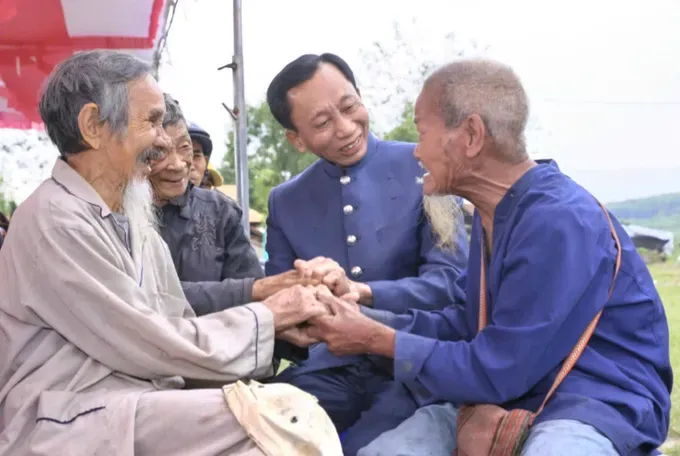
Recognizing that belief and religion are the spiritual needs of the people, President Ho Chi Minh and the Communist Party of Vietnam viewed ensuring the people’s happiness as their mission. As a result, an increasing number of religions have received official recognition.
While the Government recognized only six religions between 1945 and 1975, by 2025 it had officially recognized 43 organizations across 16 religions. Religious followers account for 28 percent of Vietnam’s population, including 61,000 dignitaries and 30,000 places of worship. Thousands of religious leaders and followers have also been sent abroad for advanced training, including doctoral and master’s degrees.
All religions are now able to host major international conferences in Vietnam. These include the Federation of Asian Bishops' Conference (FABC) marking 50 years of its foundation in 2023; the United Nations Day of Vesak Celebration held in 2008, 2014, 2019, and 2025 at various locations across the country; and the celebration of 100 years of Protestantism in Vietnam.
The Government has allocated hundreds of hectares of land for religious sites, such as La Vang Holy Land in Quang Tri, the second campus of the Major Seminary in Hanoi, and the offices of the Catholic Bishops' Conference of Vietnam in Hanoi, as well as land for Buddhist and Protestant facilities in Hanoi. Procedures for land-use certification and construction of religious facilities are handled quickly and conveniently.
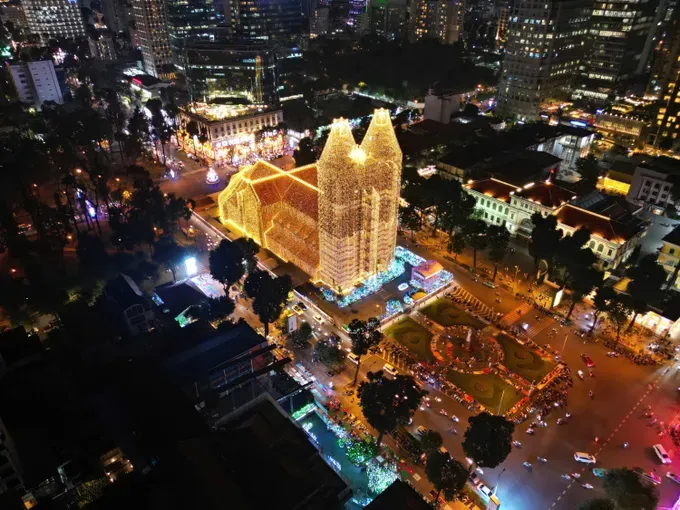
In the capital city of Hanoi, in 2023, the authorities approved the Catholic Diocese to carry the Eucharist to Hoan Kiem Lake, delighting the Catholic community. Many religious facilities are now impressive and spacious, such as Thai Binh Cathedral and its pastoral center—among the largest in Southeast Asia—and the Bai Dinh and Tam Chuc pagodas in Ninh Binh. The Vietnamese Government has also actively promoted diplomatic relations with the Vatican.
In 2024, Archbishop Marek Zalewski, the permanent Vatican representative in Vietnam, visited Hanoi to carry out his duties. Efforts are currently underway to facilitate a visit by Pope Leo XIV to Vietnam. As the late Pope Francis remarked in 2024, Vietnam is a country truly worth visiting, and he hoped to come. But if he cannot, his successor will.
Any foreign visitor witnessing religious life in Vietnam affirms that it is vibrant, with believers demonstrating deep faith. Yet, for reasons unclear, the U.S. Commission on International Religious Freedom continues to issue reports that misrepresent the religious situation in Vietnam. It is hoped that the Commission will come to Vietnam to observe firsthand and hear from the Vietnamese people, which would allow for more accurate and objective reporting.