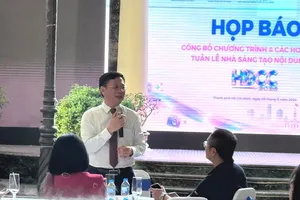
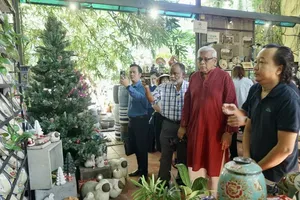
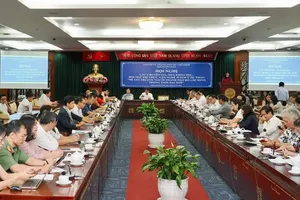
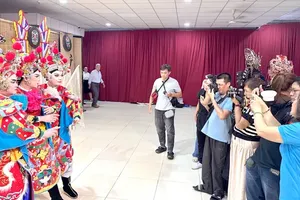
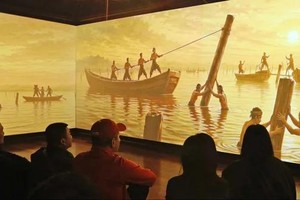
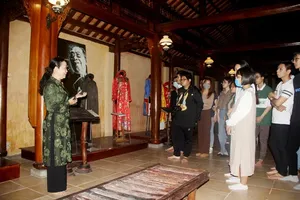
Journalists from SGGP Newspaper had an exchange with Director Tran The Thuan of the Ho Chi Minh City Department of Culture and Sports, raising questions about the city's new approaches to enable residents to enjoy and participate in cultural and sports activities right where they live, opening new opportunities to promote development.
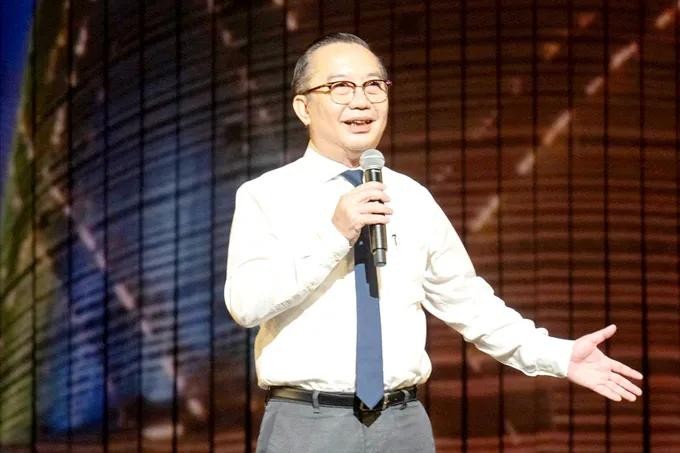
Director Tran The Thuan said that after 20 years, Ho Chi Minh City is honored to hold the role of the main host locality for the National Games. The games gather 36 delegations with approximately 16,000 officials, coaches, and athletes, competing in 48 sports. The city undertakes the opening ceremony, closing ceremony, and 44 out of 48 sports, holding a core role in coordinating and preparing facilities, expertise, logistics, and communications. The city is determined to organize the games solemnly, safely, professionally, efficiently, and hospitably.
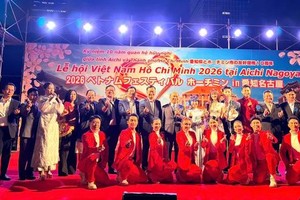
With the first Vietnam Cultural Day, Ho Chi Minh City considers this an important occasion to promote the identity and creativity of a major cultural center, linking heritage preservation with cultural industry development.
The city will roll out a wide-ranging program of cultural activities from early November through the end of December 2026 under Plan No. 556/KH-UBND, with the highlight being the Culture and Great Unity Week from November 18 to 24. The event is held in conjunction with the Great National Unity Day (November 18) and Vietnam Cultural Heritage Day (November 23).
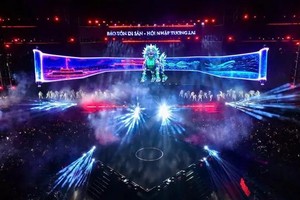
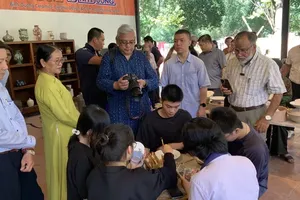
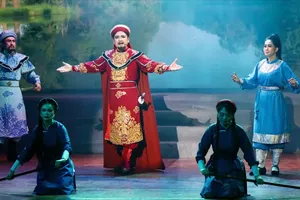
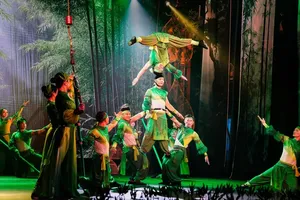
Activities will take place across the city, from central venues to local communities. The program features traditional art performances, fine arts and photography exhibitions, heritage education initiatives, the Con Dao Book Fair under the theme Con Dao Legend, a cultural industries showcase on Nguyen Hue Walking Street, and 3D mapping performances.
The city will also introduce free and discounted admission programs at public cultural institutions to encourage greater public participation. Through these initiatives, residents are expected not only to engage as audiences but also to play an active role in preserving, creating, and promoting cultural values within the community.
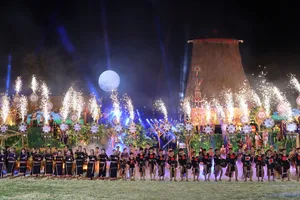
Culture is the spiritual foundation, while sports represent the strength of willpower. That spirit will be demonstrated at the opening ceremony of the National Games on November 21 at Saigon Riverfront Park in An Khanh Ward, with the message "Converging Identity - Spreading Sports Spirit - Aspiration to Reach Far."
The city is currently implementing seven solution groups, focusing on strengthening management, market development, and regional linkages. Director Tran The Thuan disclosed that the sector is building a growth scenario for cultural industries through 2030, striving to contribute 7.2 percent to the city's GRDP. At the same time, the city is building a set of statistical indicators to measure the economic value of this sector.
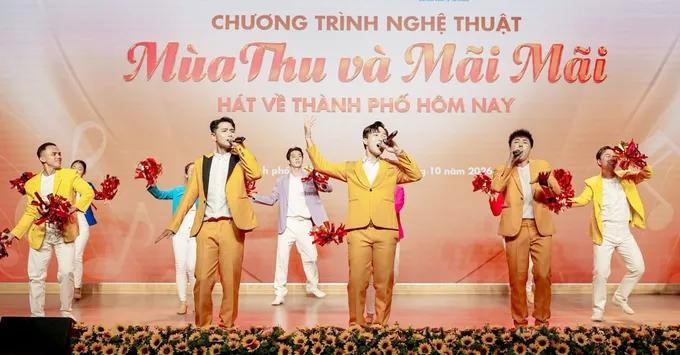
The city is also researching the establishment of a cultural industry development center to act as a focal point connecting the ecosystem. Cultural industry clusters and zones will be planned toward regional linkage: the central area retains the role of a creative nucleus, combining the creative industry advantages of the Binh Duong area and the cultural tourism and marine tourism of the Ba Ria - Vung Tau area. In that ecosystem, the State creates, enterprises invest, and artists are the creative subjects.
Joining the UNESCO Creative Cities Network helps Ho Chi Minh City bring cinematic works to international audiences, connect filmmakers, and develop domestic audiences. The Urban Development Law grants the city additional authority to mobilize social resources, develop institutions, and support cultural and sports activities. These two opportunities meet at a very specific task: opening more places for residents to participate and securing resources to maintain activities at those locations.
First is opening more screening, performance, and community activity points from existing locations.
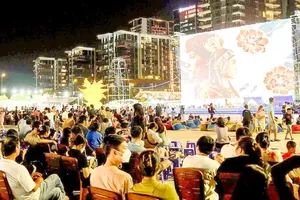
At the Ho Chi Minh City International Film Festival in 2024, Saigon Riverfront Park was used for outdoor film screenings for children free of charge or at low cost. This approach can be replicated, bringing mobile screenings to residential areas that currently have limited conditions to visit theaters. The Saigon Riverfront Cinema Park and the literary and artistic creative space at No. 25 Le Quy Don (Vo Thi Sau Ward) are also having operational plans prepared.
At the grass-roots level, the resolution on public-private partnership approved by the Ho Chi Minh City People's Council partially concretizes Article 26 of the Urban Development Law. The resolution provides financial support to non-public cultural and sports institutions in communes and Con Dao Special Zone to organize community service activities. Funding is tied to results; for instance, a sports facility can open free or discounted training sessions for residents according to an approved plan; non-public libraries are also supported with materials, equipment, and connections to share digital resources.
Second is creating playgrounds for students and creating opportunities to bring works to the public. In the 2026-2027 school year, the city will pilot introducing performing arts and cinema into high schools, accompanied by support policies for school cinema clubs. For practitioners, the city supports animated film, documentary, and feature film projects that meet criteria set by the city. The city also supports performance slots for newly staged programs and plays such as hat boi, cai luong, puppetry, or plays on historical, traditional, and children's themes.
Third is mobilizing social resources to develop talent. The resolution supports organizations and individuals training athletes using non-budgetary resources, tied to specific results: athletes achieving accomplishments in tournaments and meeting qualifications will be summoned to the city sports team, signing contracts with commitments to compete for the city for a minimum of two years. In the field of cinema, having Ho Chi Minh City films selected for screening at the Busan Inter-City Film Festival has opened an additional channel to international audiences. That serves as a premise to train young filmmakers and cooperate in production.
Reorganization is not merely an addition of area, population, or facilities. This is a historic opportunity to form a unified, dynamic, and identity-rich cultural and sports space.
Accordingly, resources will be connected under the "sports-culture triangle" model. In this model, the core area (former Ho Chi Minh City) maintains the role of an executive, high-tech application, high-performance training, and major event organization center; the former Binh Duong area leverages the strengths of young workforce, facilities, and athlete forces in industrial zones, linked with sports equipment manufacturing; the former Ba Ria - Vung Tau area exploits marine advantages and water sports, linked with sports tourism and the night economy.
Besides, the grass-roots institution system is streamlined and restructured, with cultural and sports service supply centers at the commune, ward, and special zone levels. Priority investment will be given to areas far from the center, preventing vacant zones in cultural and sports enjoyment among residents.
In line with the spirit that 'culture leads the way while sports advances alongside to drive development', the cultural and sports sector is committed to transforming these new resources into a powerful catalyst for growth. The sector aims to leverage public-private partnerships to help build Ho Chi Minh City into a modern, creative, humane, and globally integrated center for culture and sports.
The Ho Chi Minh City People’s Council has approved a resolution on initiatives aimed at encouraging greater private-sector participation in culture and sports, with a range of financial support measures introduced for eligible organizations and projects.
Under the resolution, non-public cultural and sports institutions operating in communes and Con Dao Special Zone will receive annual support of VND 100 million (US$3,900) over a three-year period. School-based film clubs will be granted VND10 million upon establishment and an additional VND24 million per year if they satisfy the prescribed criteria.
The policy also provides funding for film production projects, including animated, documentary, and feature films. Support ranges from VND60 million to VND100 million for short films and from VND200 million to VND400 million for feature-length productions.
In addition, newly staged artistic programs and performances may qualify for financial assistance on a per-show basis, subject to meeting the resolution’s eligibility requirements.