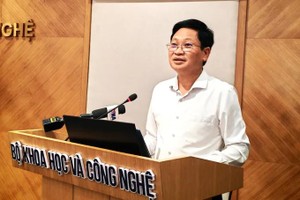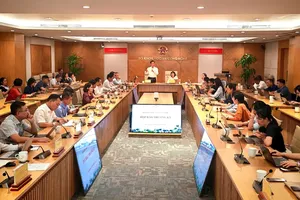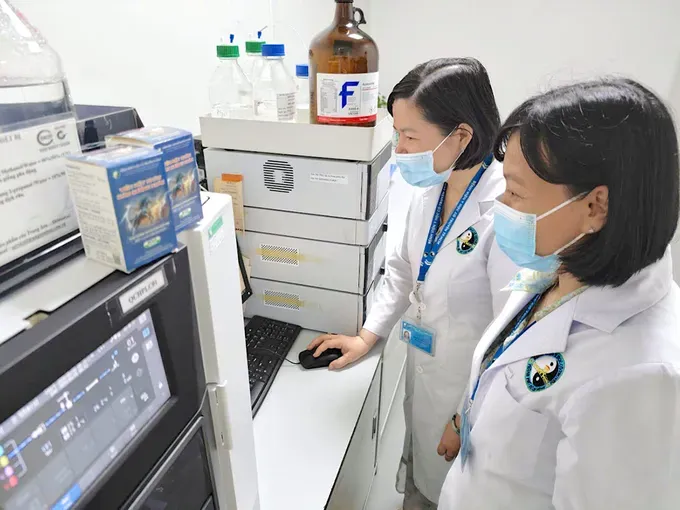
Recently, the Advisory Council for Evaluating Science – Technology Tasks under the HCMC Department of Science and Technology reviewed 11 research initiatives, six of which were reportedly assessed as having extraordinarily high commercialization potential. One of the standout proposals is a study aimed at modernizing a traditional remedy consisting of Hedyotis diffusa and Scutellaria barbata for hepatoprotective effects, conducted by Dr Duong Hong To Quyen and her associates at the HCMC Traditional Medicine Hospital.
For Dr Duong Hong To Quyen, adapting to modern needs required a structural shift. “Historically, this folk remedy was primarily utilized as a decoction made from Hedyotis diffusa and Scutellaria barbata at a 2:1 ratio,” she explained, detailing the team’s transition to a hard capsule format to better suit market demands and user convenience.
This particular dosage form is highly compatible with production from herbal extracts, and as a rule of thumb, it significantly masks the medicine’s unpleasant odor and taste while facilitating effortless use, storage, and transportation. Testing outcomes from interdisciplinary competent authorities have also confirmed that the final hard capsule product meets stringent quality requirements, successfully satisfying the pharmacological criteria necessary for widespread utilization in medical examinations and treatments.
Another highly regarded endeavor is the research on “Developing skin rejuvenation cosmetics from recombinant proteins FGF-2 and EGF,” carried out by a research group from the University of Science (Vietnam National University – HCM). Currently, several cosmetic enterprises have reportedly expressed an interest in collaborating on technology transfer to swiftly get the ball rolling on launching the product.
Assoc Prof Dr Dang Thi Phuong Thao, Head of the Biotechnology Department and the project’s principal investigator, noted that her team formulated this skin rejuvenation blend, which functions to support the regeneration of the skin’s structural matrix. According to the study’s findings, the product effectively diminishes brown spots and wrinkles, enhances elasticity, boosts moisture levels, and mitigates skin damage induced by ultraviolet radiation.
The advisory council also highly praised the remaining four projects for their commercial viability:
- Developing nano-drugs for anti-rejection and prostate fibroids treatment by the University of Medicine and Pharmacy at HCMC;
- Formulating tablets from Epimedium and Eurycoma longifolia extracts to support male physiological enhancement by the HCMC Traditional Medicine Hospital;
- Creating an attenuated vaccine to prevent Bacillary Necrosis of Pangasius on a commercial scale by the Biotechnology Center of the Saigon Hi-Tech Park;
- Formulating bilayer tablets to treat hypertension by the UMP Science and Technology Center.
For Director Lam Dinh Thang of the HCMC Department of Science and Technology, to effectively incentivize the commercialization of scientific research and intellectual property, HCMC is focusing on solutions like perfecting the valuation mechanism for technological assets, flexibly assigning exploitation rights to organizations, supporting technology refinement, and simultaneously building a robust framework to share risks in innovation.
Most notably, the city doesn’t factor previously invested state budget capital into the enterprise’s reciprocal matching rate, creating favorable conditions for businesses to boldly participate in technological development and product commercialization.
Chairman Nguyen Minh Duc of the Advisory Council for Evaluating Science and Technology Tasks indicated that these projects harbor immense commercialization potential, robustly addressing market demands with high capacity for practical application. Nevertheless, the overarching process of bringing research findings to the market remains riddled with hurdles. For instance, formulating tablets from Epimedium is lacking a suitable mechanism for transferring intellectual property rights.
To perfect the financial instruments supporting commercialization of scientific projects, Head Nguyen Thi Thu Suong of the Science and Technology Development Division (HCMC Department of Science and Technology) elaborated on the upcoming steps.
Once the advisory council delivers its evaluation outcomes, she noted that the department will push forward to establish a Content Appraisal Council and a Financial Council to examine the appropriate reciprocal funding levels for each respective project.
Over the subsequent one to two months, the HCMC Department of Science and Technology will officially approve and disburse implementation funds for the selected projects. This vital financial support, drawn from the state budget, will be disbursed across three stages, comprising 50 percent during the initial phase, 40 percent in the subsequent phase, and the remaining 10 percent strictly after the project has successfully accomplished its commercialization targets.