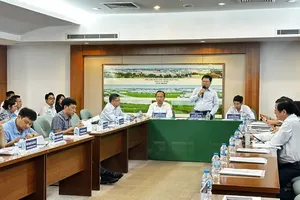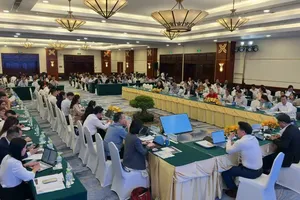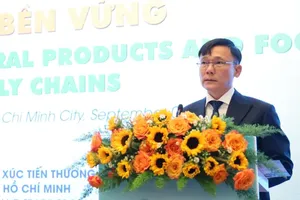
The seminar placed the issue of green development within the broader regional context of the Central region, the area facing mounting pressures from climate change and rapid urbanization.
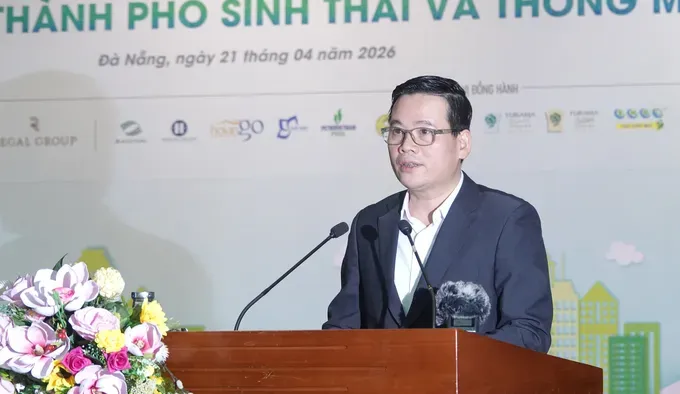
In this context, the green transition is no longer viewed as an option but an inevitable imperative. According to Mr. Nguyen Hong Quang, Deputy Director General of the Department of Environment under the Ministry of Agriculture and Environment, in line with global trends, Vietnamese cities are under increasing pressure to transform their growth models. In this process, environmental quality, infrastructure, and technology are emerging as decisive factors shaping both competitiveness and quality of life.
However, the current pace of urbanization continues to give rise to inherent tensions: while serving as a key driver of economic growth, innovation, and productivity gains, it simultaneously intensifies pressures on natural resources, the environment, and urban resilience. Therefore, advancing a green economy, a circular economy, and low-carbon development in urban areas has been identified as a central pathway to balancing growth objectives with environmental protection.
Nevertheless, to ensure that the green transition delivers substantive outcomes, it is essential to further refine the legal framework and establish clear, measurable green criteria. In addition, there is a need to develop financial instruments such as green credit and green bonds, alongside strengthening communication efforts to foster a broad-based shift in public awareness and societal behavior.
Da Nang is regarded as a core locality spearheading the green transition in the Central region. According to Vice Chairman of the municipal People’s Committee, Tran Nam Hung, the city remains steadfast in its choice of a green growth model, viewing it as a foundation for enhancing quality of life and competitiveness.
This orientation is not new, as Da Nang has pursued it early on through the “Building Da Nang – an Environmental City” initiative launched in 2008. However, amid urban expansion and evolving development requirements, the current approach to green transition has become more comprehensive, closely aligned with long-term planning and sustainable development strategies.
The city has integrated green objectives into its master plan for the 2021–2030 period, with a vision to 2050, while proactively adjusting its programs to ensure consistency with the legal framework and practical conditions.
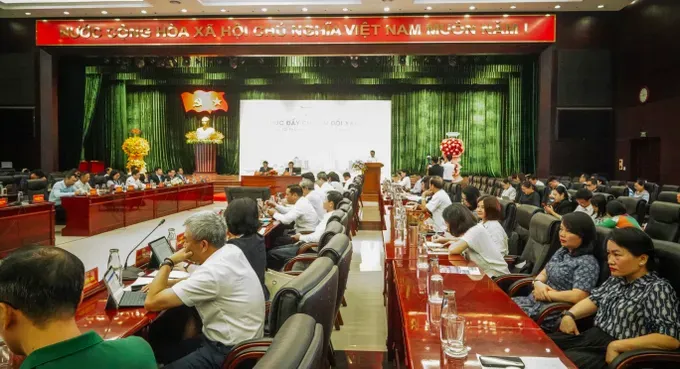
According to Dr. Architect Pham Anh Tuan, Chairman of the Vietnam Association of Landscape Architects, landscape infrastructure serves as a key lever for sustainable urban development. Rather than relying predominantly on “hard” infrastructure, cities should prioritize “soft” solutions such as restoring natural ecosystems, enhancing water permeability, and improving environmental regulation capacity.
International practices have demonstrated a range of effective models aligned with this approach. China has advanced the concept of “sponge cities” to enhance water adaptability; the Netherlands has developed flexible living spaces tailored to hydrological conditions, while Japan integrates ecological elements into technical infrastructure systems. A common feature of these models is their long-term implementation, requiring persistence and policy consistency across multiple phases.
In the context of the Central region, particularly Da Nang, recent incidents of localized flooding have exposed limitations in planning and infrastructure approaches. This reality underscores the need to formulate ecological urban development scenarios, with a focus on riverfront spaces along the Han River, strengthening connectivity across mountain–river–sea ecosystems, and promoting the use of environmentally friendly materials with strong water absorption and retention capacity.