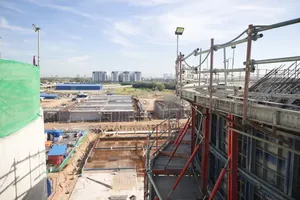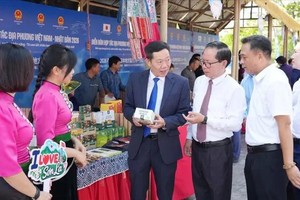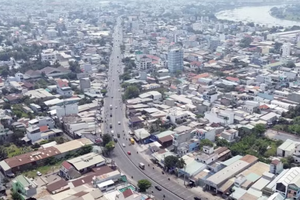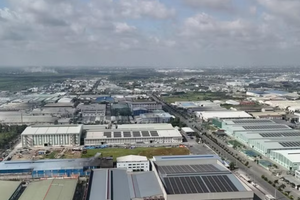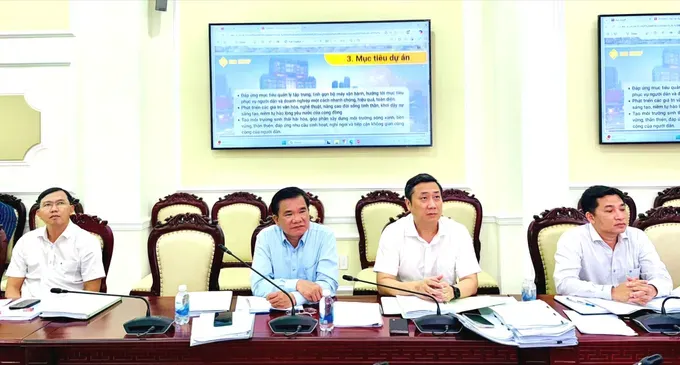
The survey results are expected to be submitted at the second session of the municipal People’s Council.
At the survey session, Deputy Director of the Ho Chi Minh City Department of Finance, Truong Tan Vu, stated that the current system of administrative headquarters remains scattered, lacks connectivity, and has yet to meet the operational requirements of a special urban center with the largest population scale and economic size in the country. This situation has adversely affected the efficiency of the state administrative apparatus while increasing time and transaction costs for both citizens and businesses.
Meanwhile, the requirements for administrative reform, digital transformation, and the development of a modern urban government are setting entirely new standards for workspace, technical infrastructure, and connectivity. The establishment of a centralized and integrated administrative center has therefore become an inevitable necessity to enhance governance effectiveness and efficiency, as well as to improve the quality of public service delivery.
In addition, the current urban structure lacks a large-scale public space of symbolic significance commensurate with the city’s stature. A national central city aspiring to regional and international prominence cannot be without a central square. Therefore, the investment in the construction of a central square is both essential and justified.
Head of the Economic and Budget Committee of the Ho Chi Minh City People’s Council, Nguyen Cong Danh, stated that the Central Square and the Ho Chi Minh City Administrative Center represent a symbol of the city’s development vision. Accordingly, the Committee has, in principle, reached consensus with the proposal of the Ho Chi Minh City People’s Committee to implement the project. However, it is essential to clearly define the scale of utilization of the administrative center, including the number of agencies, units, and personnel to be accommodated, in order to accurately calculate floor space and ensure stable demand while avoiding waste.
The traffic organization plan must be studied in a comprehensive and synchronized manner to meet both domestic and external operational requirements.
The total investment capital must be determined with precision, ensuring reasonable cost structures. Regarding the land fund used for BT (Build-Transfer) contract payments, it is necessary to clearly identify locations, areas, and estimated values, while strictly adhering to the principle of value equivalence and establishing mechanisms to address price fluctuations, thereby preventing any loss of state assets.