On January 26, the HCMC Export Processing and Industrial Zones Authority (HEPZA) submitted a proposal to the HCMC People’s Committee regarding the approval of a plan to implement Resolution No.89/2025/HDND (dated December 26, 2025) of the municipal People’s Council.
This resolution regulates the order and procedures for the establishment, expansion, and adjustment of the boundaries of the HCMC FTZ. Accordingly, HEPZA proposed that the decision contents include regulations on issuing implementation plans and appendices, enforcement validity, and organization of implementation.
Deputy Head Tran Viet Ha of HEPZA added that this move aims to accelerate progress to soon establish the Cai Mep Ha FTZ as a pioneering pilot model with superior institutions and an international-standard free trade and investment environment. The FTZ is viewed as a new growth driver, creating a foundation to develop HCMC into a marine economic hub in Southeast Asia and fostering rapid, sustainable, and integrated development for the Southeast region and the whole country.
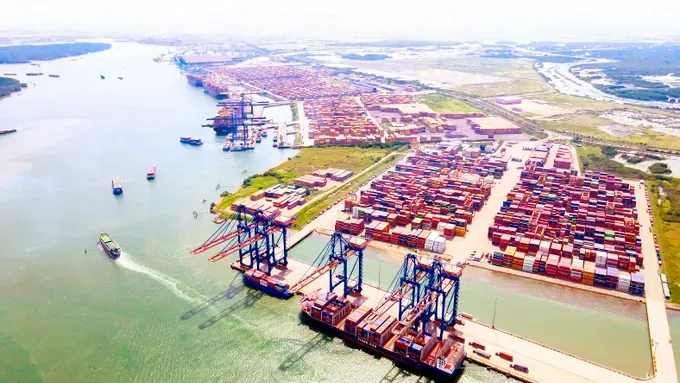
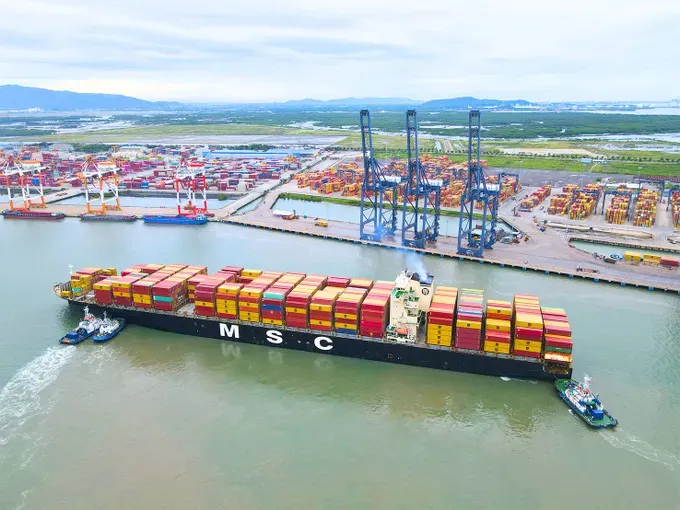
The FTZ is linked to the Cai Mep Ha seaport area, taking the digital economy, green economy, and circular economy as its focus and development momentum. As a green logistics center, the international cargo transshipment port plays a crucial role in the global supply chain through a close connection between the Cai Mep – Thi Vai deep-water port cluster and Long Thanh International Airport.
Notably, at a recent Business Investment Forum for the Southern Key Economic Region, Vice Chairman Nguyen Hai Minh of the European Chamber of Commerce in Vietnam (EuroCham) shared that European businesses are particularly interested in the FTZ. Since the signing of the EU-Vietnam Free Trade Agreement, investors have viewed Vietnam as a logistics hub for transshipment and distribution of goods to Southeast Asian countries.
However, at that time, there were many obstacles related to the legal framework for foreign enterprises, and the concept of the FTZ was unclear. Now that the legal framework for the FTZ has been formed, European businesses in Vietnam expect authorities to soon finalize lists of “permitted” and “prohibited” activities and specify clearer incentives.
Discussing breakthrough solutions for the HCMC FTZ to compete and attract foreign investors, economic expert Dr Nguyen Tri Hieu suggested that laws within the HCMC FTZ should be compatible with international practices while conditions regarding tax, customs, and currency circulation need to be open.
Infrastructure and transport connections between the Cai Mep Ha FTZ and airports, as well as connections to financial, commercial, and service centers, must also be convenient by both road and rail for the FTZ to develop.
According to Dr Huynh Thanh Dien from Nguyen Tat Thanh University, in the occurrence of trade wars and tariff disputes between nations, Vietnam has emerged as a preferred destination. Many multinational corporations may choose HCMC as a location for high-value production segments and cargo transshipment.
The formation of an FTZ with tax reduction incentives and the development of supporting services, especially with good infrastructure connections between HCMC and neighboring provinces, will increase investment attraction from foreign investors.
The development of the FTZ is currently placed in the context of combination with the VIFC-HCMC, where one side is viewed as a “commodity market” and the other as a “capital market.” Explaining the relationship between the HCMC FTZ and VIFC-HCMC further, Vice Chairman of the VIFC-HCMC Executive Agency Assoc Prof Dr Nguyen Huu Huan analyzed a current paradox.
While some port clusters like Cai Mep – Thi Vai have cargo volumes ranking among the top in the world, about 70-80 percent of financial transactions for this port are carried out in Singapore. The reason is that capital flow in Singapore is freer and more open than Vietnam’s regulations. Therefore, when the Vietnam International Financial Center is established, our free capital flow could become similar to Singapore’s.
Promoting linkages between the HCMC FTZ and VIFC-HCMC at this moment will attract massive financial transactions from Vietnamese seaports, bringing significant benefits.
There is currently a proposal to manage currency circulation in the FTZ according to VIFC-HCMC regulations, as the center will play a strategic role in finance and transactions within the FTZ. This connection will help goods flow faster and more efficiently, cut costs for businesses, and create a new growth driver for the economy.
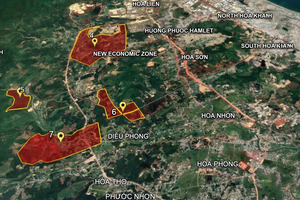
The Cai Mep Ha FTZ covers a scale of 3,808 hectares. Associated with the Cai Mep Ha seaport area in a modern direction, the FTZ will have three functional layers creating an ecosystem including:
- transportation hubs (seaports, inland waterway ports, railway stations);
- logistics warehousing;
- industrial-urban-services areas.