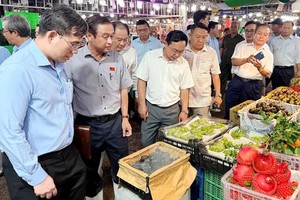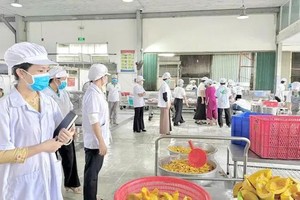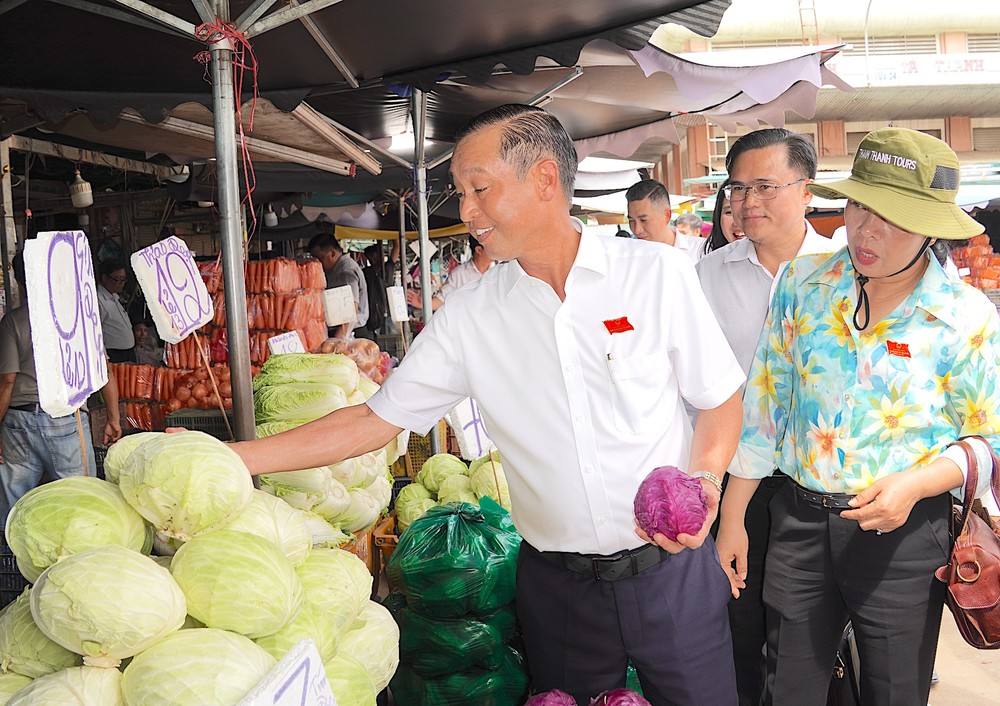
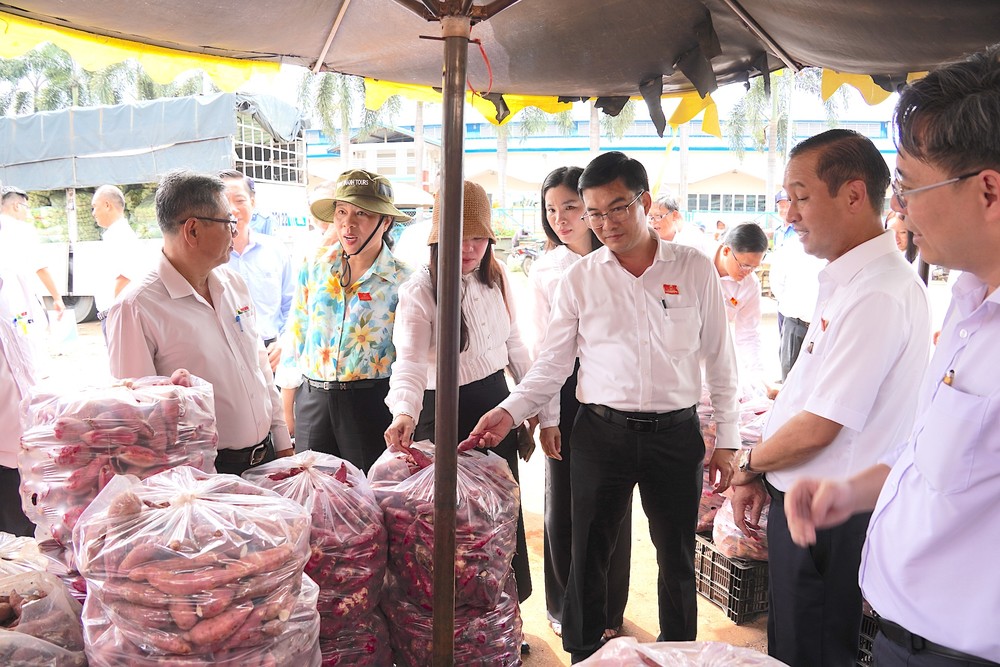
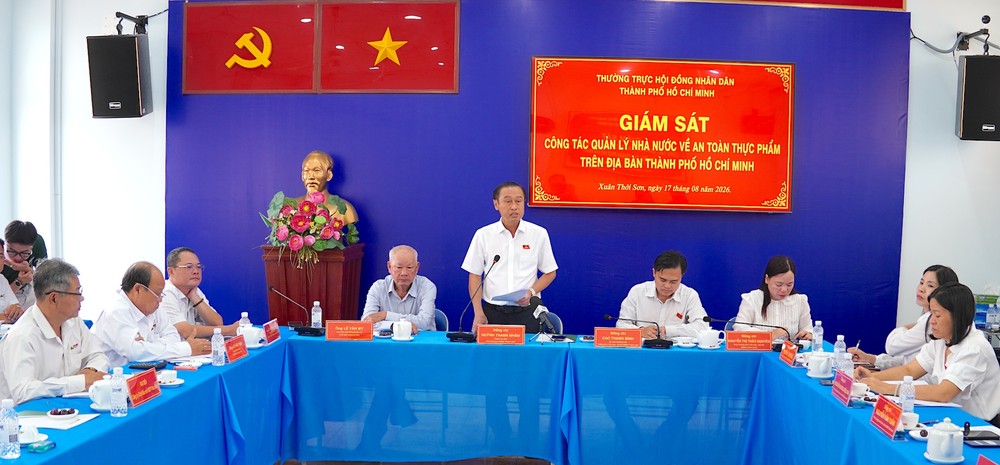
A Ho Chi Minh City People's Council delegation led by Deputy Chairman Huynh Thanh Nhan inspected food safety management at Hoc Mon Agricultural and Food Wholesale Market, focusing on oversight of informal trading around the facility, on August 17.
The delegation reviewed the market's food safety controls and coordination with local authorities.
Mr. Le Van Tien, Director of Hoc Mon Agricultural and Food Wholesale Market Management and Trading Co., Ltd., said the market currently has 350 permanent stalls, including 50 selling pork and 300 dealing in vegetables, fruit, and other produce. The market operates around the clock.
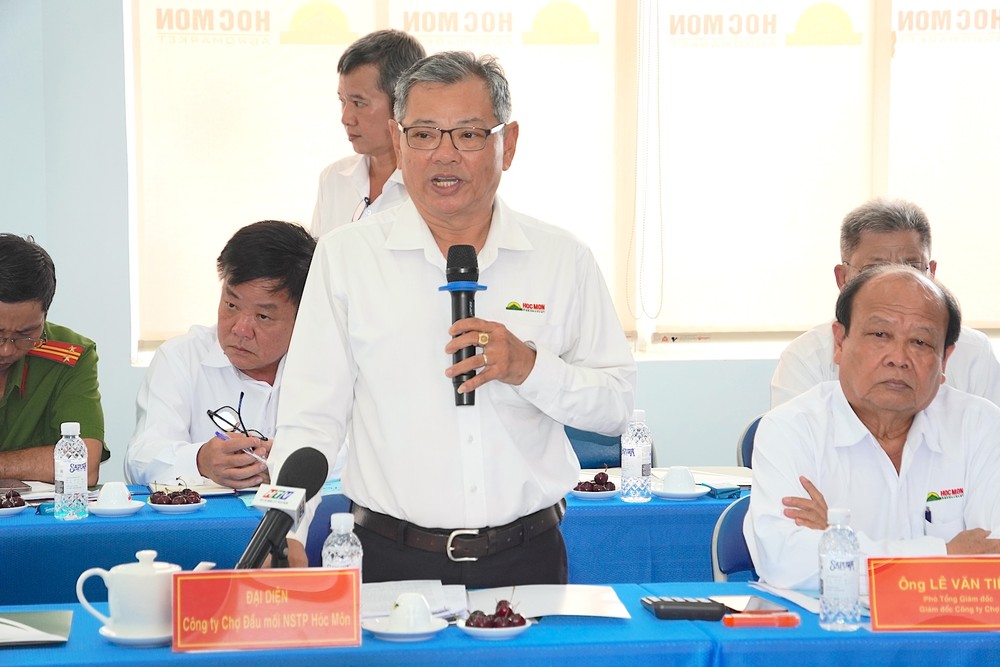
The facility handles an average of 2,020 tons of goods every 24 hours. Pork accounts for about 360 tons per night, equivalent to roughly 4,800-5,000 pigs. More than 1,360 tons of vegetables and other produce arrive daily, along with around 30 tons of fruit.
About 10,000 vehicle movements are recorded each day as trucks deliver and collect goods.
Hundreds of agricultural and food samples were tested during the first half of 2026, with no food safety violations detected, Mr. Le Van Tien said.
However, authorities remain concerned about food businesses operating outside the market.
Nearly 300 traders sell agricultural products and food around the market's perimeter around the clock, raising questions about who is responsible for supervising them and whether the food sold to consumers meets safety standards.
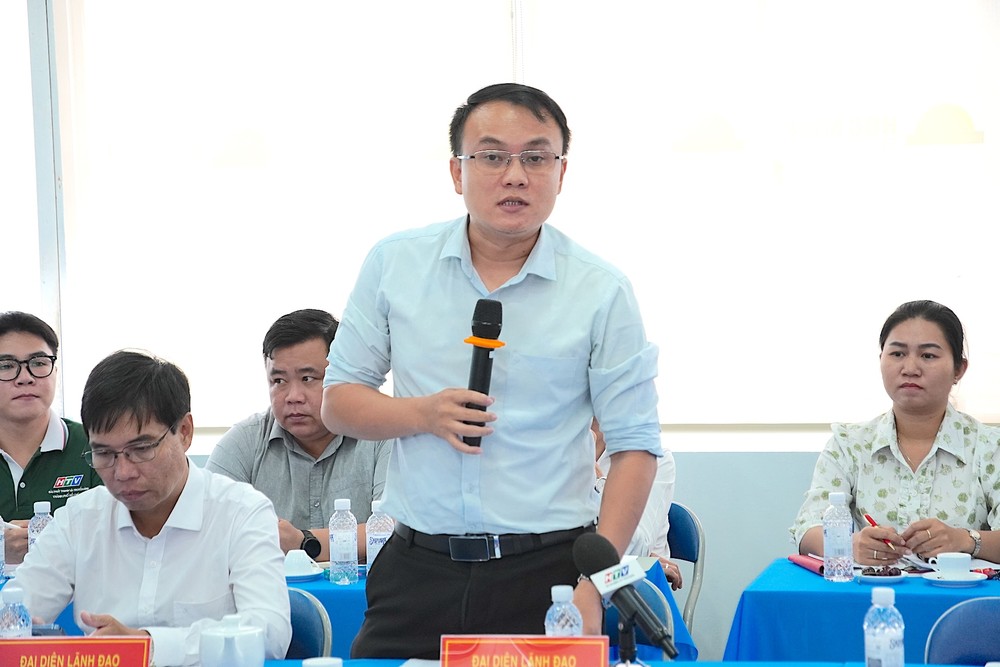
"This is a pressing issue for the locality," said Mr. Tran Quoc Tuan, Deputy Chairman of Xuan Thoi Son Commune's People's Committee.
A review found 147 permanent food-selling locations, only 50 of which have business licenses, along with more than 100 mobile vendors.
Local authorities are reviewing the remaining traders and urging them to sign commitments to comply with food safety regulations. Those who fail to comply within 15 days will face administrative measures, Mr. Tran Quoc Tuan said.
Informal markets remain a major concern
Concluding the inspection, Mr. Huynh Thanh Nhan praised the efforts of the Hoc Mon wholesale market, local authorities and relevant departments in strengthening food safety management.
Nevertheless, he said the city still faced significant challenges in regulating activities outside wholesale markets, particularly the proliferation of informal markets in surrounding areas.
Such unregulated trading not only creates food safety risks but can also affect public order. Meanwhile, grassroots authorities remain short of personnel and equipment, while rapid food testing and laboratory analysis can take considerable time.
Mr. Huynh Thanh Nhan called on city departments and local authorities to step up food safety oversight and instructed the wholesale market's management board to work closely with the city's Food Safety Department to strictly verify documentation and records accompanying goods entering the market.
The city should work toward ensuring that 100 percent of goods sold at the market have clear and traceable origins, he said.
Authorities should also increase both regular and surprise sampling of high-risk products that may contain chemical preservatives, including pickled bamboo shoots, shredded water spinach and seafood.
At the same time, local authorities must intensify efforts to clear unauthorized trading points and vendors encroaching on roads and sidewalks around the wholesale market.
Mr. Huynh Thanh Nhan also called for the immediate deployment of camera-based monitoring and social media channels through which residents can report violations, enabling authorities to respond more quickly.
He stressed that food safety communication must also be strengthened, particularly among traders and residents, to raise awareness of the direct impact of food safety on public health and people's long-term physical development.
"Every resident and every trader should not only comply proactively with food safety regulations but also serve as an advocate for food safety," Mr. Huynh Thanh Nhan said.