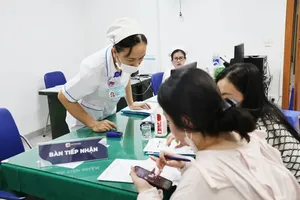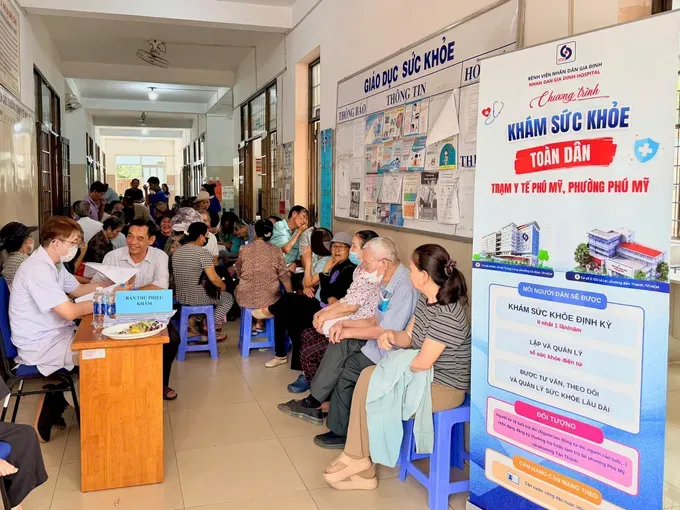
The stations will also be connected with specialized hospitals for more in-depth support when needed.
On September 23, the Ho Chi Minh City Department of Health announced that it had developed a plan to assign hospitals to support the 168 health stations, along with a scheme to rotate doctors to stations facing staffing shortages.
In the initial phase, the city’s health sector will deploy 81 experienced general practitioners and specialists on a rotational basis to 37 health stations currently short of medical staff. These efforts are a key component of the hospital-health station connectivity program, which aims to strengthen grassroots healthcare capacity and build public confidence in local health services.
Associate Professor and Doctor Tang Chi Thuong, Director of the Ho Chi Minh City Department of Health, said a key feature of the program is the establishment of a two-tier support mechanism, combining comprehensive area-based support with specialized assistance by field.
The first tier involves each health station being assigned a designated partner hospital. General hospitals and regional medical centers with appropriate capacity will be assigned specific responsibilities, ensuring that all 168 health stations have a general hospital providing ongoing support. The assigned hospitals will work with the health stations to assess their current situation, identify needs, and develop support plans.
Support will cover not only professional areas such as training, consultations, technology transfer, emergency care, management of non-communicable diseases and referrals, but also governance, quality management, patient safety, medicines, laboratory testing, infection control and digital transformation.
The second tier involves specialized hospitals providing in-depth support in their respective fields across the entire network of health stations. The aim is to establish continuous specialized-care networks extending from specialized hospitals to community-based care.
Specialized hospitals will provide training, consultation, and case discussions, as well as guidance on treatment, referrals, and the transfer of techniques appropriate for grassroots healthcare facilities.
Each health station will have a regular partner hospital while also being connected to the city’s network of specialized hospitals. The goal is not for hospitals to do the work on behalf of health stations but to help them gradually strengthen their own capacity and build public trust, Associate Professor and Doctor Tang Chi Thuong emphasized.
According to Associate Professor and Doctor Tang Chi Thuong, in the initial phase, hospitals will immediately deploy 81 doctors on a rotational basis to 37 health stations facing staffing difficulties, with the initial goal of ensuring that each station has at least five doctors directly involved in providing primary healthcare.
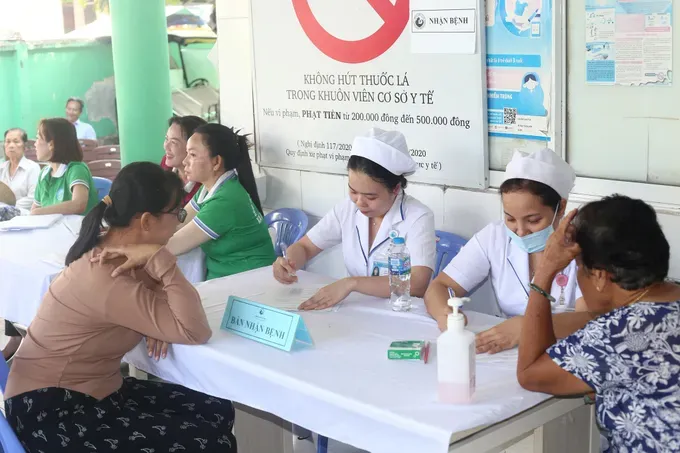
Hospitals have been asked to select doctors with practical experience and professional expertise suited to the needs of each health station. Rotating doctors will not only directly provide medical examinations and treatment, manage non-communicable diseases, and handle initial emergency cases, but will also be responsible for guiding and sharing experience with local medical staff and helping strengthen their capacity.
Therefore, the rotation of doctors is not simply about filling staffing gaps but also about bringing hospitals’ professional expertise to health stations. The rotating doctors will serve as a direct link between hospitals and health stations, facilitating ongoing professional exchanges, consultations, referrals, training, and support in handling cases beyond the stations’ capabilities.
In the next phase, based on assessments of each health station’s current situation and demand for doctors, the designated partner hospitals will proactively propose the appropriate number of doctors, specialties, and rotation periods. Additional staffing will be provided according to actual needs rather than through a uniform approach. Mobilizing all public hospitals presents the ultimate goal of strengthening health station capacity and building public trust.
The hospital-health station connectivity program reflects the responsibility of the city’s public hospitals toward grassroots healthcare. Each hospital assigned to provide support is not simply given a list of health stations to assist; it takes on the responsibility of working alongside them to identify challenges, develop solutions, and monitor outcomes together. Each hospital must appoint a leader and a professional focal point to take responsibility, proactively work with its assigned health stations, assess their current situation, identify priority issues, and develop specific support plans, Associate Professor and Doctor Tang Chi Thuong emphasized.
Additionally, Dr. Tang Chi Thuong noted that the program’s effectiveness should not be measured solely by the number of rotating doctors, training sessions, or consultations. More importantly, it should be assessed by what additional services and tasks the health stations are able to provide, how much the capacity of their local staff has improved, and whether more people have gained confidence in seeking care at health stations.