Tasks qualifying for immediate implementation
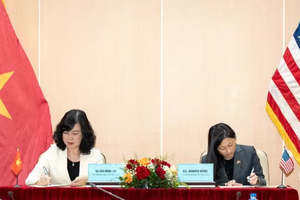
The 5th session of the 11th HCMC People’s Council passed 24 resolutions during the initial phase of materializing the Law on Urban Development, encompassing agriculture, environment, science, technology, planning, architecture, construction, healthcare, and education, out of 147 resolutions under the Council’s jurisdiction to review for the law’s rollout.
This marks the paramount step for the city to execute novel mechanisms and policies mandated by law. However, it’s widely acknowledged that not every policy can be rolled out the moment legislation takes effect.
For Hoang Tung, Head of the Urban Affairs Committee under the HCMC People's Council, provisions boasting relatively comprehensive criteria, conditions, jurisdictions, sequences, and procedures can be deployed from October 1. These include mechanisms executing independent compensation, support, and resettlement projects; policies supporting science and innovation; alongside handling measures for violating structures.
Regarding contents tied to HCMC’s master planning, transit-oriented urban development, and underground space exploitation, the rollout inherently demands time. Authorities need this buffer to tweak plans, pinpoint scopes, alongside preparing essential data and execution prerequisites.
Also according to Head Hoang Tung, for policies capable of immediate deployment, guidelines must be explicitly clear and unified, specifying the subjects to whom the policy applies, necessary conditions, required dossiers, submission venues, resolving agencies, plus timeframes. Policies directly impacting citizens desperately need coherent instructions, curbing the chaotic scenario where every locality interprets them differently.
Across individual sectors, it’s evident policy materialization must be executed phase by phase. In the realm of science and innovation, according to the HCMC Department of Science and Technology, scientific activities fundamentally undergo nine distinct stages from inception until operational results are brought to life.
In the immediate future, the department is laser-focusing on guiding universities, research institutes, sci-tech enterprises, plus innovative startups to tap into new policies. Concurrently, they’re setting up a specialized unit to process registration dossiers for controlled testing. Once a project surfaces, the department will coordinate advising the HCMC People’s Committee to greenlight the trial and issue tailor-made regulations.
Within the land sector, the HCMC Department of Agriculture and Environment has proposed mechanisms for independent compensation, support, and resettlement projects. This outlines execution criteria, conditions, sequences, and procedures aiming for sheer transparency, resource control, and safeguarding the legitimate rights of the populace.
Bringing policies to patients
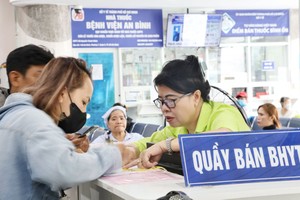
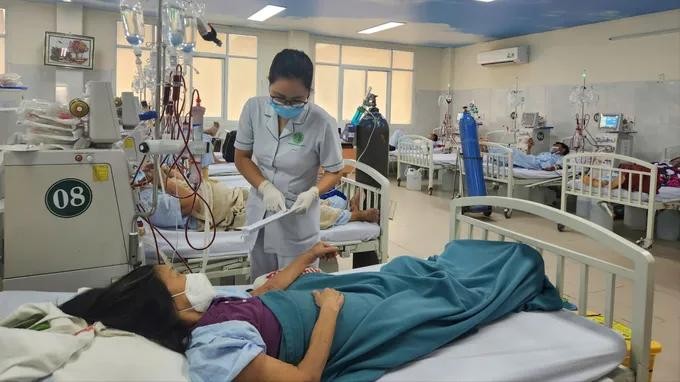
One of the policies materialized this time directly strikes a chord with disadvantaged citizens, heavily subsidizing health insurance co-payments for chronic kidney failure patients.
Starting October 1, the resolution stipulating support levels for stage-5 chronic kidney disease patients treated via routine hemodialysis or continuous ambulatory peritoneal dialysis (CAPD) takes full effect. It specifically targets children alongside severely disadvantaged individuals residing within HCMC.
According to the resolution, nearly 700 patients fall under this supportive umbrella, boasting a total annual budget of approximately VND10.5 billion (US$404,000).
Beneficiaries include:
- children aged 6 to under 16;
- individuals from households recently escaping poverty within 36 months of official recognition;
- and solitary seniors aged 60 and above, or those living with low-income relatives.
When battling stage-5 chronic kidney disease, these vulnerable demographics get their entire post-insurance co-payments fully subsidized by the city’s budget.
For the past year, 9-year-old Huynh Yen Nhi has routinely traveled with her father, Huynh Phuoc Buu, conquering a grueling 100-kilometer journey to Children’s Hospital 2 for blood filtration.
Even with health insurance covering 80 percent, Nhi’s family still shoulders expenses over VND2.5 million ($96) monthly just for co-payments. Her mother is also a dialysis patient undergoing treatment at Ba Ria General Hospital. With his wife and child battling terminal illnesses, Mr. Buu inadvertently became the sole breadwinner.
The agonizing ordeal has taken a massive toll. “I’m genuinely exhausted,” he confessed. “If my daughter gets to benefit from the city’s new policy, it’s incredibly fortunate. But I deeply hope every dialysis patient receives this municipal support, because sick people simply can’t handle heavy labor while their health perpetually deteriorates.”
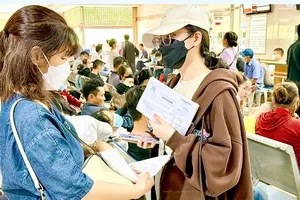
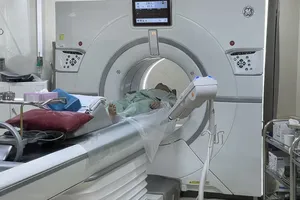
According to the HCMC Department of Health, end-stage chronic kidney failure patients must endure numerous monthly treatments just to stay alive, averaging 12 sessions for hemodialysis and 30 for peritoneal dialysis. This protracted treatment notoriously diminishes labor capacity, concurrently piling massive expenses onto families.
The department recorded cases where patients reduced or entirely interrupted treatments due to sheer financial incapacity, devastating the treatment process and vastly escalating severe complications.
As informed by Deputy Director Huynh Minh Chin of the HCMC Department of Health, the foundational groundwork is firmly set. The healthcare sector proactively prepped core components to roll out this policy, zeroing in on identifying beneficiaries and coordination mechanisms.
They strictly demanded medical facilities execute unified workflows, sparing patients from bureaucratic hurdles. The sector’s ultimate goal is that eligible patients can tap into it seamlessly from day one.
Head of the Hemodialysis Unit at Children’s Hospital 2 Hoang Ngoc Quy highly praised HCMC for pioneering this support policy. He deeply expects it will soon be replicated across other provinces, effectively helping pediatric patients and their struggling families alleviate the immense disadvantages and agony inflicted by the disease.
Promulgating resolutions to flesh out the Law on Urban Development will relentlessly continue. According to HCMC People’s Council Chairman Vo Van Minh, until year-end, the city anticipates hosting two additional council sessions to review and pass rollout resolutions for the urban development law.
Through practical deployment, issues that weren’t adequately forecasted during the policy-making phase will continuously be pinpointed; clever, highly effective methods will be summarized and scaled up; meanwhile, any glaringly unsuitable regulations will be thoroughly scrutinized, amended, and supplemented to achieve perfection.