On September 28, Vice Secretary of the Party Committee and Chairman of the Vietnam Fatherland Front Committee of Ho Chi Minh City, Nguyen Phuoc Loc, met with the municipal Department of Health to discuss plans to link hospitals with 168 commune-level health stations and rotate doctors to local health stations.
Ensuring health stations are not left to work alone

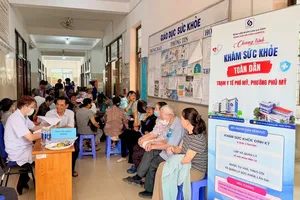
Reporting at the meeting, Assoc. Prof. Dr. Nguyen Anh Dung, Deputy Director of the Ho Chi Minh City Department of Health, said the program connecting hospitals with health stations aims to strengthen grassroots healthcare capacity, enable residents to receive healthcare services in their local areas and gradually build public confidence in health stations.
Ho Chi Minh City will assign hospitals to work alongside 168 commune-, ward- and special zone-level health stations. Each health station will have a designated partner hospital providing support in both clinical expertise and management, while also being connected to the city’s network of specialized hospitals for more advanced support when needed.
The program establishes two tiers of support for each health station. The first is a designated partner hospital that provides support in conducting assessments, developing plans, training, consultations, technical transfers, initial emergency care, non-communicable disease management, and referrals. It will also assist with administration, quality management, medicines, testing, infection control and digital transformation.
The second tier is a network of specialized hospitals providing field-specific support in training, consultation, case discussions, treatment guidance, referrals and appropriate technical transfers.
Each health station will have a hospital providing regular support while also being connected to the city’s network of specialized hospitals. The goal is not for hospitals to take over the work of health stations but to help them gradually strengthen their own capacity.
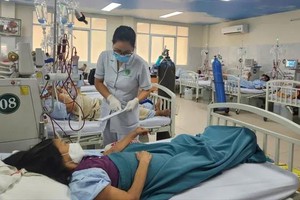
According to Assoc. Prof. Dr. Nguyen Anh Dung, alongside professional support, the Ho Chi Minh City health sector is deploying 81 experienced general practitioners and specialists on rotation to 37 health stations, facing staffing shortages. The doctors will provide medical examinations and treatment, manage non-communicable diseases and handle initial emergencies, while also providing guidance, sharing experience and strengthening the capacity of local healthcare staff. They will also serve as a bridge for ongoing consultations, referrals, training and professional support between hospitals and health stations.
The health sector expects regular collaboration between hospitals and health stations to create a continuous support network, strengthening grassroots healthcare, bringing services closer to residents and better meeting their primary healthcare needs. The ultimate goal is to enhance the capacity of health stations and strengthen public confidence, the Ho Chi Minh City health sector leader said.
Bringing healthcare closer to residents and improving quality
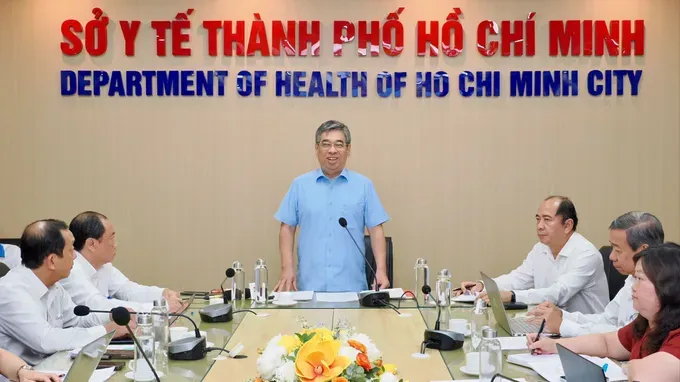
Speaking at the meeting, Vice Secretary of the Ho Chi Minh City Party Committee Nguyen Phuoc Loc commended the Department of Health for promptly completing draft plans to concretize the policies of the municipal Party Standing Committee, Resolution No. 72 on breakthrough measures to strengthen the protection, care and improvement of people's health, as well as resolutions adopted by the Ho Chi Minh City People’s Council on enhancing grassroots healthcare capacity.
According to the city’s leader, this is a major policy initiative that will enable Ho Chi Minh City to strengthen grassroots healthcare, preventive medicine and primary healthcare, while gradually consolidating family medicine. The ultimate goal is to ensure that residents have faster, closer, better, and more continuous access to healthcare services, without geographical distance or administrative boundaries becoming barriers to healthcare access.
Mr. Nguyen Phuoc Loc called on the health sector to clearly adopt the approach of making health stations the focal point, higher-level hospitals the foundation, and rotating healthcare workers the bridge between them. Support should be provided through an integrated and comprehensive system linking health stations with general and specialized hospitals across the city’s healthcare network.
The Department of Health should also establish comprehensive coordination mechanisms among commune-, ward-, and special zone-level people’s committees, partner hospitals and health stations, while clearly defining the relationships among hospitals, rotating healthcare workers and health stations. Procedures for pre-deployment training, higher-level professional guidance, clinical coordination, consultations, emergency care and referrals must also be clearly defined.
Rotating healthcare workers must serve as a bridge between health stations and higher-level hospitals. Only then can the model truly deliver results, he emphasized.
According to Vice Secretary of the Ho Chi Minh City Party Committee Nguyen Phuoc Loc, the deployment of healthcare workers to grassroots facilities must be organized systematically, with clear assignments, reception arrangements and performance assessments. The initiative is not merely a short-term solution to supplement staffing. More importantly, the rotation program should help build the long-term professional capacity of grassroots healthcare workers.
Regarding the functions of health stations, he noted that their operating model could no longer follow past practices but must place primary healthcare and disease prevention at the center. At the same time, health stations should develop family medicine, manage residents’ health throughout their life cycle, and make effective use of electronic health records following the citywide health checkup program.
The health sector should develop a detailed list of duties for rotating healthcare workers, clearly defining objectives, targets and performance evaluation criteria. Continuous training must be given particular attention, as healthcare requires regular knowledge updates, professional development and practical training.
He also stressed that hospital-health station partnerships must be flexible and tailored to conditions in each locality. Ho Chi Minh City could select several health stations as pilot sites where higher-level hospitals provide comprehensive support and organize professional exchanges and on-site training. Specialized hospitals could provide support in specific fields, such as obstetrics and gynecology, orthopaedics and trauma, musculoskeletal medicine and emergency trauma care.
Selecting pilot health stations should not be aimed solely at providing support while rotating healthcare workers are deployed there but at laying the foundation for local staff to gradually master their professional skills. The city could implement various investment models and assess their effectiveness in practice before scaling up suitable ones.
According to Mr. Nguyen Phuoc Loc, the city could consider selecting several health stations in remote and isolated areas for investment in priority outpatient clinics and short-stay treatment facilities. Where appropriate, higher-level hospitals could also bring certain specialized techniques to grassroots facilities to provide support. This would create opportunities for practical training, enabling grassroots healthcare workers to maintain and improve their professional skills.
Investment in health stations must be geared toward strengthening the professional capacity of their staff. Healthcare workers may have degrees and certificates, but without opportunities to practice, their professional skills cannot develop sufficiently. Therefore, higher-level hospitals should not only send staff to grassroots facilities but also create opportunities for local healthcare workers to learn, practice and improve their skills, the Vice Secretary of the Ho Chi Minh City Party Committee emphasized.
He also called on the health sector to urgently and resolutely finalize the plans so that training can be organized and rotating healthcare personnel can be deployed to grassroots facilities as soon as possible. Implementation must bring about substantive improvements in the capacity of all 168 health stations, so that after each phase of support, local staff become increasingly capable and confident. The ultimate goal is to build a grassroots healthcare system that is closer to residents, delivers better and more continuous care, enabling people in Ho Chi Minh City to receive healthcare at the nearest facility and connect conveniently with the city’s entire healthcare system.