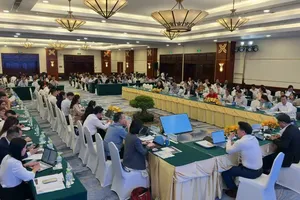
This morning, Saigon Business Magazine and the Vietnam Institute for Innovation jointly organized a webinar titled "New Growth Drivers for Ho Chi Minh City" in an online format. The program attracted the participation of many economic experts, policymakers, and business representatives.
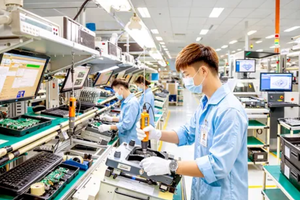
In the context of Ho Chi Minh City's transformation towards a growth model focused on depth, with productivity, quality, and innovation as the main drivers, the discussions focused on clarifying the sectors that can create high added value and significant spillover effects in the coming period.
Lecturer Do Thien Anh Tuan of the Fulbright School of Public Policy and Management told the program that Ho Chi Minh City’s challenge lies not in a lack of mechanisms or resolutions, but in implementation. He noted that under the same institutional framework, some localities achieve breakthroughs while others lag, with the difference rooted in leadership capacity and accountability. He stressed that the city must set clear priorities, carry them out thoroughly, and measure progress through concrete outcomes rather than issuing additional policies.
Le Phung Hao, Chairman of Global AAA Consulting, emphasized that a financial center can only fulfill its role when it addresses the actual capital needs, especially for small and medium-sized enterprises (SMEs). In the context of the shift towards high-tech industries, businesses need long-term capital, reasonable costs, and mechanisms to support restructuring. He proposed strengthening the sandbox for digital finance models, promoting mergers and acquisitions, and enhancing cooperation with international financial institutions.
Professor Vu Minh Khuong, from the Lee Kuan Yew School of Public Policy (National University of Singapore), argued that Ho Chi Minh City needs to design its financial center based on its inherent advantages, rather than simply copying international models. According to him, the capital needs for infrastructure, renewable energy, data centers, and supply chain upgrades are enormous, requiring flexible and effective capital mobilization mechanisms. Development must be based on substantive reforms and a long-term vision.
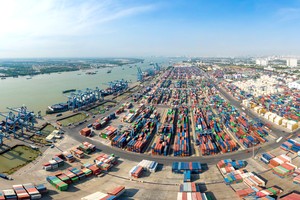
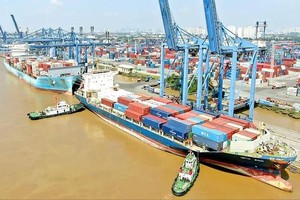
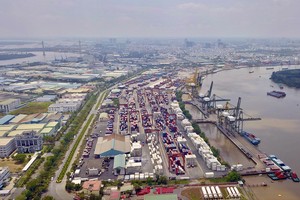
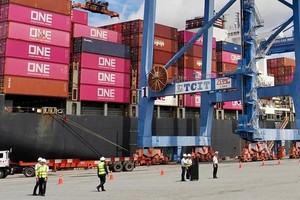
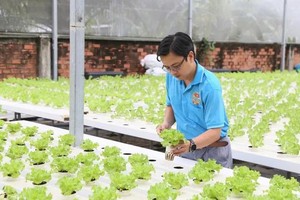
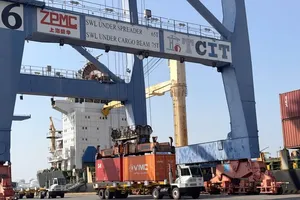
From a policy perspective, Ms. Truong Thiet Ha, Deputy Head of the Economic Development Research Department, Ho Chi Minh City Institute for Development Studies, stated that the city is promoting green growth, developing logistics and free trade zones, and piloting new business models. However, the decisive factor remains effective implementation.
Opinions at the webinar unanimously agreed that to maintain its leading role, Ho Chi Minh City needs to focus resources on high value-added industries, improve implementation capacity, and promote the proactive role of businesses in the growth model transformation process.