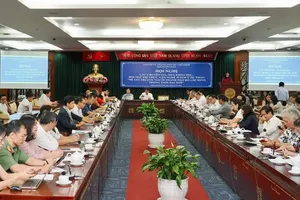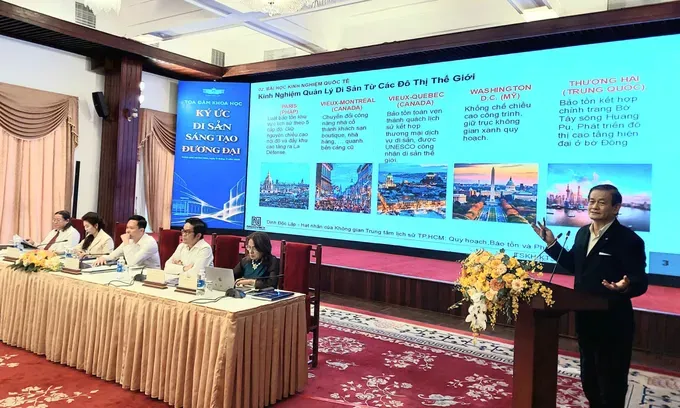
The discussion focused on solutions to preserve and leverage the value of this special national relic, making practical contributions to the sustainable development of Ho Chi Minh City and the nation.
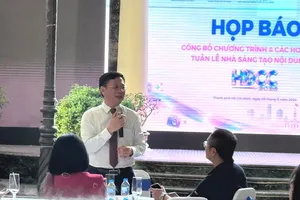
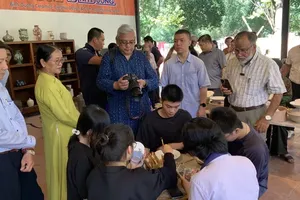
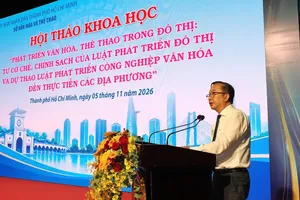
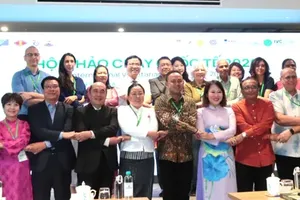
On November 11, the Independence Palace – Reunification Hall Special National Relic, in collaboration with the Institute for Economic and Tourism Development Research, organized a scientific seminar themed "Memory – Heritage – Contemporary Creativity."
Mr. Bui Vu Toan, Director of the Reunification Hall, emphasized that research, interpretation, and experience methods must be continuously innovated, with increased application of technology and contemporary creative forms, while strictly ensuring the original authenticity, integrity, and solemnity of the special national relic.
Mr. Nguyen Minh Nhut, Deputy Director of the Ho Chi Minh City Department of Culture and Sports, stated that the Independence Palace Special National Relic is one of four special national relics in Ho Chi Minh City. He noted that heritage management should focus on awakening historical memories, accelerating digital transformation, and diversifying public experience formats to turn heritage into a socio-economic development resource, thereby helping build Ho Chi Minh City into a creative and modern space.
Providing an in-depth perspective on urban architectural planning, Dr. Sc. Arch. Ngo Viet Nam Son, Vice President of the Asian Cultural Landscape Association, proposed applying a five-tier urban heritage conservation solution, ranging from absolute level-1 conservation of the relic to level-2 exterior conservation, level-3 adaptive reuse, level-4 landscape conservation, and level-5 urban renewal and replacement. He also recommended promoting heritage economy and cultural industry models while establishing specific mechanisms to attract public-private partnership (PPP) resources for heritage preservation and services exploitation.
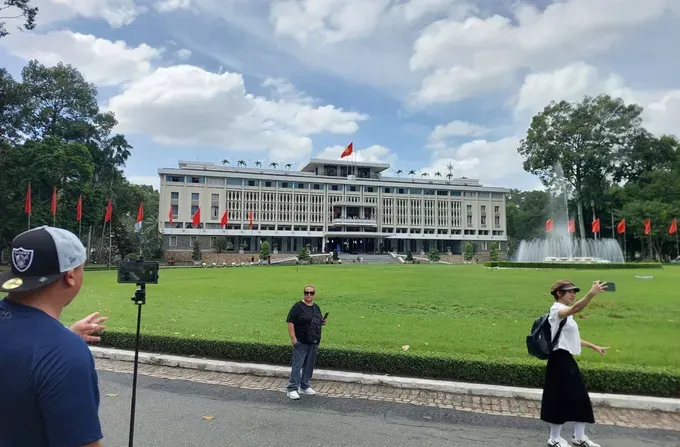
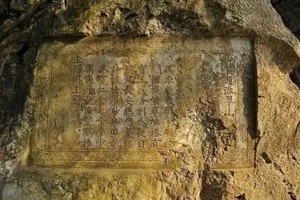
From an archaeological and urban memory perspective, Dr. Nguyen Thi Hau, General Secretary of the Historical Science Association, highlighted that the stratigraphy of the Independence Palace area preserves rich historical layers from prehistoric traces and Gia Dinh Citadel to Norodom Palace and the current structure.
She outlined five specific development orientations: expanding the heritage access boundary, supplementing archaeological stratigraphy records, offering multidimensional historical interpretation, integrating heritage into urban planning, and continuously updating criteria for evaluating heritage values according to new generations.
In addition, the seminar recorded several evocative economic and tourism development solutions from scholars. Prof. Dr. Phan Thi Thu Hien from the University of Social Sciences and Humanities, Ho Chi Minh City, proposed transforming the Independence Palace Special National Relic into a "living heritage" through a heritage experience ecosystem, organizing night tours, and issuing a "Heritage Passport" to connect urban heritage routes.
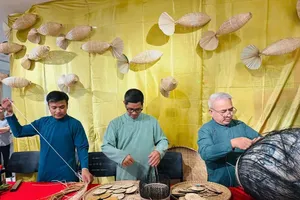
Dr. Duong Duc Minh presented a "Circular Heritage Economy" model, suggesting the optimization of available resources such as digitizing nearly 9,000 artifacts, crafting souvenirs from greenery maintenance by-products, and designing night experience routes aimed at Net-Zero goals.
Meanwhile, Dr. Le Thi Minh Ly positioned the Independence Palace Special National Relic as a "Memory Museum" — a gathering place to share and dream — proposing enhanced collection of memory heritage through eyewitness oral histories and document digitization for youth education and communications.