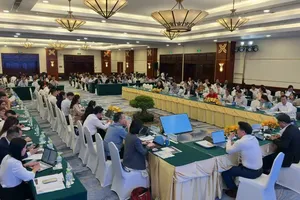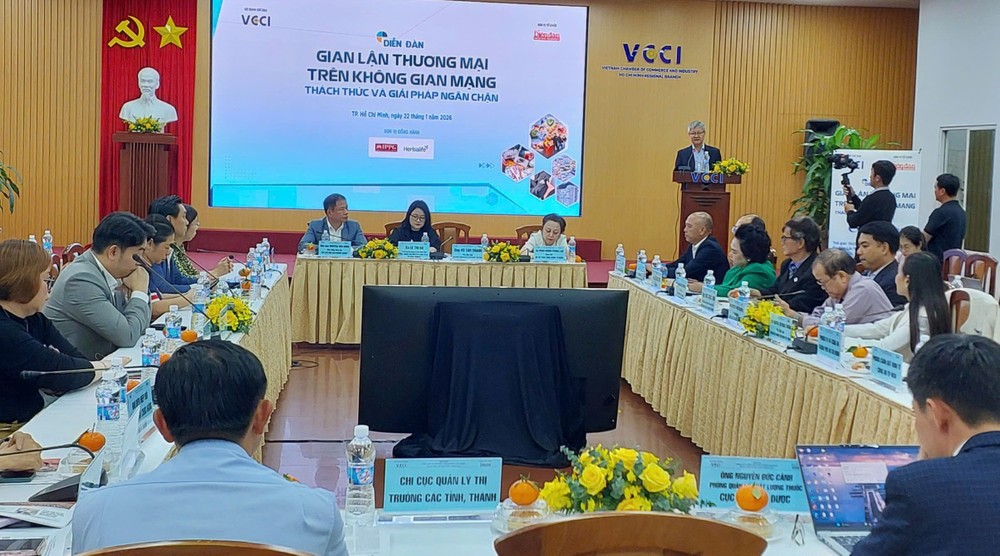
The Vietnam Chamber of Commerce and Industry (VCCI) directed Business Forum Magazine to organize a forum titled “Online Trade Fraud: Challenges and Solutions for Prevention” on the afternoon of January 22.
In his opening remarks, Mr. Vo Tan Thanh, Vice Chairman of VCCI, noted that amid the rapid pace of digital transformation, e-commerce and online business activities have become a key driver of economic growth, expanding opportunities for both enterprises and consumers. However, he cautioned that many bad actors have exploited regulatory loopholes and engaged in deceptive practices to sell counterfeit, substandard, and untraceable products. Such goods pose serious risks to consumer health and even lives, while undermining legitimate businesses.
Ms. Le Thi Ha, Head of the E-commerce Operations Management Division under the Department of E-commerce and Digital Economy at the Ministry of Industry and Trade, said that over the past year, 47,800 products showed signs of being counterfeit, imitation goods, or infringing intellectual property rights, a sharp increase compared with previous years. As of December 2, 2025, the department had taken down more than 13,700 online storefronts suspected of violations. According to Ms. Le Thi Ha, the newly passed E-commerce Law, set to take effect on July 1, 2026, will fundamentally reshape the regulatory framework for e-commerce, including the mandatory identification of sellers.
Ms. Pham Khanh Phong Lan, Director of the HCMC Food Safety Authority, used the phrase “bucket-and-basin technology” to describe the production of dietary supplements, highlighting how easily such products can be manufactured. Even when a supplement is declared as being produced by a factory meeting GMP standards, she said, it should not be taken at face value.
“Test certificates included in application dossiers are meaningless and lack objectivity. No one is foolish enough to submit a substandard product for testing; they will keep testing until it meets the standard, or submit a compliant sample for inspection,” Ms. Pham Khanh Phong Lan said.
From the business perspective, Mr. Nguyen Phuong Son, Director of External Affairs at Amway Vietnam, said that in 2025, the company had formally requested several major e-commerce platforms to remove a total of 822 infringing links. Ms. Ta Dieu Huong, Head of the Legal Affairs Committee of the Vietnam Multilevel Marketing Association, pointed out serious shortcomings in current enforcement procedures, noting that identifying and requesting the removal of violating links can take an inordinately long time, sometimes months or even years.
Ms. Ta Dieu Huong called on e-commerce platforms to tighten listing requirements for products distributed through specialized or exclusive systems. Specifically, she said platforms should require sellers to provide authorization letters or proof of lawful distribution before allowing product listings.
Mr. Nguyen Thuan Dat, a representative of Imex Pan Pacific Group (IPPG), said the group currently distributes 138 renowned international brands in Vietnam. Online trade fraud, he noted, threatens revenue losses for luxury goods distributors such as IPPG. “The consequences go beyond economic damage and extend to national reputation. Vietnam risks being labeled a high-risk market for intellectual property, which would make major brands hesitant to expand their presence here,” Mr. Nguyen Thuan Dat said.
Business representatives expressed hope that the E-commerce Law will be strictly enforced in practice, alongside tougher penalties to effectively curb counterfeit goods and trade fraud.