The Ministry of Justice on July 13 convened an appraisal meeting on the draft Urban Development Law, formerly known as the Special Urban Law.
The proposed legislation introduces a comprehensive and long-term legal framework for urban development, replacing the previous pilot-based approach with stable policies applicable to multiple cities.
The draft law was jointly prepared by the Ministry of Justice, the Ministry of Finance, the Ho Chi Minh City People's Committee and other relevant localities. The Ministry of Justice also serves as the appraisal agency.
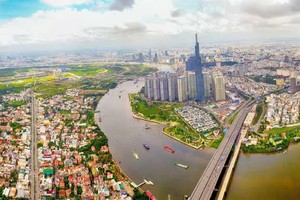
Under the draft, Ho Chi Minh City would be granted broad decision-making authority in nearly all areas except national defense, security, foreign affairs and religious affairs. The city would also be empowered to issue legal documents with provisions differing from those of the Government and ministries when necessary to address local conditions.
The legislation proposes replacing multiple overlapping planning schemes with a single citywide master plan that would carry legal authority equivalent to both provincial and general urban planning. It also authorizes the city to manage and develop underground space as well as low- and high-altitude airspace.
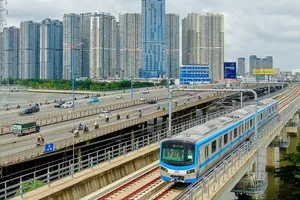
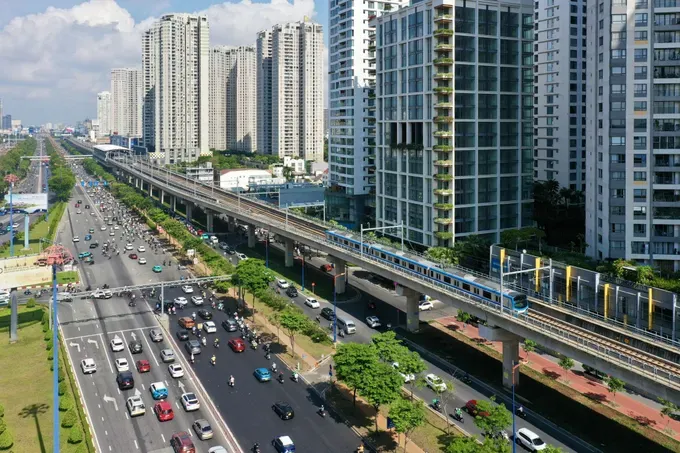
Transit-oriented development (TOD) is identified as a core mechanism for reshaping urban space around metro stations and ring roads. Under the proposal, the city would be allowed to recover land surrounding transport hubs, create land reserves for auction, and generate revenue to finance infrastructure development.
The draft also introduces expanded financial powers, allowing Ho Chi Minh City to borrow from international financial institutions, issue municipal bonds, and retain all revenues generated from the law's special policy mechanisms.
In addition, the legislation provides for the establishment of special functional zones, including the International Financial Center, a free trade zone and an integrated logistics hub. These zones would enjoy preferential customs, tax and foreign exchange policies aimed at enhancing the city's global competitiveness.
Regarding governance and staffing, the Ho Chi Minh City People's Council would be authorized to increase its staffing levels by up to 20 percent above the quota allocated by the central government, provided the city can finance the additional personnel from its own budget.
The drafting agency estimates that implementation of the law would enable Ho Chi Minh City to maintain average annual GRDP growth of more than 10 percent. Under this scenario, the city's GRDP is projected to reach approximately US$1.2 trillion by 2050.
The draft law would also apply to Hanoi, which could choose to adopt its provisions, except those on special economic zones, through a resolution of the city's People's Council.
Dong Nai City and other cities that have not yet attained special urban status may also be permitted to apply selected mechanisms and policies under the law, subject to approval by competent authorities and compliance with government regulations. Cities recognized as special urban centers in the future would automatically fall under the law's provisions.
The draft further proposes streamlined governance for strategically important sub-provincial administrative units such as Con Dao, Van Don and Cat Hai. These areas would operate without separate People's Councils and would benefit from preferential policies supporting the marine economy, casino development and foreign real estate investment.