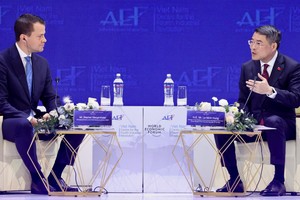
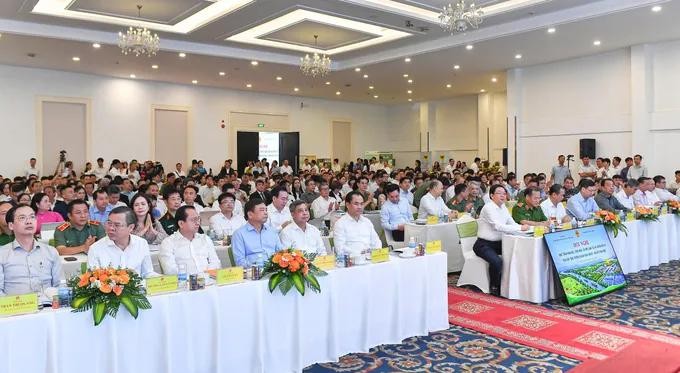
On November 2, in Can Tho City, the Ministry of Agriculture and Environment, in coordination with the Ministry of Public Security, organized a conference on science and technology development, innovation and digital transformation to promote growth in the agricultural sector in the Southern region.
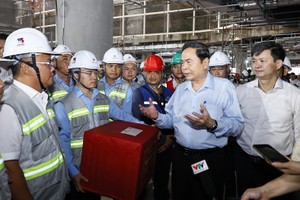
Attending the conference were Deputy Prime Minister Ho Quoc Dung, Minister Trinh Viet Hung of Agriculture and Environment, Deputy Minister of Public Security Senior General Nguyen Van Long along with leaders of southern localities, research institutes, universities and agricultural enterprises.
According to a report from the Ministry of Agriculture and Environment, the agriculture, forestry and fisheries sector grew by 3.78 percent in 2025, with exports reaching US$70.63 billion. In the first nine months of 2026, the sector continued to grow by 4.02 percent, while exports reached approximately US$56.3 billion, up 7.8 percent year-on-year.
Despite these achievements, delegates pointed to several persistent bottlenecks and challenges facing the agricultural sector. These include fragmented landholdings, which drive up investment costs for IoT equipment, automation and technological infrastructure; poorly integrated agricultural data systems that create “data islands”, undermining management and forecasting, weak cooperation between research institutions, universities and businesses; the limited commercialization of scientific research and inadequate incentives to attract private investment in agricultural science and technology. The sector also faces mounting pressure from dwindling land and water resources, climate change, drought and saltwater intrusion.
Deputy Prime Minister Ho Quoc Dung said southern localities still have substantial room for growth in agriculture. However, many key agricultural industries have yet to gain control of their supply chains. As evidence, he noted that agricultural, forestry and fisheries exports exceeded US$62 billion during the first 10 months of the year, while nearly US$45 billion worth of raw materials had to be imported.
The Deputy Prime Minister pointed out that post-harvest losses in agriculture remain very high, ranging from 20 percent to 30 percent. He added that while average global logistics costs account for about 10 percent of total costs, the figure in Vietnam stands at 16 percent. Despite having extensive agricultural production areas, the country spends more than US$8 billion annually importing corn, soybeans and other by-products.
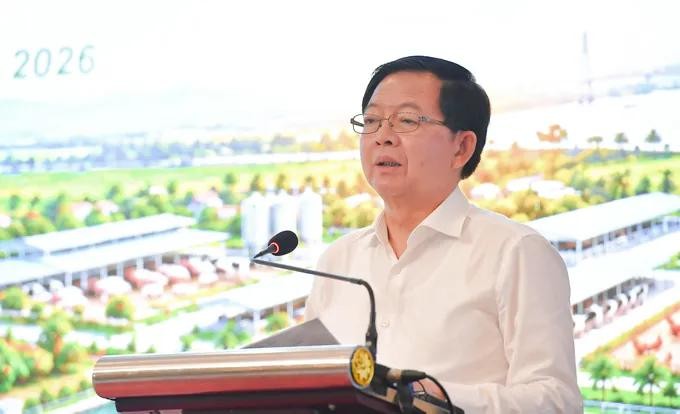
According to Deputy Prime Minister Ho Quoc Dung, Vietnam has abundant agricultural by-products as well as research institutes, universities, scientists and businesses capable of producing animal feed. Yet among 24 shrimp feed suppliers, only one is a domestic company, with the remainder relying on imports. Similarly, other livestock sectors continue to depend heavily on imports, with as much as 80 percent of livestock vaccines sourced from abroad.
Assessing the current state of science and technology application, the Deputy Prime Minister said the biggest challenge is bringing research results into practical use. Over the past five years, only about 12 percent of research projects have been linked to businesses, while the rest have failed to reach the market.
He therefore instructed localities to reassess the effectiveness of agricultural research outcomes and identify priority, urgent tasks that directly affect growth and competitiveness. From now until the end of November, each locality must select three to five priority challenges and clearly define production, processing, consumption and branding linkages.
Deputy Prime Minister Ho Quoc Dung assigned the Ministry of Agriculture and Environment responsibility for monitoring implementation and reporting comprehensively to the Prime Minister.
He also urged local authorities to fully recognize existing bottlenecks and seriously and decisively develop solutions that can deliver substantive progress in applying science, technology, innovation and digital transformation to the agricultural sector.