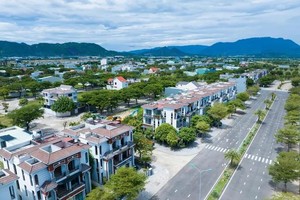
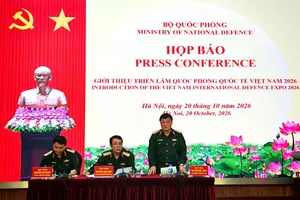
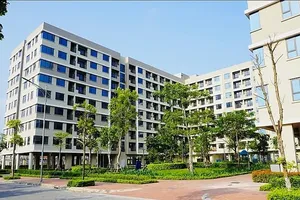
Many decisions aimed at improving social welfare and promoting economic development are being implemented by the administrative machinery at an unprecedented pace. The swift establishment of 107 inter-level boarding schools in border regions and a tax-relief resolution passed by the National Assembly just 20 days after receiving policy approval are vivid examples.
The gap between policymaking and daily life, between decisions and implementation, is being reduced to its lowest level through a guiding principle: matching words with action.
New boarding schools open doors to education for border children
These days, classrooms at Sin Thau Primary and Secondary Boarding School in Sin Thau Commune, Dien Bien Province, are filled with the sounds of Ha Nhi children practicing their lessons amid the scent of fresh paint.
Schools in remote mountainous areas now have televisions and modern teaching equipment alongside traditional blackboards and chalk.
In the 2026-2027 academic year, the school has 1,013 students, including 898 boarders. A total of 745 students live more than 7 kilometers from the school, while 477 come from villages along the border.
Eighth-grade student Khoang Tu Ca said he no longer has to travel 10 kilometers each day from Phu Ma Village to attend classes. As a result, he now has more time to study and participate in school activities.
The availability of a modern boarding school in the area has also eased the burden on parents. Trieu Thi Van, a mother from Ta Mieu Village in Sin Thau Commune, said her family used to worry constantly about their child’s safety, especially during the rainy season, when mountain roads became slippery and difficult to navigate.
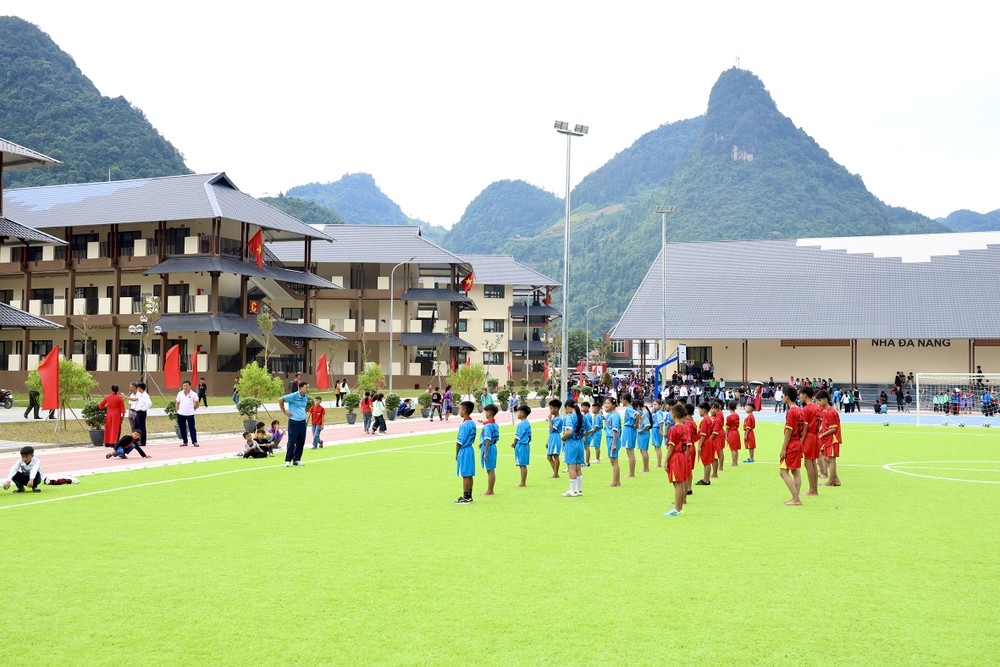
Principal Le Bao Khuong of Sin Thau Primary and Junior High Boarding School affirmed that far beyond the significance of a new construction project, the school is an opening door to the future for thousands of students in the border region. Hundreds of kilometers away in Lao Cai, Mong Thi Duyen, Principal of Muong Khuong Primary and Junior High Boarding School in Muong Khuong Commune, Lao Cai Province, could not hide her emotion standing before the borderland school spanning nearly 50,000 square meters. Built with a total investment of VND255 billion (US$9.86 million), local residents praised the facility as being as beautiful as a park.
Principal Mong Thi Duyen shared that many students live over 20 kilometers away from the school; now, attending boarding school, their living and learning conditions are fully guaranteed.
To turn these dreams into reality, the administrative machinery had to activate an unprecedented rapid-response campaign. At a meeting on July 17, 2025, the Politburo agreed on the investment policy to construct multi-level boarding schools across 248 land border communes, assigning a directive to complete 100 schools no later than the start of the 2026–2027 school year. An exceptionally challenging mandate was set, demanding that all determination to act move immediately out of the meeting rooms and into practice.
Just 10 days later, in Dien Bien Province, General Secretary To Lam and a central delegation attended the groundbreaking ceremony for the Si Pa Phin Commune Multi-Level Primary and Junior High School. By November 9, 2025, construction had been launched simultaneously at 108 multi-level boarding schools.
Guided by the directive to “focus on implementation, not retreat”, ministries and agencies coordinated closely to accelerate the program. The Ministry of Finance consolidated funding requests for submission to the Prime Minister, while the Ministry of Construction issued 14 standardized designs tailored to different regions. The Ministry of Agriculture and Environment reviewed and allocated land, and the Ministry of Home Affairs finalized policies for teachers and students in border areas.
Local authorities proactively allocated budget funds or mobilized private-sector resources and investment. Deputy Prime Minister Le Tien Chau regularly chaired meetings to address difficulties and remove bottlenecks throughout implementation.
After just six months of construction, on January 31, 2026, Si Pa Phin Multi-Level Boarding Primary and Junior High School became the first to cross the finish line, kicking off a series of breakthroughs that expanded from eight schools to 20, and then 30 schools.
This exemplary journey of resolving obstacles and overcoming difficulties provided quality educational opportunities for millions of students in border regions. Permanent Vice Minister of Education and Training Pham Ngoc Thuong noted that the entire campaign was condensed into 100 days and nights, implementing 108 schools across 21 provinces and cities, including many challenging terrains.
Ultimately, 107 out of 108 border schools were put into operation for the 2026–2027 academic year, opening right on September 5.
Vice Minister Pham Ngoc Thuong revealed that the deadline pressure, along with numerous challenges such as rugged terrain, severe weather, difficult construction conditions, and labor shortages, served as a 'test' of the courage and determination of the machinery of the state.
Twenty special days are set to clear bottlenecks and reduce taxes
If the border school construction campaign serves as proof of organizational and execution capacity, recent real-world practices on the economic front have reaffirmed that institutions must lead the way. The journey of a policy has now broken free from waiting on rigid procedures to operate faster and with greater transparency, promptly addressing urgent real-world demands.
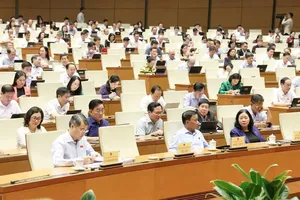
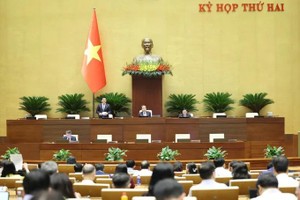
The most distinct impression was made at the First Extraordinary Session of the 16th National Assembly. In a mere 17 working days, the legislative body completed a massive volume of work, passing 15 laws, six normative legal resolutions, and giving feedback on seven other key draft laws. Beyond statistical figures, the session's outcomes clearly demonstrated a decisive spirit of action to remove implementation bottlenecks.
The session agenda was continuously adjusted with flexibility to prioritize urgent matters; delegates worked through Saturdays and Sundays; and bodies of the National Assembly and the Government organized reception, explanation, and revision of drafts in short timeframes.
This high working intensity demonstrated an action-oriented National Assembly responding to new requirements and immediately resolving pressing issues.
During the session, the National Assembly passed a resolution reducing personal income tax and corporate income tax by 30 percent for individuals and enterprises with annual revenues not exceeding VND10 billion.
Looking back at the timeline reveals the machine's lightning-fast speed of work. At the regular Government meeting on August 3, Prime Minister Le Minh Hung directed the Ministry of Finance to propose tax measures to support small and medium-sized enterprises, individuals, and business households.
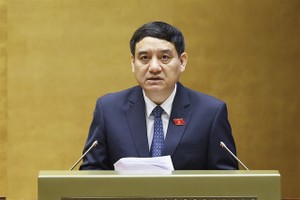
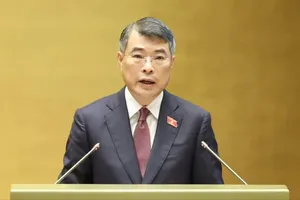
On August 21, just three days before the session closed, the Government submitted an addition of this item to the agenda. "Due to the urgent nature of the policy, the Government proposed that the National Assembly Standing Committee consider and permit the drafting and issuance of the resolution under expedited procedures, while also adding this draft resolution to the agenda of the First Extraordinary Session," Minister of Finance Ngo Van Tuan recalled.
From the moment the head of Government made the proposal to the time the National Assembly pressed the button to pass it, the entire process spanned just 20 days. According to the Minister of Finance, issuing the resolution in August allowed the policy to take effect immediately in the third quarter of 2026, helping reduce financial pressure and positively impacting millions of business households and enterprises. Waiting until the October session to pass it would have significantly reduced implementation effectiveness, affecting production and business opportunities during the year-end peak season.
Ho Chi Minh City accelerates policy implementation and accountability
In line with decisions made by the Central Committee, the principle of “institutions leading the way” is gaining traction among local administrations, driving coordinated efforts nationwide to remove procedural bottlenecks and accelerate implementation.
In Ho Chi Minh City, the time between the adoption of a Party resolution and its implementation is being shortened. Just one week after the national conference, on August 7, the municipal Party Committee convened a conference to disseminate and implement the resolution of the third Plenum of the Party Central Committee and identify specific tasks. Le Quoc Phong, Permanent Deputy Secretary of the Ho Chi Minh City Party Committee, said the early rollout was intended to translate the Party Central Committee’s strategic directions into the city’s action program as quickly as possible.
This urgent approach has driven rapid operational shifts. Once guidelines are clear, all levels and sectors must identify their respective responsibilities, prepare preliminary tasks, and incorporate them into concrete plans. Ho Chi Minh City's decisive motto was clearly reflected during preparations to implement the Urban Development Law.
While the National Assembly was deliberating the draft Urban Development Law, Ho Chi Minh City pursued a parallel approach, urgently reviewing provisions slated for delegation and decentralization to accelerate the implementation of new mechanisms and policies. Secretary Tran Luu Quang of the Ho Chi Minh City Party Committee emphasized that the city’s approach is not to wait for the law to take effect before beginning preparations.
As a result of this proactive approach, by the time the law took effect on October 1, the Ho Chi Minh City People’s Council had already adopted 25 resolutions detailing its implementation, enabling the city to put the new policy mechanisms into practice from day one.
This sense of urgency is helping establish a new standard of official discipline. Ho Chi Minh City Party Committee Secretary Tran Luu Quang stressed that greater authority must be accompanied by clear accountability for implementation. The city is translating its emphasis on decisive and effective governance into practice through regular reviews and evaluations of officials using a performance-based KPI system.
Officials who fail to deliver results or shirk responsibility will face consequences. From the National Assembly to local administrations, a more determined approach to work is challenging entrenched practices and fostering a new culture of action.
At the National Conference to disseminate and implement the resolution of the fourth Plenum of the Party Central Committee on October 16, General Secretary and President To Lam called for upholding responsibility and removing all obstacles to development so as not to forfeit opportunities for the nation and its people.
This serves as a solid anchor for grassroots officials who are closest to city dwellers to operate with a steadfast commitment to seeing citizens' issues through to the very end.