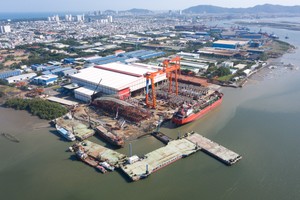
In the early hours of October 16, the steel arch structure and its supporting framework, weighing a colossal 3,400 tonnes for the pedestrian bridge crossing the Saigon River, was successfully loaded onto a specialized barge at Dong Xuyen Port in Rach Dua Ward, gearing up for its complex voyage toward the city center.
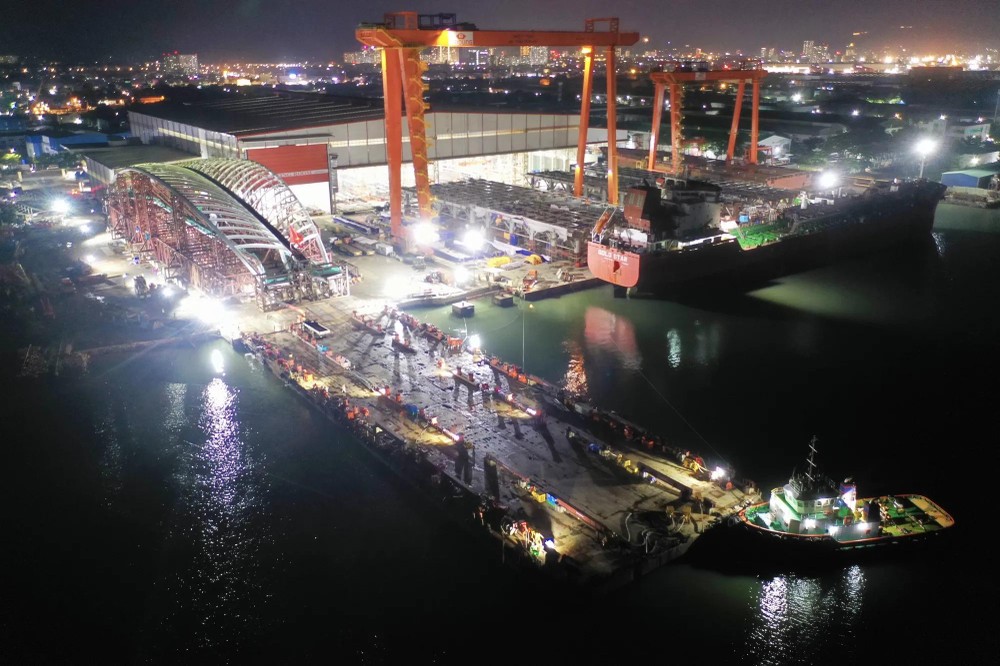
Loading the 3,400-tonne structure onto the barge overnight
Following months of meticulously calculating technical methods and researching hydrological conditions, construction units launched the bridge’s framework at the Dai Dung Factory area on the night of October 15. A dedicated task force was strategically deployed to regulate traffic, ultimately ensuring absolute safety.
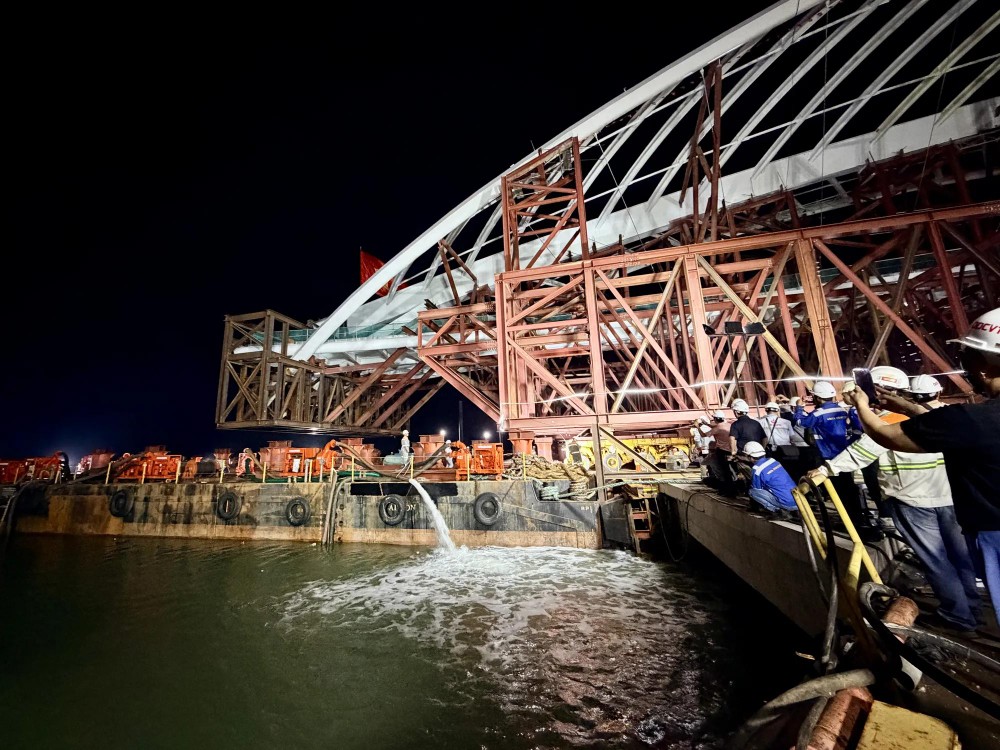
Receiving this massive structural complex was a specialized barge boasting a deadweight capacity exceeding 14,000 tonnes, stretching over 100 meters in length, 36 meters in width, with a 6.1-meter draft. Prior to the scheduled launch, the barge was reportedly maneuvered into position, securely anchored, and connected to the pier via a ramp system so the SPMT self-propelled transporters could smoothly traverse onto the deck.
The SPMT system advanced in short, calculated distance, allowing the technical squad to rigorously inspect the barge’s elevation, inclination, and overall stability before proceeding further.
The most formidable bottleneck was keeping everything balanced as the barge absorbed a payload of thousands of tonnes. Consequently, the ballast water pumping system operated continuously, carefully coordinating with every single step of the transporter fleet’s movement.
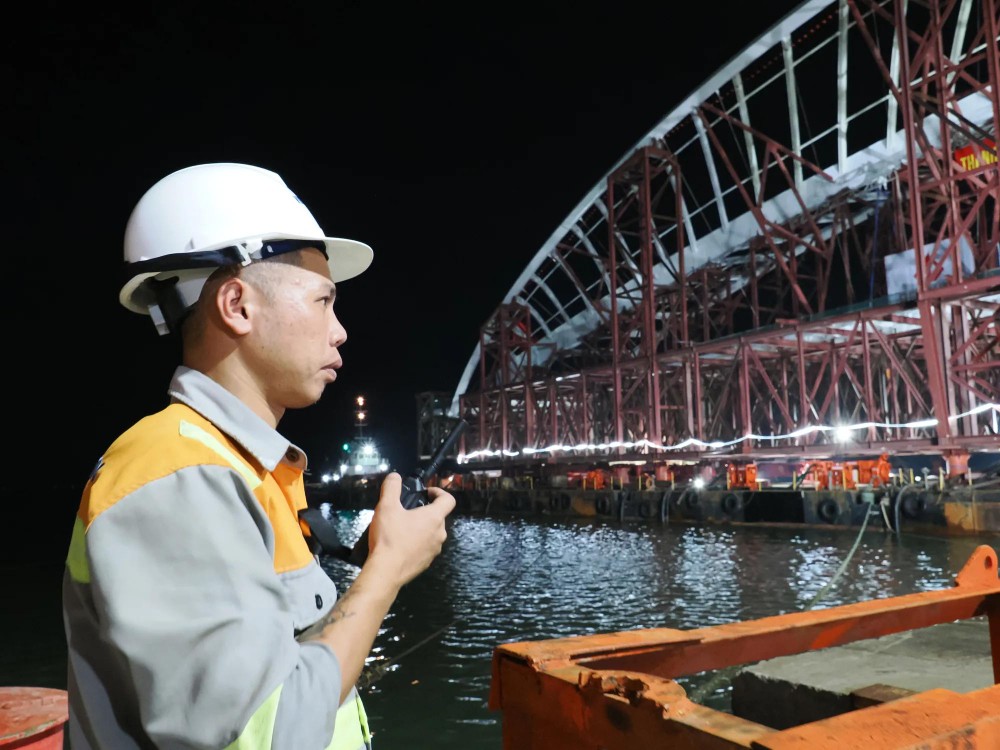
Engineers relentlessly monitored the elevation, inclination, and draft, meticulously cross-referencing them against the original design calculations. Every single adjustment was promptly broadcasted via walkie-talkies so the onshore and onboard squads could execute them in seamless tandem.
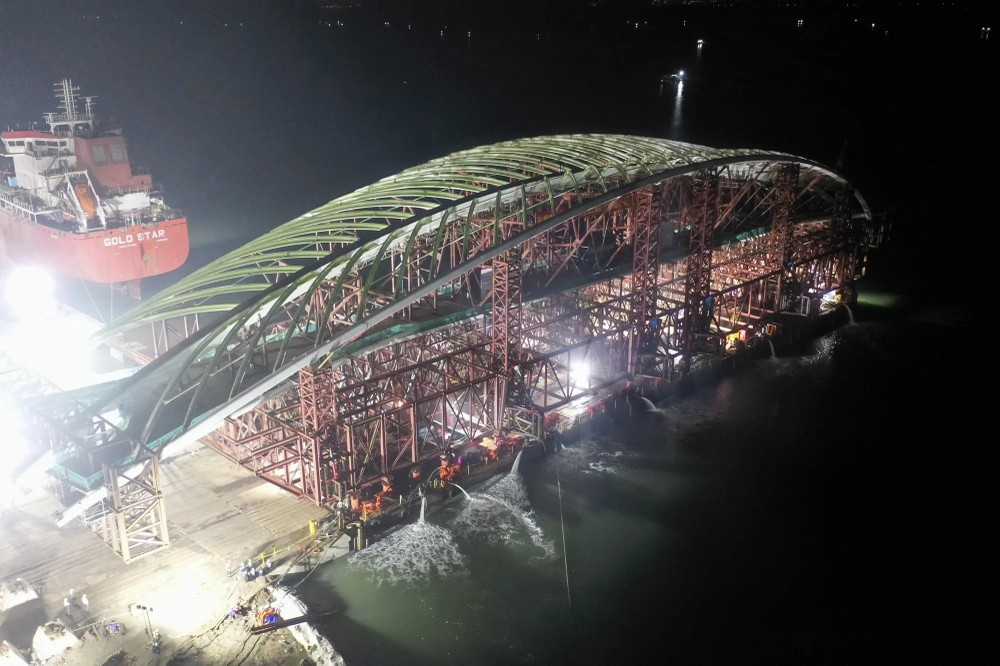
After approximately four hours, the entire structural complex settled perfectly into its designated position. The SPMT’s hydraulic system was subsequently lowered, gently placing the massive structure onto 50 steel and concrete support pillars pre-arranged on the deck to effectively distribute the payload.
By 2:15 a.m. on October 16, the launching phase was fundamentally accomplished.
For Mr. Nguyen Van Anh, the pedestrian bridge project director at Dai Dung Company, witnessing the successful launch was a profoundly emotional moment. “I’ve never experienced such a rollercoaster of surging emotions like this, ranging from profound suspense and anxiety to absolute euphoria,” he confided.
According to Mr. Anh, Dai Dung Company has executed numerous monumental projects both domestically and internationally, but this particular undertaking holds immense significance because it’s essentially dedicated to the local community, receiving substantial enthusiasm from the top executives of the primary investor, Nutifood, alongside Dai Dung Company.
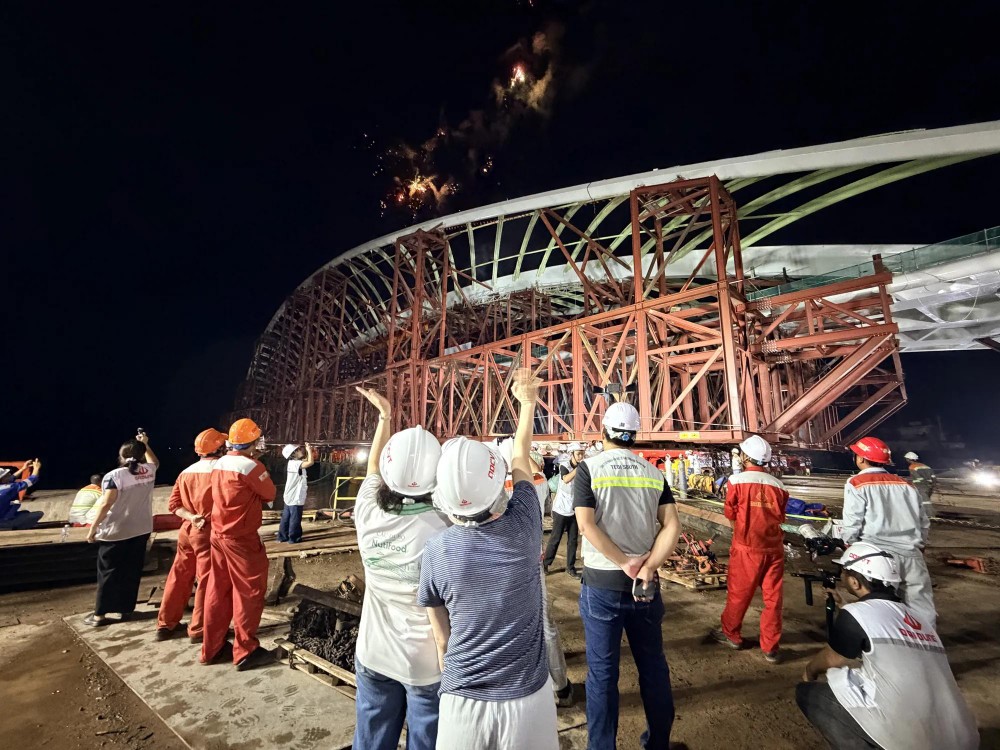
According to the onsite engineers, the most nerve-wracking moment transpired when the very first SPMT wheels rolled onto the barge. The colossal payload exerting pressure on the pier and the barge, coupled with the water’s reaction force, dictated that every single calculation must be flawlessly accurate to guarantee structural equilibrium.
Surmounting that critical juncture, watching the SPMT system incrementally advance, successfully ferrying the entire bridge structure onto the barge in absolute safety, I was genuinely moved.
Mr. Nguyen Van Anh
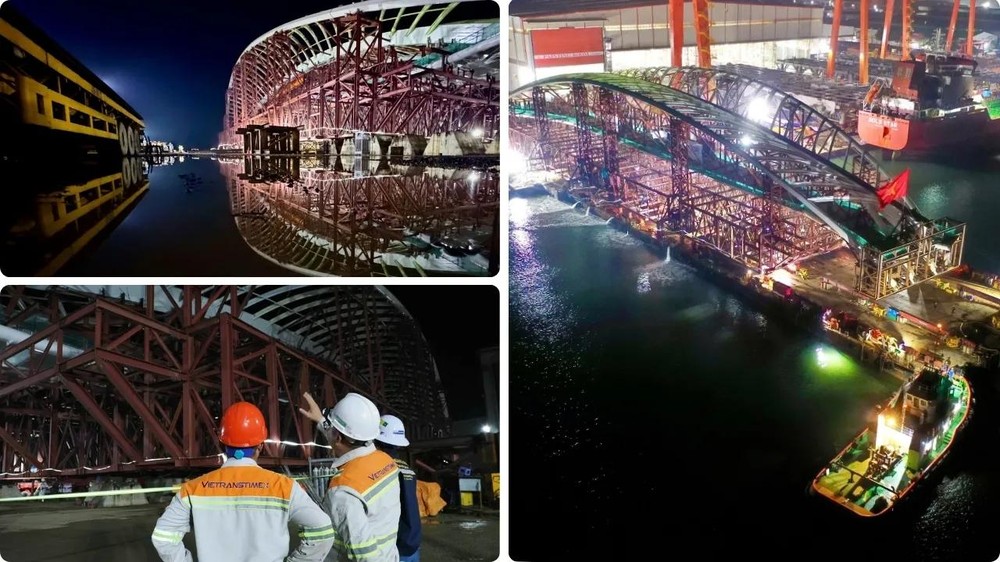
The 124-kilometer voyage back to downtown HCMC
According to the blueprint, on the morning of October 18, the towing convoy will depart from Dong Xuyen Port, embarking on a 124-kilometer journey toward downtown HCMC.
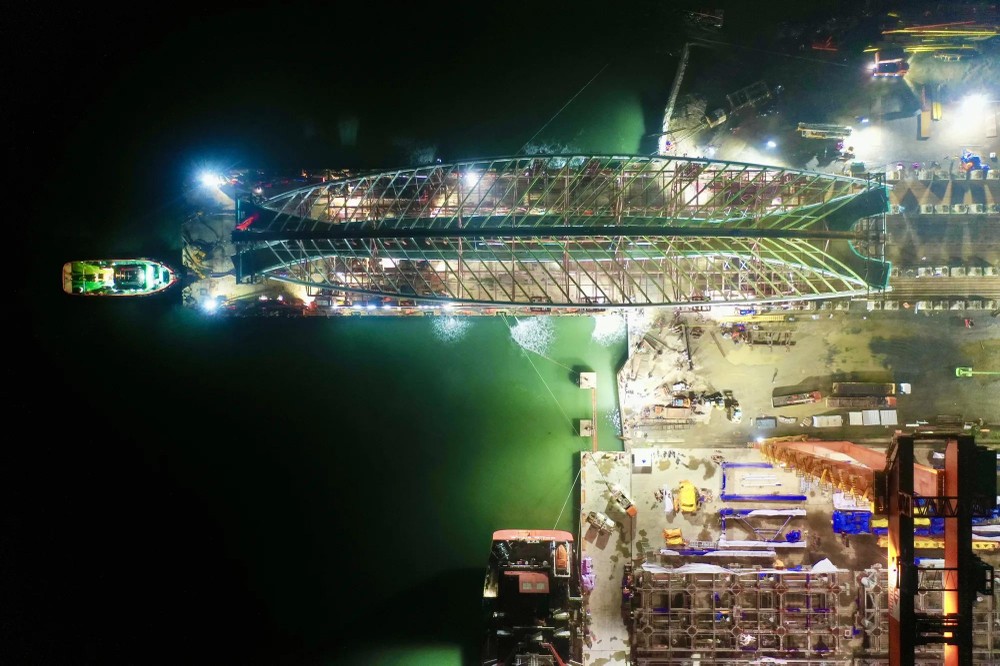
A high-capacity tugboat will shoulder the primary towing force, while two flanking tugs will correct the navigational trajectory, plus a standby tugboat will remain on high alert throughout the entire voyage. Vessels navigating along the maritime channel must strictly adhere to regulatory guidelines, effectively maintaining the towing convoy’s absolute safety.
This grueling transportation phase demands airtight coordination between the construction unit and functional agencies as well as local forces. The barge convoy will only mobilize during daylight hours, sensibly opting to drop anchor at nightfall.
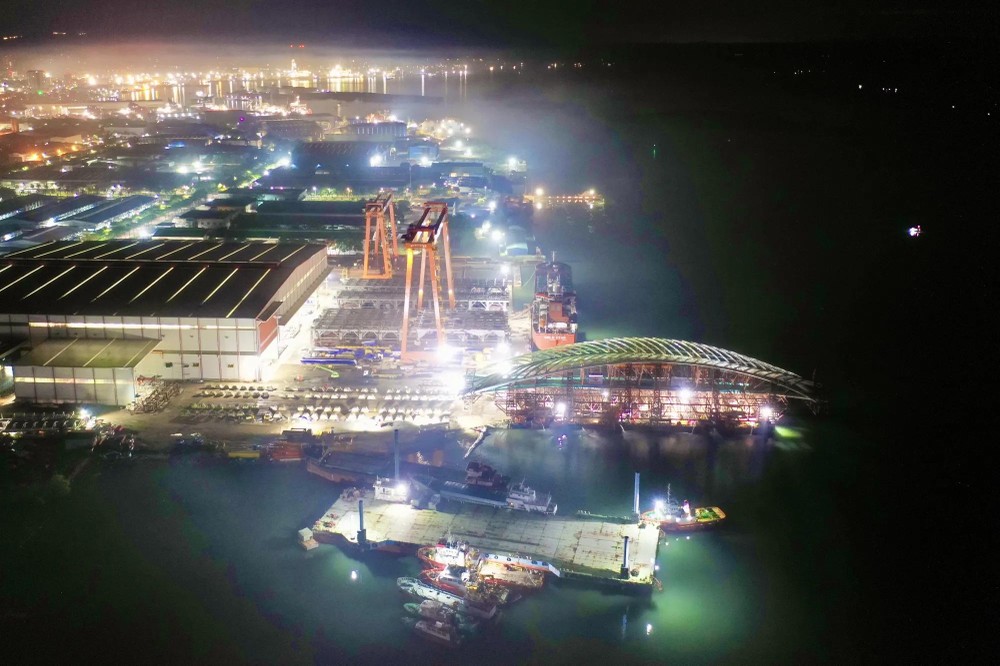
It’s highly anticipated that by the afternoon of October 19, the barge will reach the mooring zone on the Thu Thiem bank, eagerly awaiting the rollout of the closure phase scheduled for October 21.
Drawing profound inspiration from the nipa palm leaf, a symbol intrinsically tied to the Southern region, the pedestrian bridge crossing the Saigon River, generously sponsored by Nutifood, is heavily expected to become HCMC’s newest architectural centerpiece, acting as a vibrant hub where locals and tourists can stroll, admire the waterway, and vividly experience the city from an entirely novel perspective.