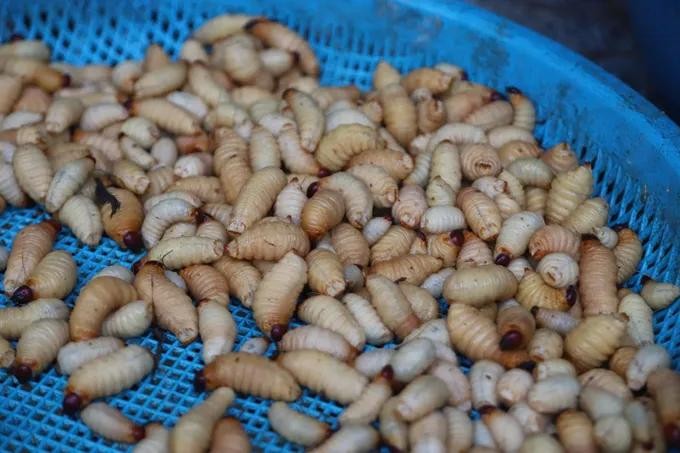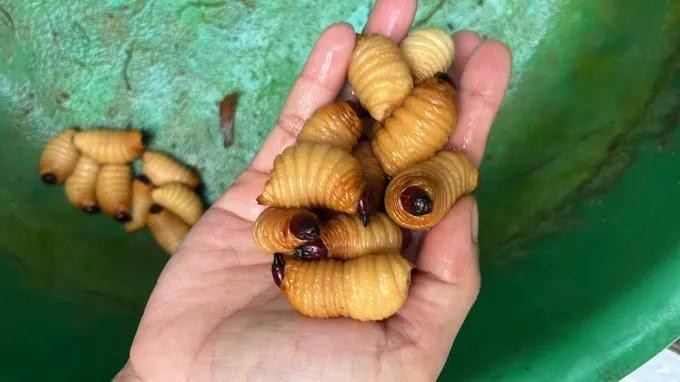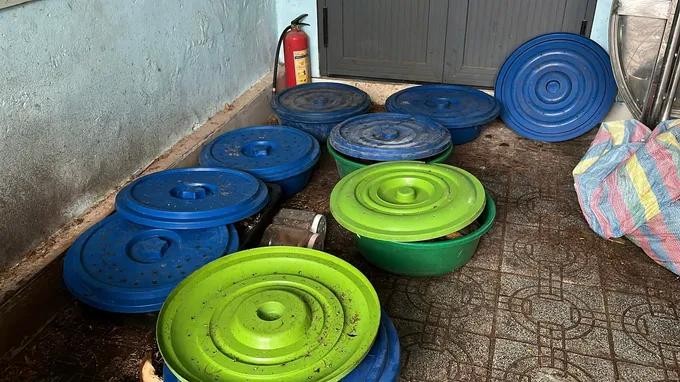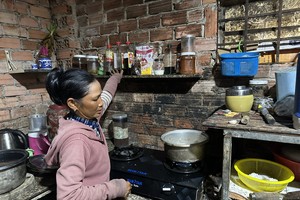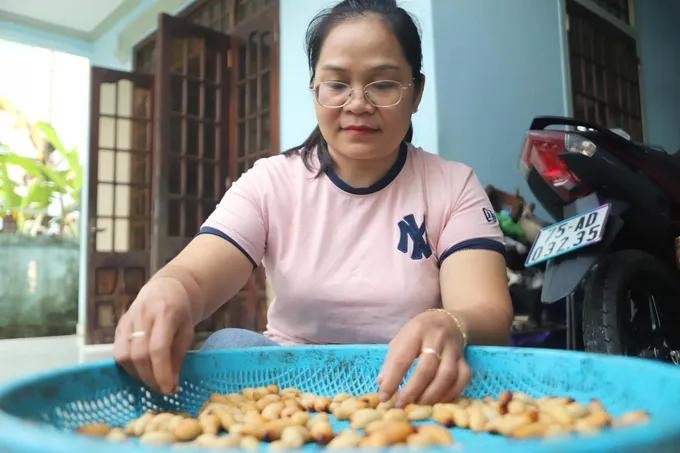
Among the pioneers in raising coconut worms is Hoang Thi Chanh from Hamlet 2 in Binh Dien Commune, Hue City. She shared that after noticing coconut larva dishes gaining popularity at festivals and food fairs in the upland area in the province, her family decided to research and begin raising the larvae themselves.
The initial phase was not without challenges. However, through perseverance and a willingness to learn, her family eventually developed an effective rearing method, achieving a yield of about 1.5 kilograms per tray. On average, they now harvest 10–15 kilograms of larvae per month, selling them at around VND250,000 (US$9.49) per kilogram. During the winter, when supply drops, prices rise to VND300,000–VND350,000 per kilogram helping the family both improve their income and supplement their daily meals.
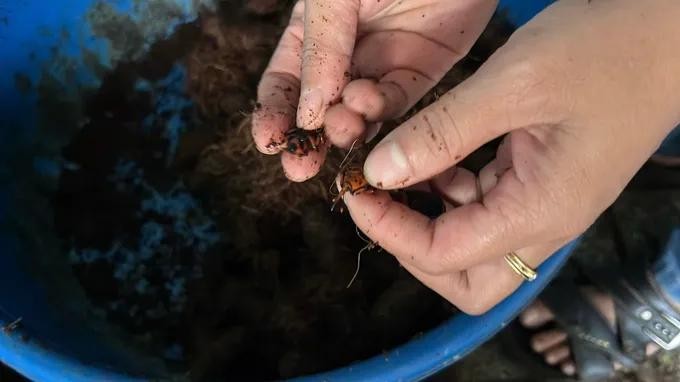
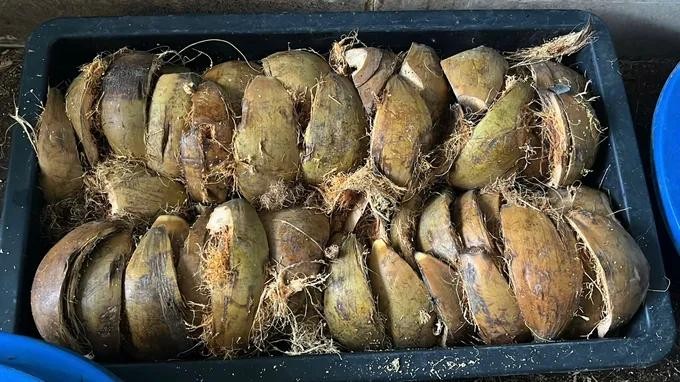
The farming process follows a closed-cycle model, breeder Hoang Thi Chanh explained. She revealed that breeders mainly use coconut husks, cornmeal, sugarcane, green bananas, and chopped cassava as feed. After allowing the parent beetles to lay eggs for about 10–12 days, the farmers separate them to start a new batch, while the remaining eggs hatch into larvae. Larger larvae begin to cocoon, while smaller ones continue to grow. After 30–35 days, under proper care, they reach harvest size even in less favorable conditions.
Praised for its simplicity, affordability, and eco-friendliness, the model is winning over residents in Binh Dien and A Luoi, where coconut larva farming is emerging as a sustainable lifeline out of poverty.
Tran Xuan Anh, Chairman of the Binh Dien Commune People’s Committee, noted that coconut grub and hornet pupae farming are opening up new economic directions for the region. “These models help diversify livelihoods and improve living standards for local people,” he said. “However, it’s essential that all farming and harvesting activities comply with safety and environmental regulations. The local government will regularly monitor these aspects.”