Ho Chi Minh City is stepping up efforts to unlock green economic potential from the Can Gio Mangrove Biosphere Reserve, promoting sustainable livelihoods beneath the forest canopy to generate resources for conservation and improve community living standards.
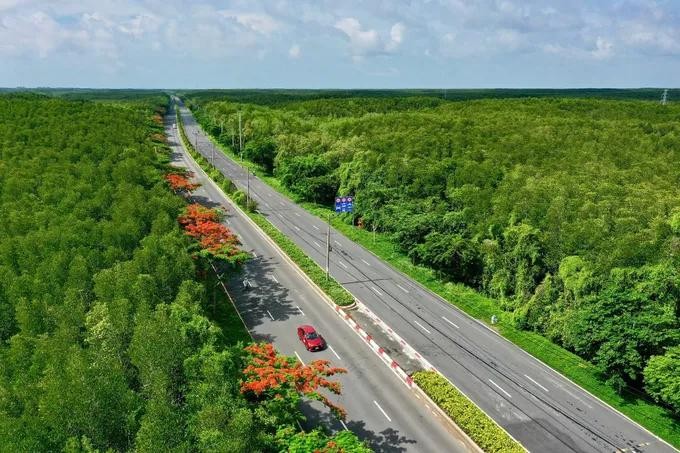
The Can Gio mangrove forest covers about 35,000 hectares across four communes including Thanh An, Binh Khanh, Can Gio, and An Thoi Dong. Its dense network of rivers, mudflats, and ponds creates a unique ecosystem that supports aquatic species and provides favorable conditions for aquaculture, fishing, and other forest-based economic activities.
Sustainable livelihood is linked to forest protection
In 1990, Ho Chi Minh City piloted a forest-contracting program, assigning 10 households to protect and manage forest areas. The family of Tran Minh Tung in Binh Khanh Commune was among the first participants.
For more than three decades, Tran Minh Tung’s family has maintained a close connection with the mangrove forest, managing approximately 79.48 hectares in the Binh Khanh sub-zone.
His daily work includes inspecting areas vulnerable to degradation, monitoring water quality and observing nearby production activities to identify potential threats to the forest at an early stage.
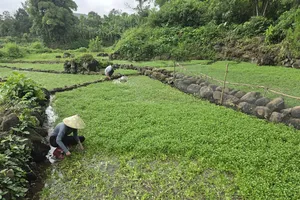
Beyond their forest protection responsibilities, his family makes use of the natural resources beneath the forest canopy to raise snails, fish using traditional lines, grow seedlings and harvest aquatic products in compliance with regulations and sustainable practices.
“My parents were also deeply attached to this forest. Despite the hardships, our family has remained committed to this land, determined to preserve the forest and contribute to protecting the city’s green lungs”, Mr. Tung said.
According to the People’s Committee in Binh Khanh Commune, the commune has nearly 7,954 hectares of forest, accounting for 50.02 percent of its total area. A total of 200 organizations, households and individuals live or conduct production activities within the protected forest area.
Alongside residents’ active involvement in forest protection, local authorities and relevant agencies conduct regular patrols and inspections to promptly detect and prevent activities that could damage the ecosystem.
Livelihoods beneath the forest canopy are also being combined with new production and tourism models. In An Thoi Dong Commune, more than 2,500 hectares are devoted to aquaculture, including 1,360 hectares of environmentally friendly shrimp farming within the forest and 320 hectares of high-tech shrimp farming.
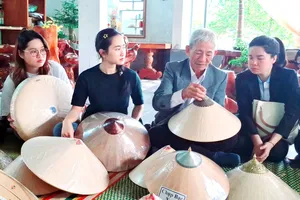
The commune has also begun developing an experiential tourism model that combines Ly Nhon’s traditional salt-making craft with the mangrove forest ecosystem.
Vice Chairman Nguyen Minh Kha of the An Thoi Dong Commune People’s Committee said linking traditional salt production with forest-based ecotourism was a key strategy for increasing production value and creating sustainable livelihoods for local residents.
According to Chairman Mai Trung Hung of the Can Gio Commune People’s Committee, 296 organizations, households and individuals live and conduct production activities within the protected forest zone, which covers approximately 3,734 hectares.
Close coordination is maintained among forest rangers, forest owners, contracted parties and relevant authorities to ensure effective forest management and protection.
Can Gio mangrove forest stores 41.5 million tons of carbon
The Can Gio mangrove forest plays a vital role in environmental protection and Ho Chi Minh City’s socio-economic development.
According to the Ho Chi Minh City Management Board for Protected and Special-Use Forests, the forest provides daily employment for more than 2,000 people through tourism, fishing and production activities conducted beneath its canopy.
The ecosystem also has a substantial capacity to absorb and store carbon. A study of restored mangrove areas in Can Gio estimated the ecosystem's average carbon stock at approximately 910 tons per hectare. Total carbon storage is estimated at around 41.5 million tons, equivalent to 152 million tons of carbon dioxide (CO2).
The mangrove forest also serves as a natural protective barrier for estuarine and coastal areas. The dense, interwoven root systems of mangrove species, including mangrove, crabapple mangrove, trap sediment, promote land accretion, reduce wave impacts and help prevent coastal erosion.
The area also provides habitats and breeding grounds for numerous animal and aquatic species, helping maintain biodiversity and safeguard natural aquatic resources.
Research on the Can Gio mangrove ecosystem has documented more than 130 algae species belonging to three groups such as diatoms, dinoflagellates and cyanobacteria.
The forest also serves as a source of genetic resources and seedlings for reforestation programs, while providing an important setting for scientific research.
Every year, tens of thousands of visitors, ranging from schoolchildren to university students, as well as numerous Vietnamese and international scientists, visit the area to study and conduct surveys and research on its ecosystem, flora, fauna and environmental conditions.
From November 6 to 8, Ho Chi Minh City is hosting the 2026 wrap-up conference for the World Network of Island and Coastal Biosphere Reserves (WNICBR).
The event is attended by representatives from the Ministry of Foreign Affairs, the Ministry of Agriculture and Environment, the Ministry of Science and Technology, the Vietnam National Commission for UNESCO, and the Ho Chi Minh City People’s Committee. Also in attendance are representatives from Vietnam’s coastal and island biosphere reserves, Con Dao National Park, as well as scientists and experts from relevant fields.
On November 6 and 7, the conference will focus on reviewing the network’s activities, featuring presentations and expert discussions on coastal and island ecosystems, biodiversity conservation, climate change response, natural resource management and development, community livelihoods, and sustainable ecotourism.
On November 8, the delegates will conduct a field visit to the Can Gio Mangrove Biosphere Reserve.
HCMC explores carbon credits and eco-tourism to boost forest value
To maximize the forest's value, the Ho Chi Minh City Management Board for Protection and Special-Use Forests is advancing initiatives including carbon-credit development and eco-tourism.
Director Huynh Duc Hoan of the management board said the agency has expanded the use of geographic information systems and specialized software for forest monitoring while developing biomass and carbon-stock databases for mangrove species.
According to Hoan, the completion of the country's domestic carbon trading framework could enable the carbon absorption and storage capacity of the Can Gio mangrove ecosystem to be converted into carbon credits and traded on the market.
Such a mechanism could create new forest-based revenue streams, improve local livelihoods, and provide funding for conservation, protection, and forest development efforts.
Another new initiative is forest environment leasing for eco-tourism projects. In 2026, Ho Chi Minh City signed its first forest-environment lease agreement in Can Gio under a plan to develop eco-tourism, resort, and recreational activities in the Can Gio protection forest through 2030.
Through waterway routes and canopy forest tours, visitors can explore the ecosystem, experience the natural landscape, and engage with local communities.
Officials describe the initiative as a pioneering step that reflects a significant shift in the city's development approach, aiming to sustainably utilize forest resources while generating financial resources for conservation and improving local livelihoods.