Each time he returns to this place, he quietly lights incense and stands for a long time before the memorial stele, as though entrusting it with emotions he has carried for decades.

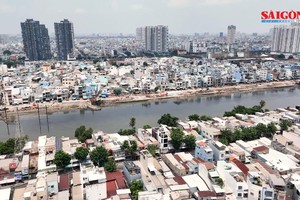
The search for the remains of fallen soldiers at Le Thi Rieng Park has been under way for more than three months. Hundreds of sets of remains have been found, but the painstaking recovery operation continues, with the utmost care required at every stage.
Every new piece of information and every historical record uncovered rekindles hope among thousands of families who have waited for their loved ones for more than half a lifetime. For the family of Heroine of the People's Armed Forces Le Thi Rieng, the separation has lasted even longer, leaving her sons with a profound longing for the mother they have spent their lives waiting to find.
The family knows only that after she was killed, Le Thi Rieng was buried in a mass grave at the former Chi Hoa Cemetery. Over the years, the cemetery was cleared to make way for a park. To this day, the exact location of her grave remains unknown.
Consequently, every discovery at the search site brings renewed hope. Yet the family understands that only after the remains have been fully examined and identified will it be possible to establish whether she is among those recovered.
According to records held by the National Museum of Vietnamese History, Le Thi Rieng was born in 1925 in Vinh My Commune, Gia Rai District, in the former Bac Lieu Province, to a farming family. Orphaned at a young age, she was raised by relatives before working at a textile workshop and joining the revolutionary movement.
In the autumn of 1945, she became active in the Bac Lieu branch of the National Salvation Women's Association. In the years that followed, she undertook women's mobilization work in Phuoc Long, Rach Gia, and southeastern Vietnam. After 1954, she worked in the Women's Mobilization Committee of the Southern Region Party Committee. She subsequently joined the Central Executive Committee of the South Vietnam Women's Liberation Association, serving as its vice president, and became a member of the Central Committee of the National Liberation Front of South Vietnam.
These responsibilities required her to travel extensively and endure repeated separations from those closest to her.
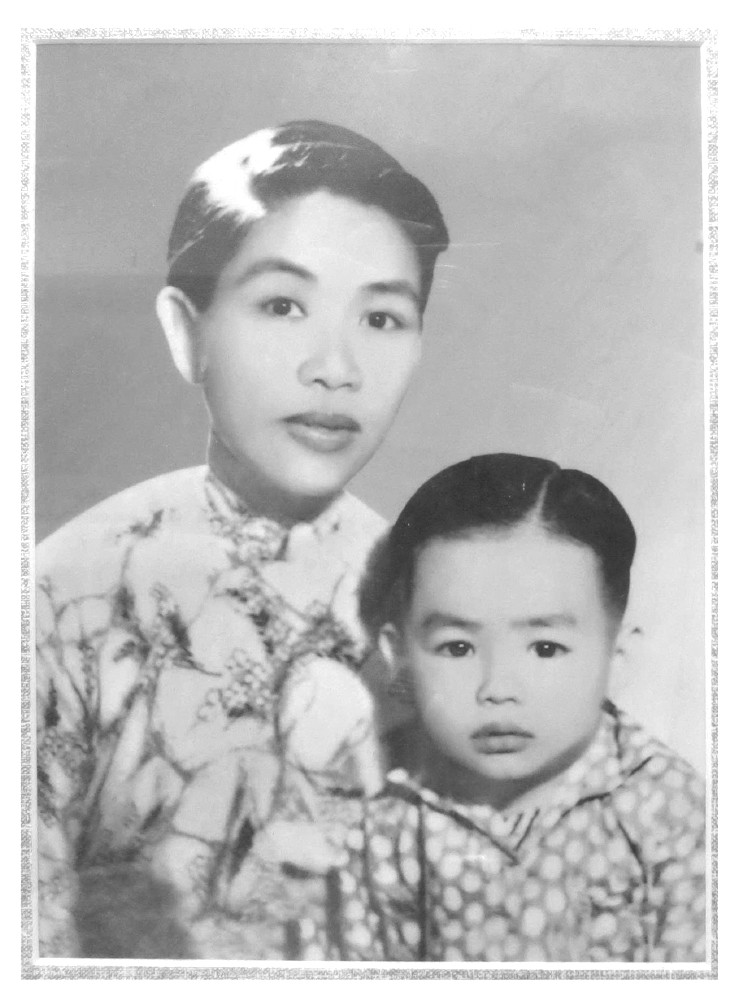
Her husband, Le Van Ba, also known as Le Trong Tam, was a revolutionary cadre. The couple had two sons, Le Minh Chanh and Le Chi Cong. In 1960, as fighting intensified, they sent their young children to North Vietnam so that the boys could remain safe and continue their education.
A photograph taken before the family parted ways became the last picture of all four together.
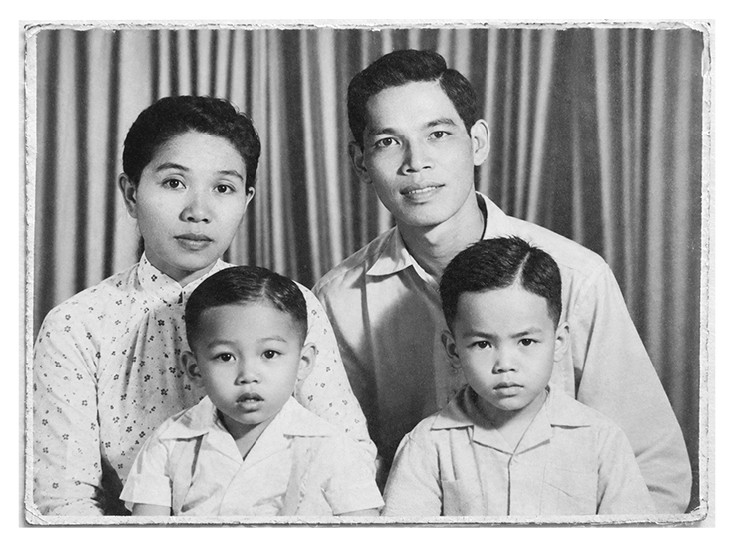
Not long afterwards, Le Thi Rieng and her husband were assigned to different areas and separated again. Le Van Ba was killed in the fighting. Le Thi Rieng was left to bear both the loss of her husband and the anguish of not knowing where he had been laid to rest. Her two sons, living far away, remained a source of strength that helped her persevere in her work.
She later became head of the Women's Mobilization Committee of the Saigon-Gia Dinh Regional Party Committee. In May 1967, she was arrested. On the night of the second day of the 1968 Lunar New Year, known as the Tet Offensive, she and Tran Van Kieu were killed.
The search now underway is therefore part of a journey her family has pursued for decades.
Le Chi Cong once followed addresses his mother had recorded in a notebook in an effort to find his father's resting place in the Di An area. He visited local residents and sought out elderly officials and former cadres, comparing accounts and tracing information about a grave bearing the name of fallen soldier Le Van Ba.
He recalled that the family had asked to take a handful of soil from the place where his father's grave was found and bring it to the grave bearing both parents' names at Ho Chi Minh City Martyrs Cemetery. After years of searching, the gesture offered some measure of consolation, even as the family continued to wait for the day his mother might be brought home.
Their hopes are part of a larger collective aspiration: to return fallen soldiers to their families. But for Cong, the search carries an intensely personal meaning.
"If we are fortunate enough to find my mother's remains, it would be something profoundly precious and sacred to our family," he said.
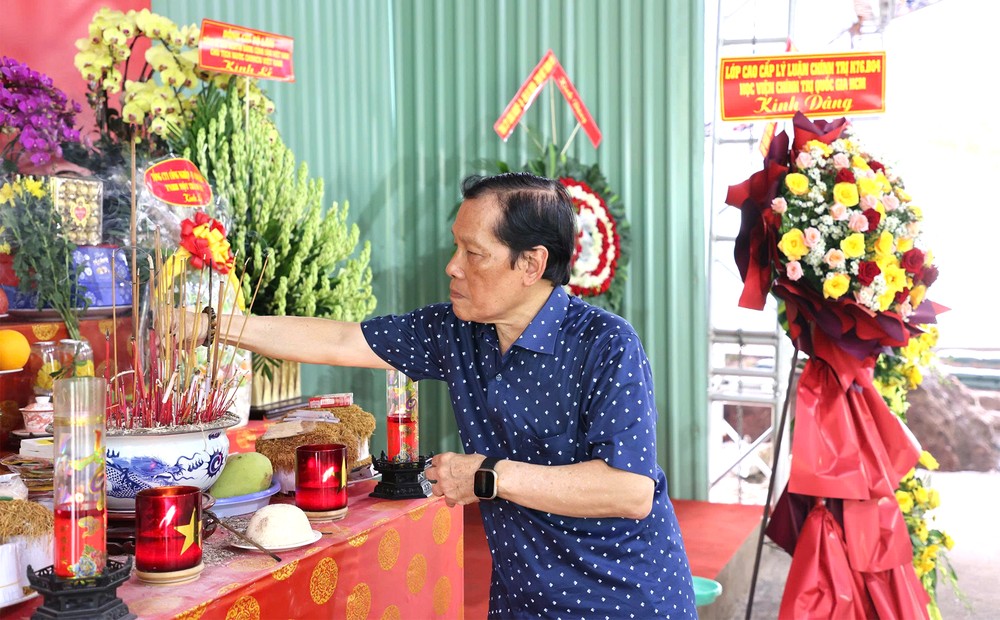

When Le Thi Rieng's two sons left the South, both were still very young. During their first years in North Vietnam, news of their mother reached them through letters.
Cong's memories of the farewell are fragmented, preserving only a few indistinct images of his mother. As he grew older, he came to know her through family photographs, the words she had left behind and the recollections of people who had lived and worked alongside her.
In the spring of 1968, the brothers learned from their teachers that their mother had been killed. Cong recalled that his elder brother, Minh Chanh, cried throughout the day, while he himself was too young to fully comprehend the loss.
With both parents gone, the boys continued to grow up under the care of their teachers and their parents' comrades. Among those who looked after them was Hoang Thi Mai Khanh, the wife of Pham Hung. The brothers called her mother because she had stepped in to care for them in their biological mother's absence.
As they grew older, their questions about Le Thi Rieng multiplied. Cong sought out people who had worked with her, asking about her character, her responsibilities, and whether she had spoken about her sons.
Through their recollections, he gradually formed a clearer picture of the woman who had been taken from him so early in life. He learned about the causes she had devoted herself to and the sacrifices she had made. He also came to understand that, amid the turmoil of war, she had continued to follow her sons' lives from afar, quietly hoping for their future.
Growing up with their longing for her, the brothers encouraged each other to hold on until peace came, believing that one day they would be reunited with their mother.
But when peace finally arrived, that reunion never happened.
Le Minh Chanh later died without witnessing the search for the fallen soldiers now underway at Le Thi Rieng Park. His daughter, Le Ngoc Mai Uyen, has since continued to await news alongside her uncle, Le Chi Cong.
She said the family hoped the search teams would be able to identify Le Thi Rieng's remains, along with those of other fallen soldiers still believed to be buried beneath the park.
The family recognizes the complexity of the task. Every set of remains recovered must undergo forensic examination and be cross-checked against available records before the identity of the deceased can be established.
"We are hopeful, but we also have to be patient and wait for that day," she said.
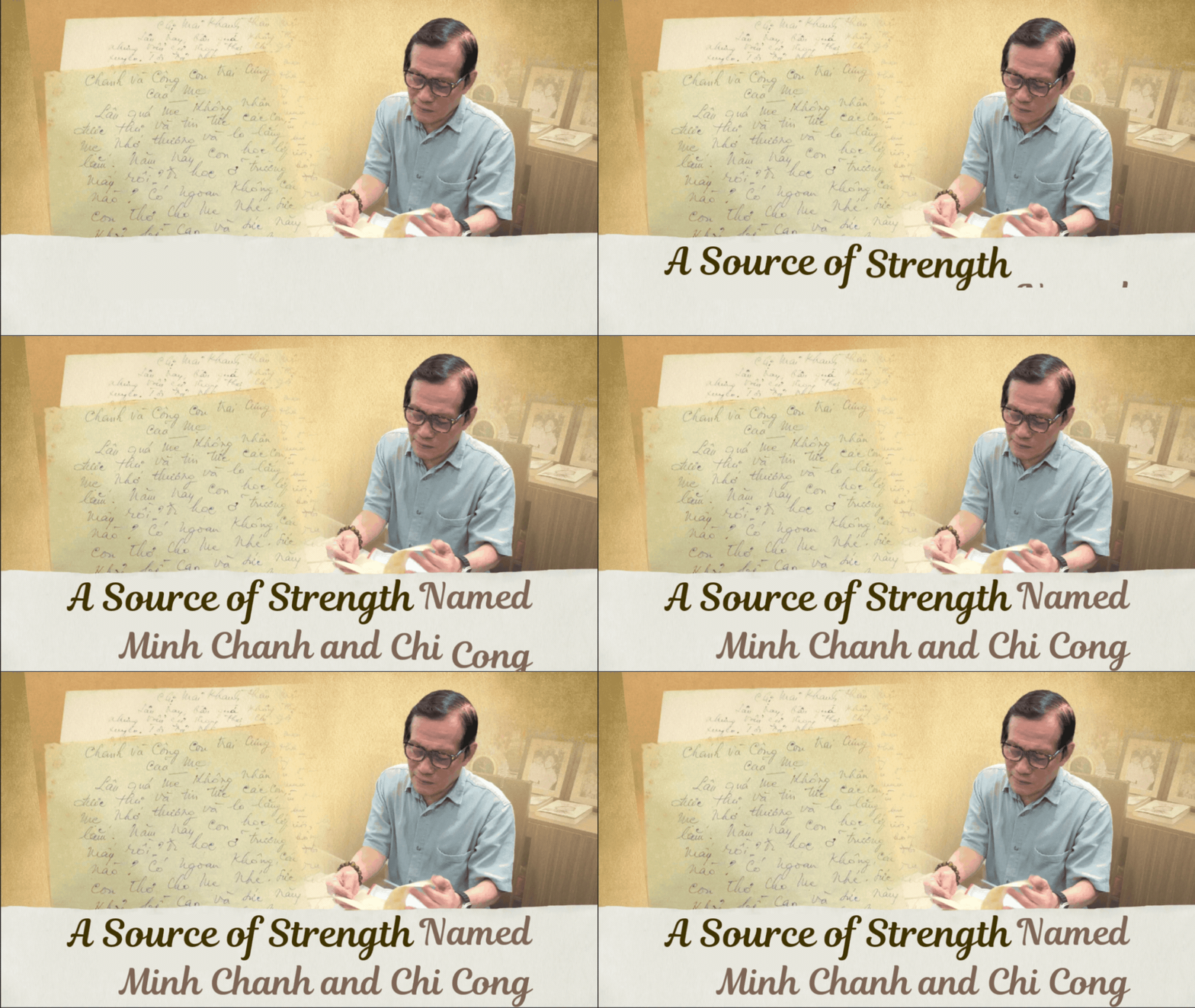
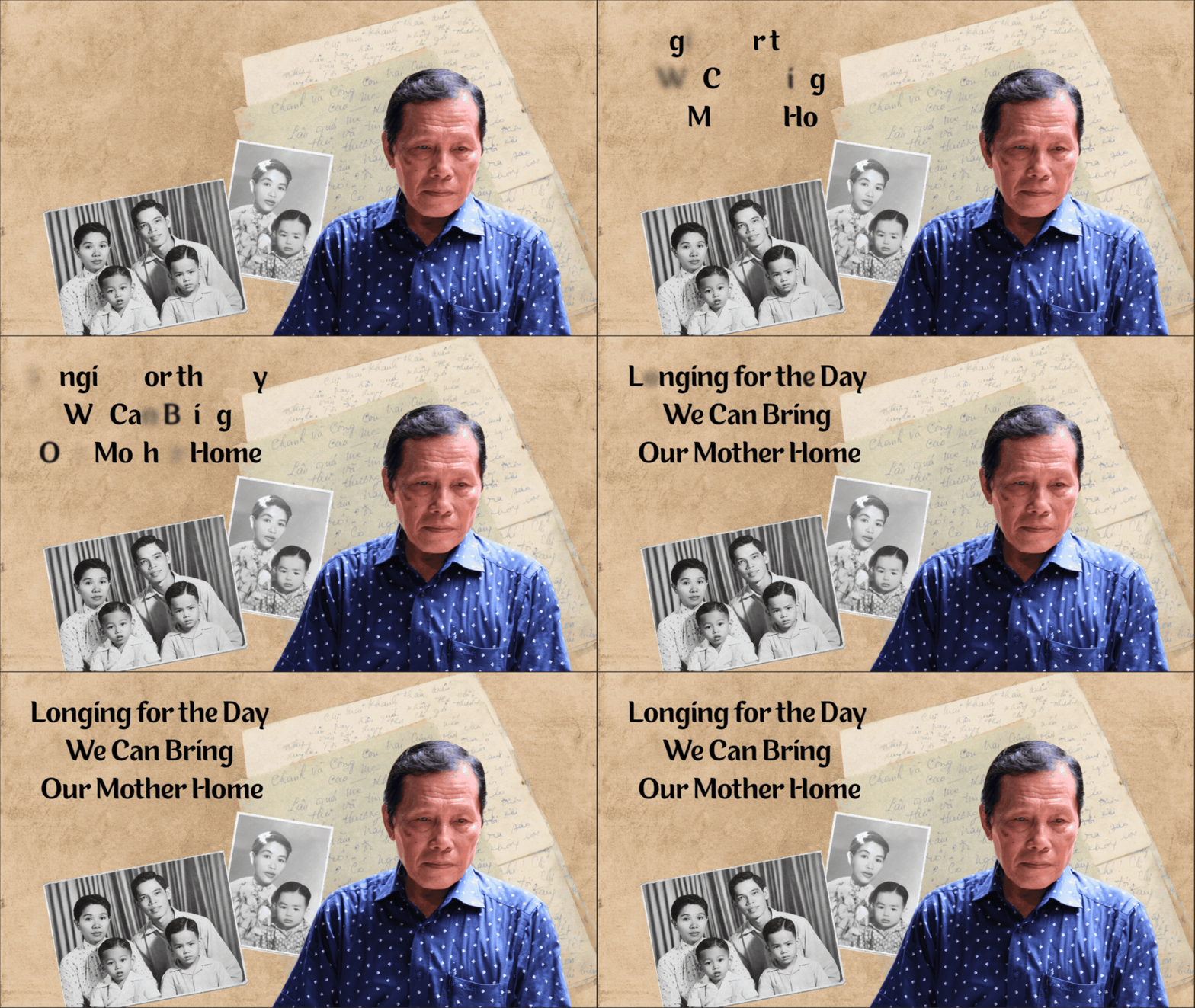
The letters and personal belongings Le Thi Rieng left behind have been carefully preserved by her family and comrades. Today, they remain a source of comfort for the sons who spent their childhood longing for their mother.
The National Museum of Vietnamese History preserves a small purple hard-cover notebook measuring 8 by 12 centimeters. It contains 95 sheets, of which only ten bear writing, while the remaining 85 are blank.
On the first page, Le Thi Rieng wrote: "Mother gives this to Minh Chanh and Chi Cong."
In a handwritten memoir titled A Painful Memory, dated December 4, 1962, she recalled parting from her husband at a revolutionary base in southeastern Vietnam. Having already separated from their two sons, the couple then had to accept missions in different locations.
She wrote about returning to a rendezvous point and nurturing the hope that she might see her husband again, only to receive news that he had been killed. Her grief was compounded by the fact that, when she sat down to write, she still had not found his grave.
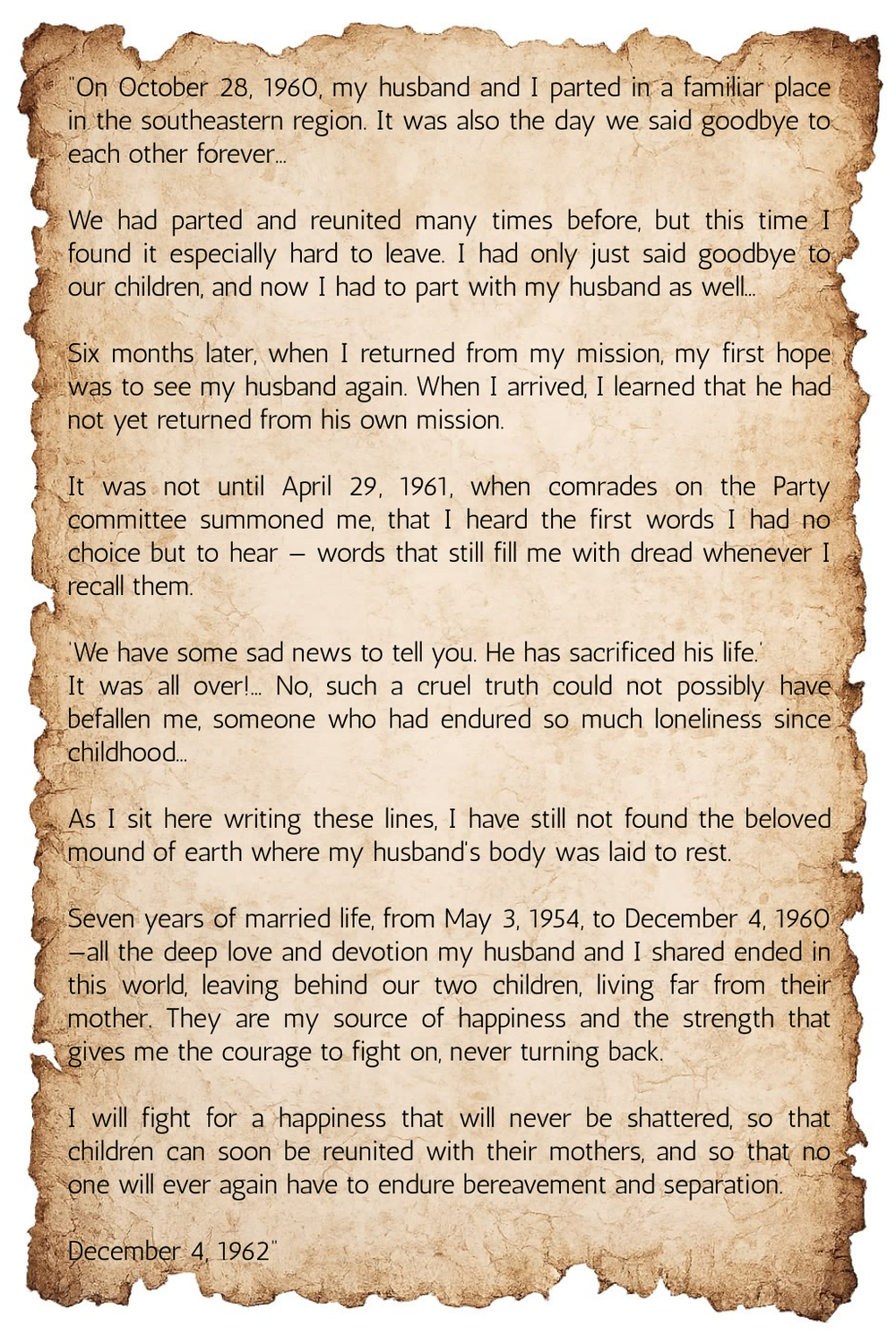
In the same memoir, she mentioned Minh Chanh and Chi Cong, who were living far away from her. Her sons were a source of happiness and strength, helping her withstand the pain of loss.
Reflecting on her own family's suffering, she imagined a future in which children could live close to their parents, free from the separations imposed by war.
During the 1963 Lunar New Year, she wrote a poem titled A Dream. In her vision as a mother, the reunification of Vietnam would also bring the chance to travel to Hanoi, meet her two sons and hold them in her arms after years apart.
It was a simple, deeply human wish: to see her children again and embrace them as any mother would.
But in 1968, she was killed before she could fulfil that dream.
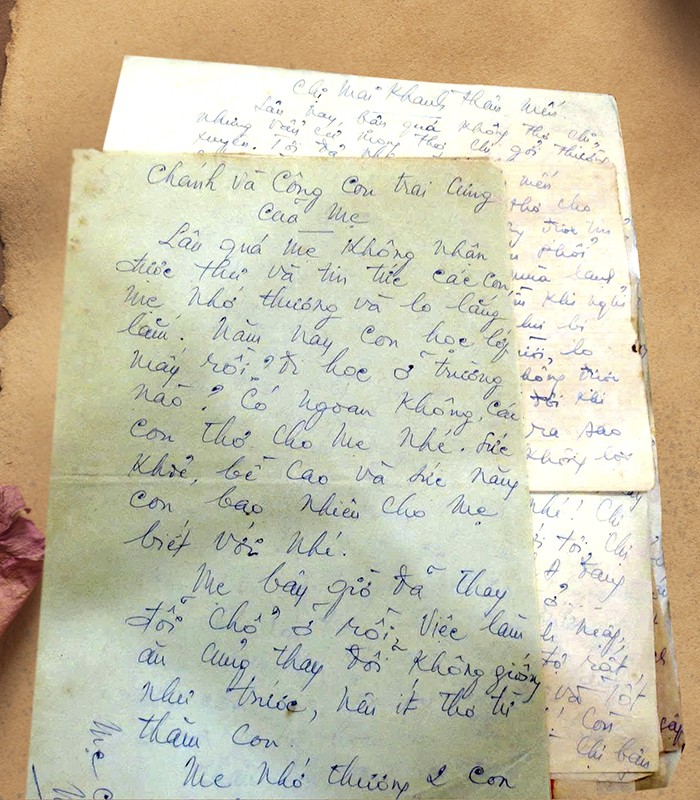
Cong has preserved the handwritten letters his mother sent from southern Vietnam as a cherished testament to their sacred maternal bond. One letter begins with the affectionate words, “My beloved sons, Chanh and Cong.” She asked what grades they were in, which school they attended, and whether they were well-behaved. She urged them to write to her and tell her about their health, height, and weight. Unable to see her children in person, she relied on these everyday questions to imagine how they were growing up, day by day.
Not all the letters were sent directly to her sons. According to Cong, many were addressed to the people caring for the children in northern Vietnam. In them, his mother asked detailed questions about the boys’ health and schooling and expressed her gratitude to those raising them in her place. Reading these old letters, Cong came to understand the depth of his mother’s love for Minh Chanh and himself.
The reunification of Vietnam, which the Heroine of the People’s Armed Forces had long hoped and fought for, eventually came. But Le Thi Rieng could not return to embrace her sons, Minh Chanh and Chi Cong. The reunion she had dreamed of would never become reality.
Yet today, a belief is gradually taking root: one day, before long, she will return…