This ancient engineering feat not only sustains local livelihoods but also creates a distinct attraction for local tourism.
Created thousands of years ago, the ancient Gio An water exploitation system—developed by the Champa people—is recognized by domestic and international archaeologists and researchers as a unique architectural work, featuring stone-stacking techniques to channel groundwater alongside a distinct surrounding ecosystem.
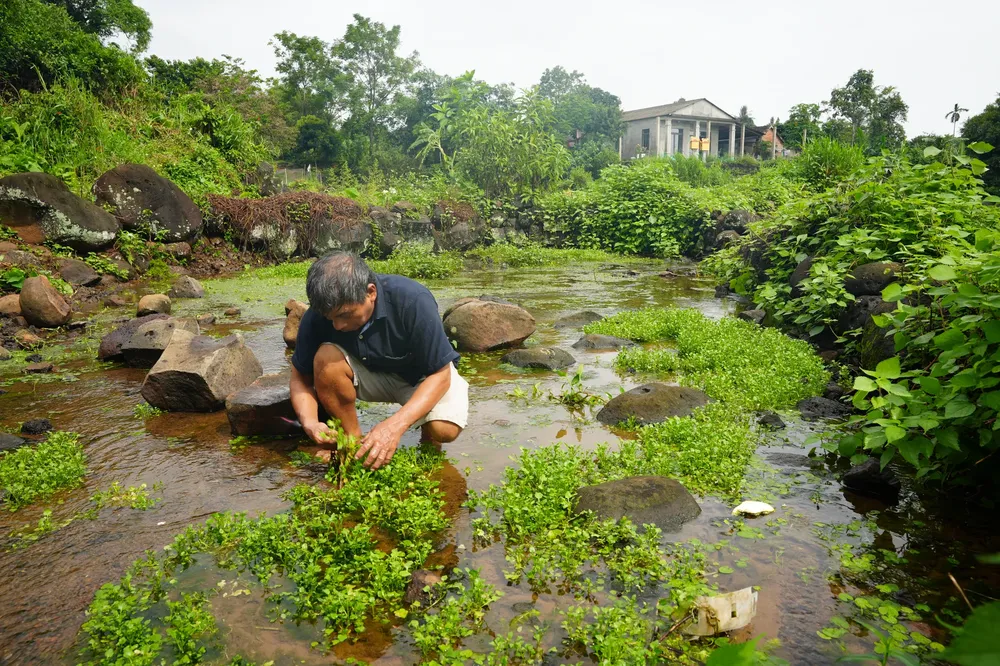
The highlight of this system is its ancient wells constructed using stone-embankment techniques to support agricultural production and daily life through a system of settling basins, retaining walls, and drainage channels, all constructed with stacked river pebbles.
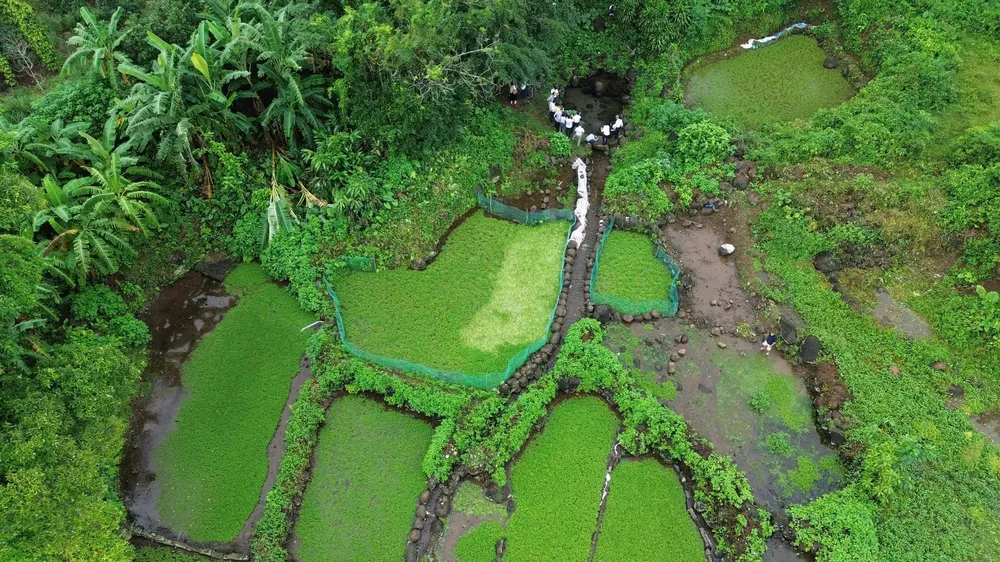
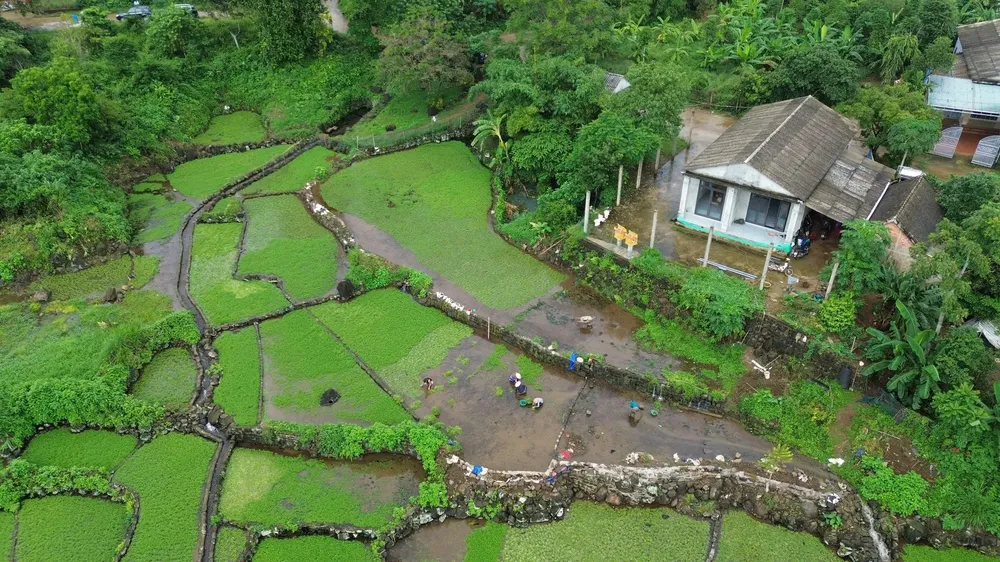
Tran Ngoc Chau, 70, a resident of Hao Son Hamlet, Con Tien Commune, said each ancient well has its own name, such as Trang, Tien, Dao, Son, Gai and Kinh. According to traditional customs, the Ong Well was reserved for men to bathe in, while the Ba Well was designated for women.
Con Tien, a transitional area between the mountainous region and the plains, was once the site of fierce fighting but has since been transformed into a prosperous and peaceful landscape. Residents believe that the abundant water supplied by the ancient well system has contributed to this transformation, supporting the cultivation of economically valuable crops such as rubber and pepper, and particularly rau liet, a local vegetable often described as a “gift from heaven.”
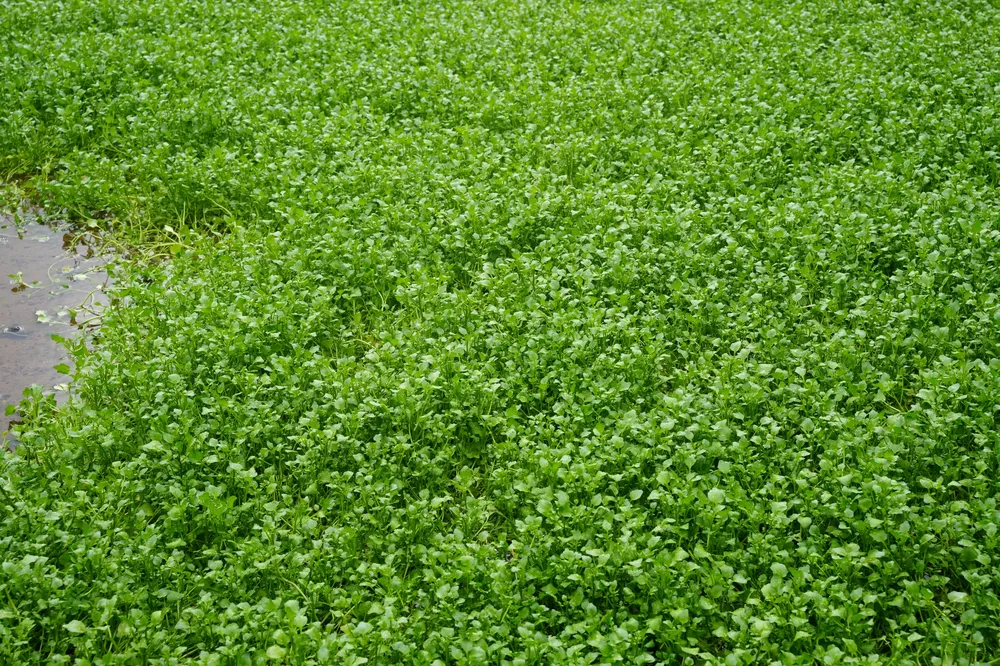
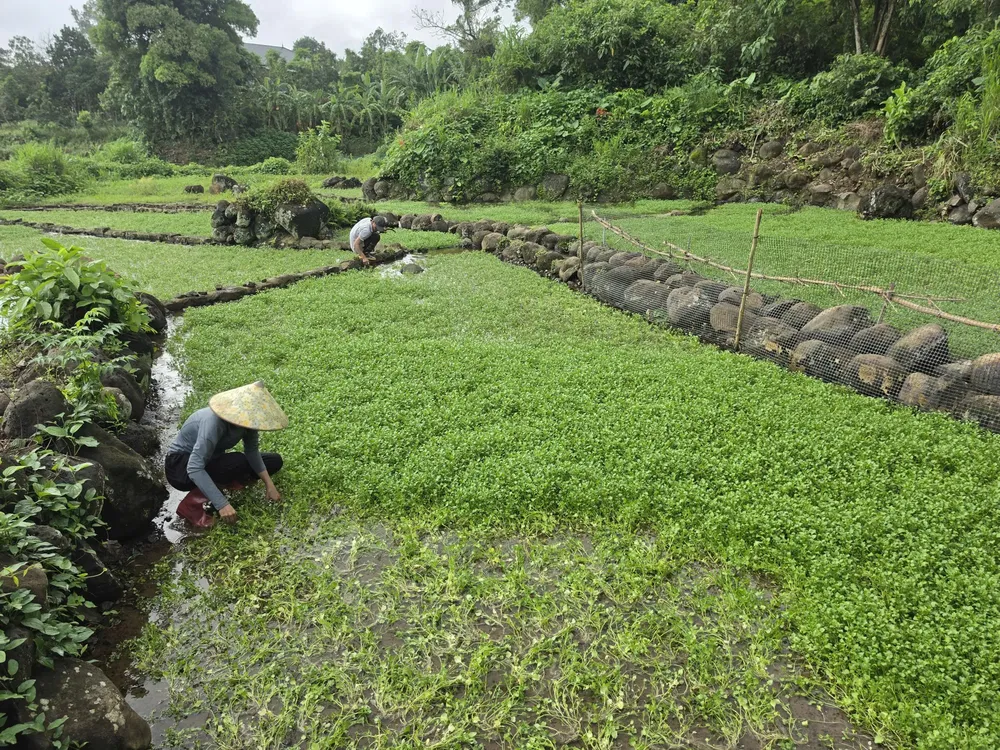
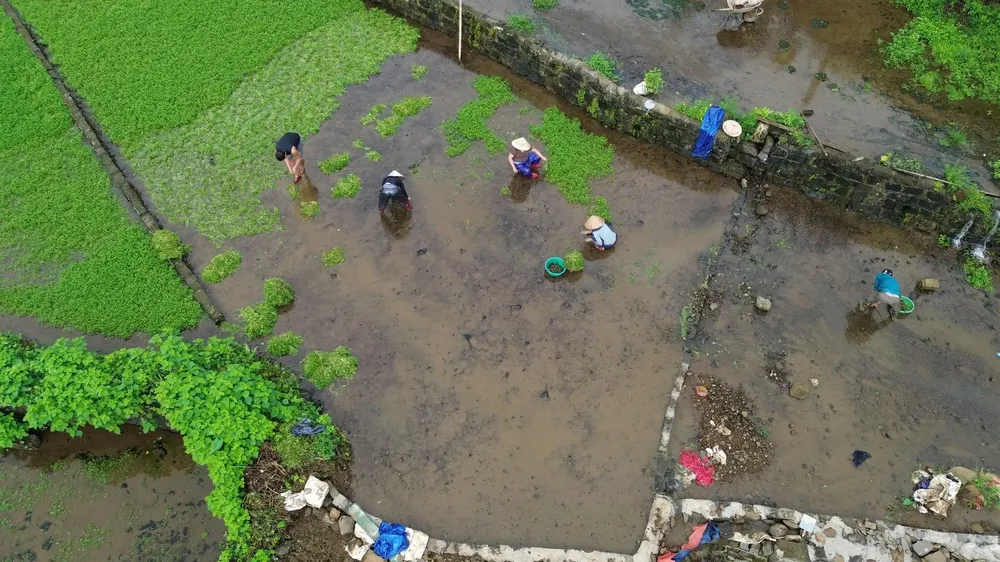
Ms. Nguyen Thi Tha, a resident of Hao Son Hamlet, Con Tien Commune, said rau liet (watercress) are grown without fertilizers or pesticides and require little maintenance. They grow on rocky fields, nourished by clean underground water flowing from the ancient wells, making them safe to eat raw straight from the fields.
At the beginning of each growing season, local farmers use leftover rau liet (watercress) roots from the previous crop to propagate new plants. The vegetable grows quickly and can be harvested every 15–20 days. According to Tha, rau liet has been certified as a clean vegetable by the relevant authorities and is purchased by traders directly from the fields at around VND15,000 per kilogram, with prices occasionally reaching VND25,000 per kilogram. With about six harvests over three months, every 100 square meters can generate revenue of VND30–50 million.
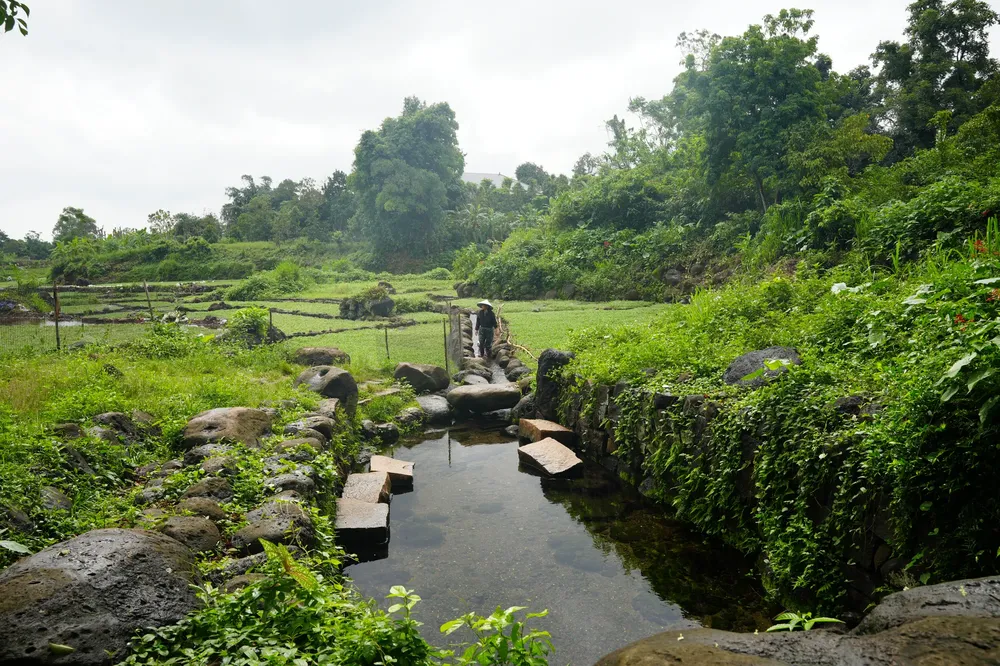
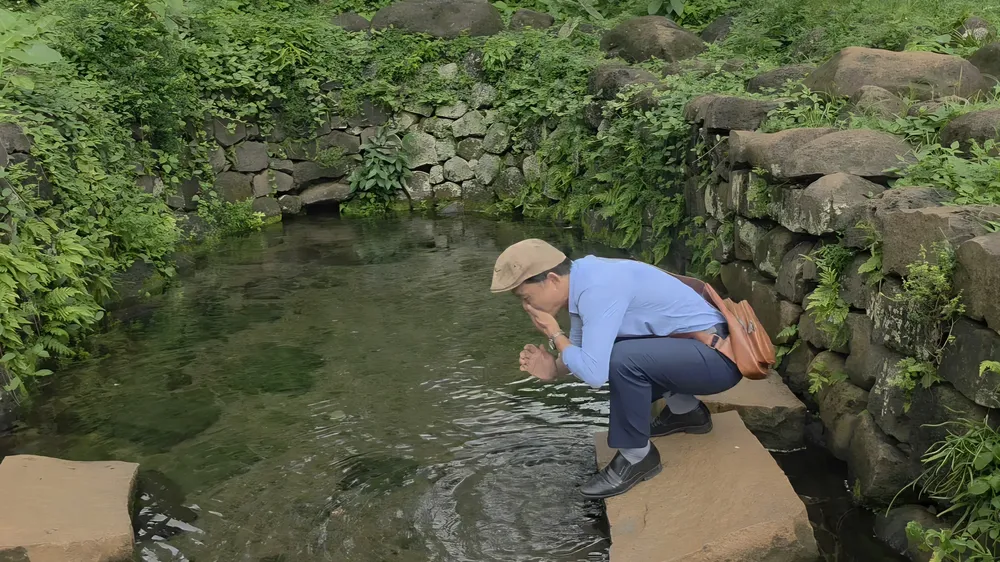
The Gio An ancient water exploitation system once comprised nearly 100 wells. However, damage caused by wartime bombing has reduced the number to around 30.
Mr. Le Phuoc Hieu, Deputy Head of the Economic Division of Con Tien Commune, said the Gio An ancient water exploitation system was recognized as a national relic by the Ministry of Culture, Sports and Tourism in 2001. In 2019, the Quang Tri Provincial People’s Committee submitted a proposal asking the ministry to consider preparing a dossier to designate the system of relics as a special national relic.
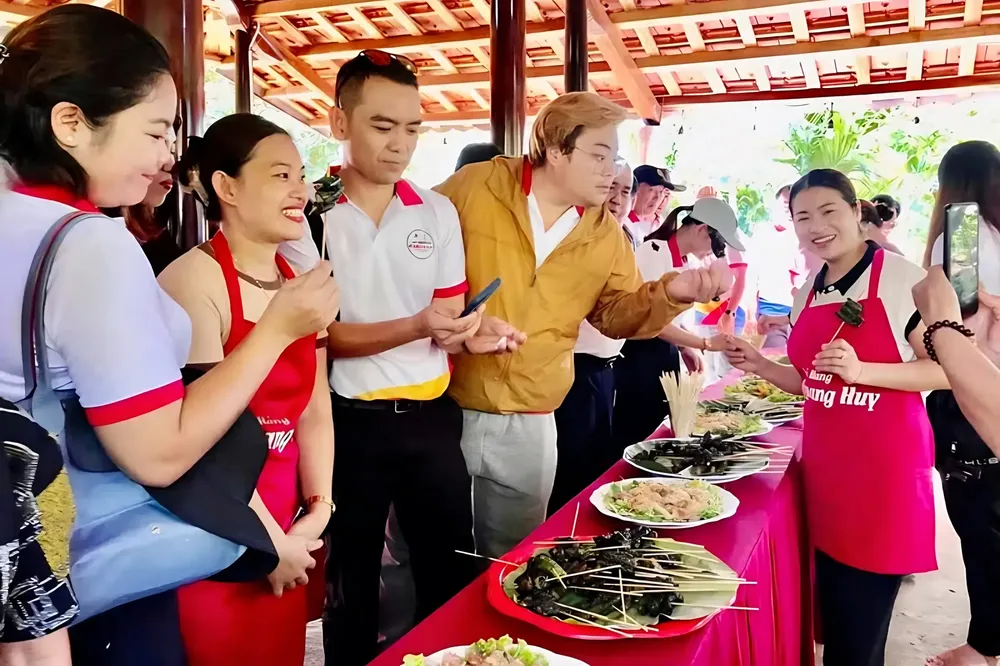
Alongside the economic value generated by rau liet vegetables and other crops, the Gio An ancient water exploitation system, a nationally recognized historical and cultural relic, is also a key attraction for tourism development in Con Tien. In 2025 and 2026, the locality welcomed approximately 70,000–100,000 visitors annually for sightseeing and experiential activities,” said Mr. Le Phuoc Hieu.
 "Visitors take photos at a rau liet vegetable field beside the Gio An Ancient Water Exploitation System.")