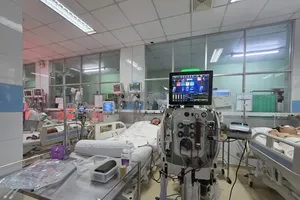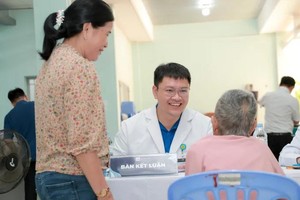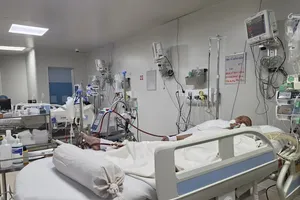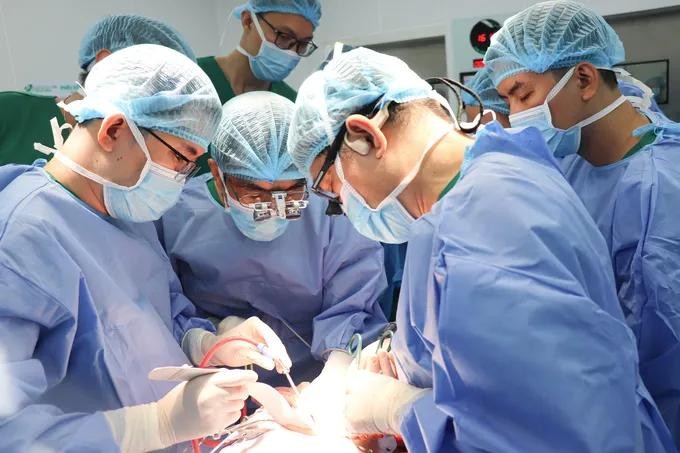
Children's Hospital 2, Ho Chi Minh City held its 2025 Scientific Conference on Pediatric Organ Transplantation, highlighting milestones and challenges in the field on December 11.
Associate Professor Pham Ngoc Thach, Deputy Director of the hospital, said pediatric transplants especially liver and kidney are among the most complex surgical procedures, requiring the collaboration of multiple medical specialties. The hospital began kidney transplants in 2004 and liver transplants a year later, initially with support from Belgian experts and Cho Ray Hospital.
Today, the hospital stands as one of Vietnam’s leading pediatric transplant centers. Over the past two decades, Children's Hospital 2 in Ho Chi Minh City has performed more than 50 liver transplants and 37 kidney transplants, giving children with end-stage organ failure a new lease on life.
Despite these achievements, organ transplants for children remain limited and fall short of real-world needs due to the severe shortage of donor organs. Most liver and kidney transplants come from living donors including parents or close relatives while organs from brain-dead donors are rarely used.
In many developed countries, organs from brain-dead children are a vital source for transplants, offering new hope for pediatric patients. But in Vietnam, the law still does not allow such procedures, even when parents wish to donate their child’s organs to save others.
Medical experts are calling for revisions to existing regulations to better reflect medical realities and ethical considerations, paving the way for a stronger legal framework supporting pediatric transplantation.
At the same conference, the hospital honored People's Physician, Professor, and Doctor Tran Dong A, who laid the foundation for Vietnam’s pediatric organ transplant program and guided its earliest operations in Ho Chi Minh City.
According to the Ministry of Health, Vietnam has so far conducted more than 9,800 organ transplants, covering six types of organs. Kidney transplants account for the majority with 8,904 cases, followed by 754 liver transplants, 126 heart transplants, and 13 lung transplants.