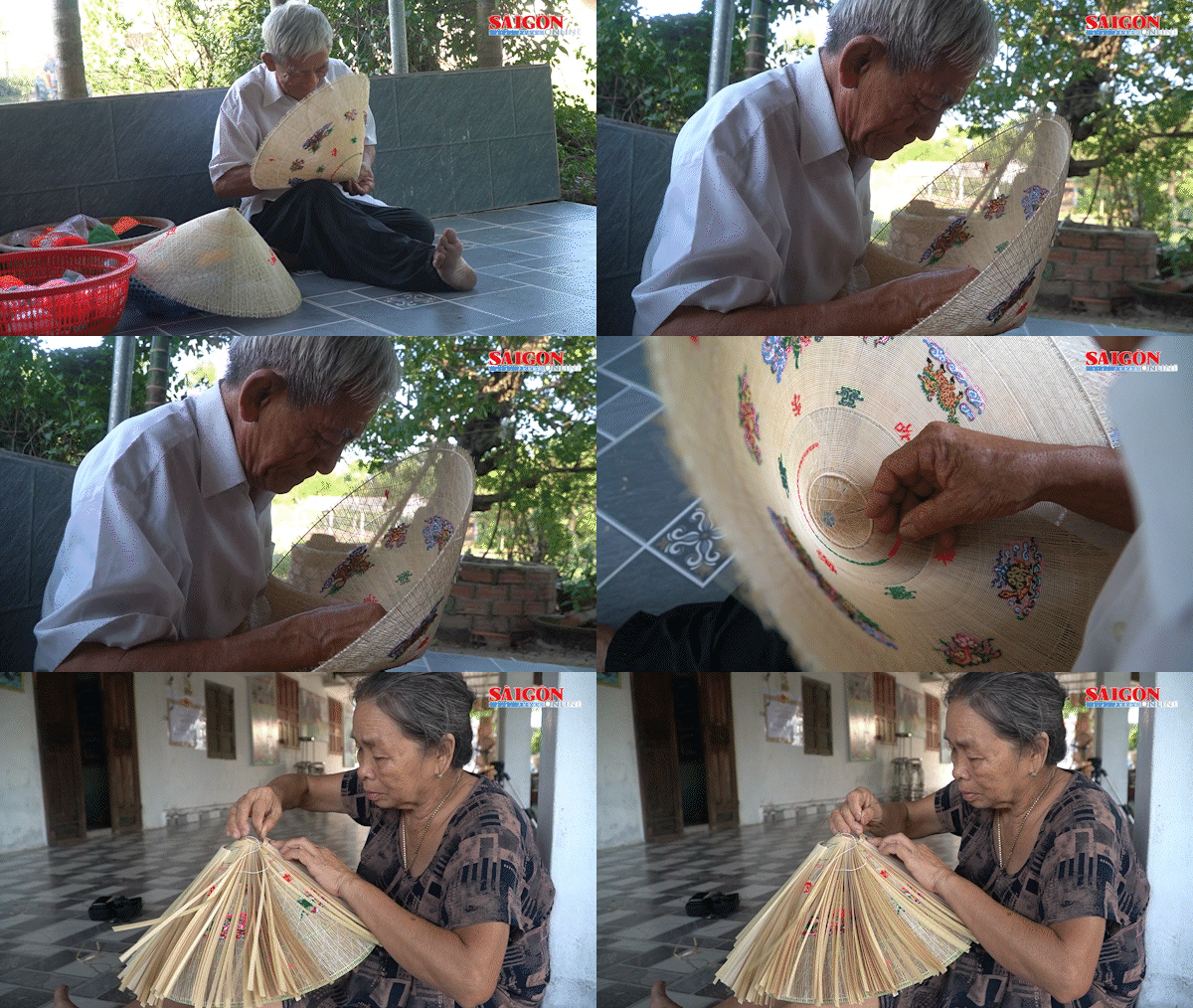
Yet the centuries-old lacquerware village of Tuong Binh Hiep, now in Chanh Hiep Ward, HCMC, has proven an exception—thanks largely to artisans who remain deeply committed to preserving and revitalizing the trade.
A legacy handed down
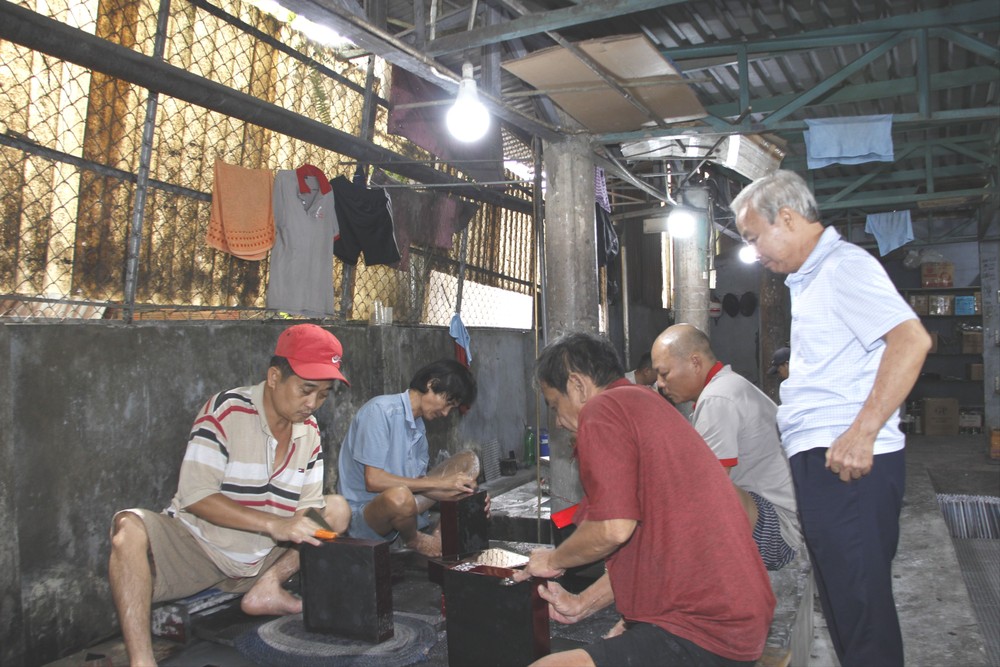
On a rain-soaked afternoon, Sai Gon Giai Phong reporters visited the workshop of Meritorious Artisan Le Ba Linh. Contrary to expectations, the production floor of Tu Bon Fine Art Lacquer Co., Ltd. was anything but quiet. Lights were on, and workers were steadily engaged in each painstaking stage of lacquerware production.
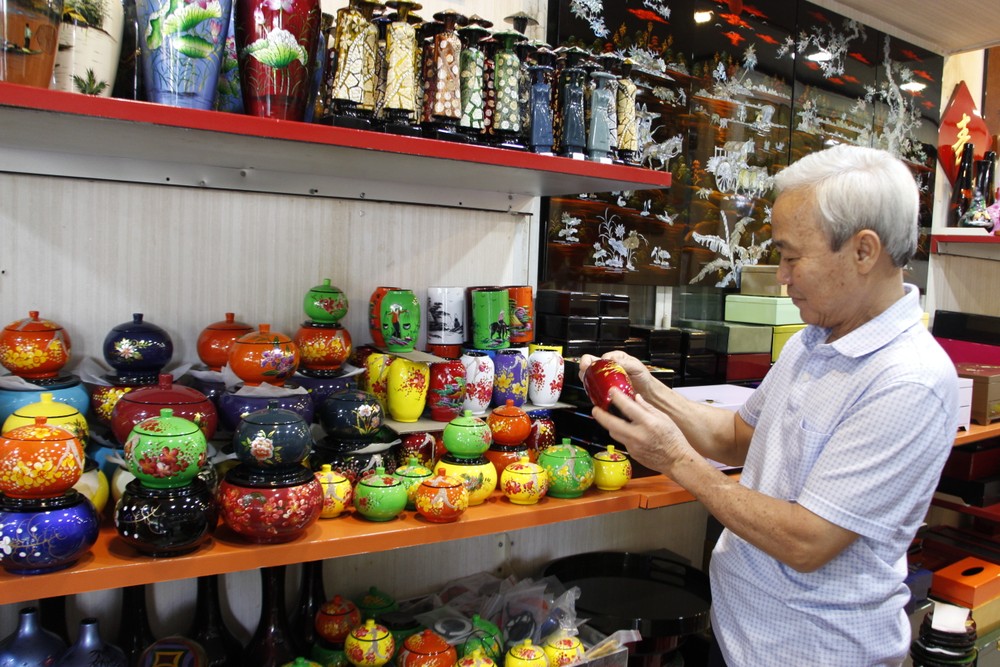
Welcoming the reporters into a cozy reception room filled with gleaming lacquer pieces, Linh spoke candidly about a craft with a history spanning more than a century. “Every trade has its ups and downs,” he said thoughtfully. “But I have never once considered abandoning this profession.”
At 63, with four decades devoted to lacquerware and the State-conferred title of Meritorious Artisan, Le Ba Linh’s career stands as proof of that resolve. Beyond passion, he has focused on finding ways to safeguard and enrich the craft. In 1991, he founded the Tu Bon lacquer workshop, which later evolved into a company and has since maintained steady growth.
Recalling earlier decades, Linh said there was a time when nearly every household in the village practiced lacquerware, and the craft sustained entire families, even lifting many out of poverty. Lacquerware, he noted, is not a basic necessity but a form of fine handicraft—often purchased as culturally rich gifts. As a result, demand can drop sharply during economic downturns.
Even so, Tu Bon has weathered repeated market shocks, continuing to provide stable jobs and income for more than 20 older workers—many of whom have few alternative employment options.
Looking ahead
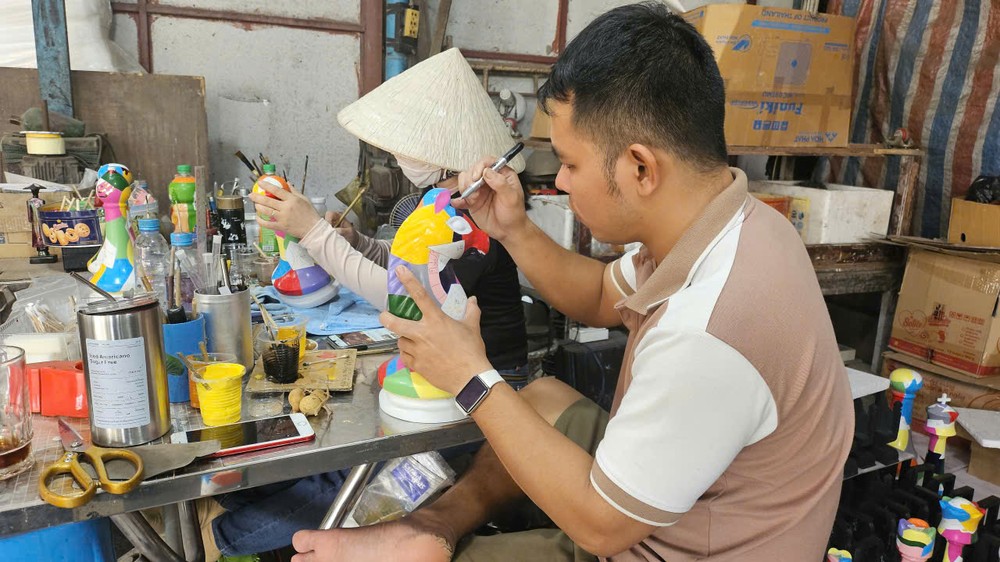
Facing changing market dynamics, Linh said lacquerware producers have had little choice but to adapt. His company has expanded into souvenir items, adjusted pricing to retain customers, and diversified designs while preserving traditional aesthetics. These efforts have paid off, particularly with foreign buyers drawn to products that blend nostalgia with contemporary flair while retaining strong cultural identity.
“Even with machinery, at least 60 percent of the work remains manual,” Linh said. “Only the skilled and creative hands of artisans can truly breathe life into each piece.”
Today, Tuong Binh Hiep is home to about ten companies and several dozen household-scale workshops, employing roughly 1,000 workers. The village has been officially recognized as a national intangible cultural heritage site, and a master plan has been approved to preserve and develop the craft village in tandem with tourism.
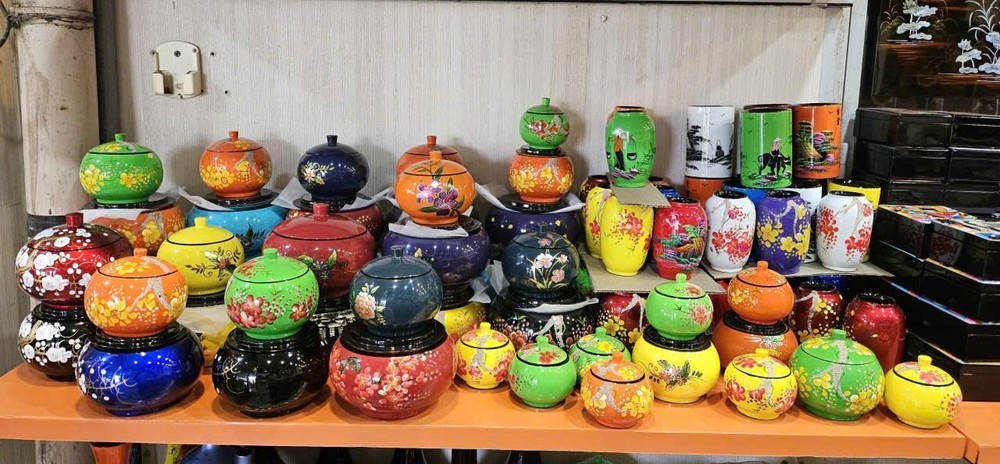
Artisans who remain in the trade hope the plan will be implemented promptly and effectively, enabling them to expand production and promote their products more widely. Linh has even floated the idea of establishing a lacquerware festival, similar to fruit or agricultural fairs. If well designed and linked to HCMC’s expanding tourism landscape, he believes such a festival could boost sales, support livelihoods, and ensure that the cultural values embedded in Tuong Binh Hiep lacquerware continue to be preserved and passed on.