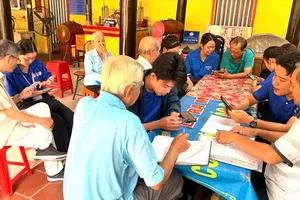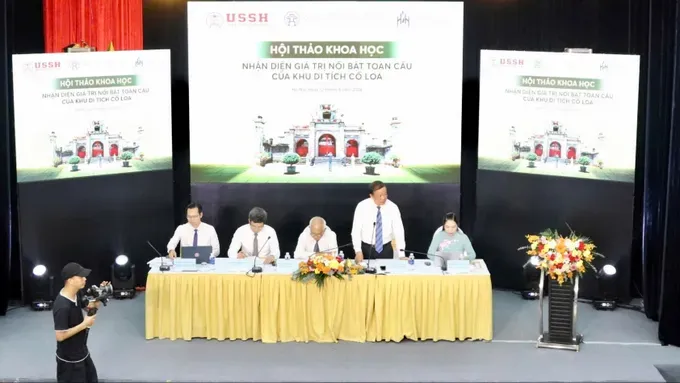
The event was organized by the Thang Long–Hanoi Heritage Conservation Center, in coordination with the Vietnam Association of Historical Sciences, and focused on building the scientific grounds to complete a summary report for inclusion on UNESCO’s World Heritage Tentative List.
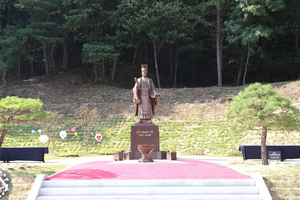
Co Loa Relic Site holds a paramount position in Vietnamese history as the ancient capital during two pivotal eras, under King An Duong Vuong’s Au Lac Kingdom in the 3rd century BCE and under King Ngo Quyen in the 10th century CE.
The workshop aimed to clarify the scientific basis for finalizing the nomination dossier to be submitted to UNESCO for consideration of Co Loa’s inclusion on the Tentative List of World Heritage Sites.
Scholars highlighted that Co Loa’s significance extends beyond its unique triple-walled rampart system to its strategic integration with moat networks, the Hoang Giang River, and the Red River system across the transition zone between the Northern region’s midlands and coastal plains. The complex represents a sophisticated synthesis of ancient civil engineering, water management, land use, and social organization that sustained a major center of power and settlement.
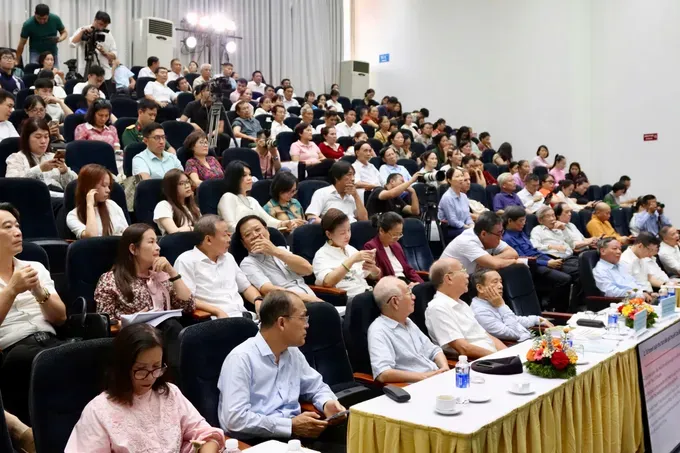
Director of the Thang Long-Hanoi Heritage Conservation Center, Nguyen Thanh Quang, described Co Loa as crucial physical evidence of early state formation rooted in the Bronze Age Dong Son culture—reflecting an intersection of advanced metallurgy, wet-rice agriculture, waterway transport, military engineering, and social structure.
Professor Vu Van Quan of the University of Social Sciences and Humanities, Vietnam National University - Hanoi, noted that the combination of ancient fortifications, historic hydrological systems, archaeological residential and metallurgical sites, and traditional village spaces underpins Co Loa’s potential Outstanding Universal Value.
Professor Nguyen Quang Ngoc emphasized that the citadel represents a culmination of the Au Lac Kingdom’s achievements and stands as a pinnacle of both the Dong Son culture and Red River civilization.
Addressing the symposium, Vice Secretary of the Party Committee of Hanoi, Nguyen Van Phong, urged researchers to systematically consolidate studies on Co Loa and the northern area of Hanoi within the broader developmental framework of Thang Long-Hanoi. He also called for a comprehensive digitization project to support research, education, and public outreach.
He underscored that the ultimate objective extends beyond securing UNESCO recognition to crafting an effective master plan that drives sustainable investment, long-term conservation, and promotion of Co Loa’s heritage value.