It preserves urban memories, connects communities and tells stories about the city’s identity.
Public spaces are part of cultural infrastructure
In recent years, the concept of “cultural infrastructure” has expanded significantly. Once mainly associated with museums, libraries, theaters, cultural centers and cinemas, it now also includes public spaces where people can access culture naturally, without tickets or barriers related to age or occupation. Public sculpture is an important link in this system.
In Ho Chi Minh City, many works have demonstrated values beyond their significance as artworks. The statue of President Ho Chi Minh on Nguyen Hue pedestrian street, a prominent feature in front of the Ho Chi Minh City People’s Committee headquarters, has become a venue for political and cultural activities during major celebrations.
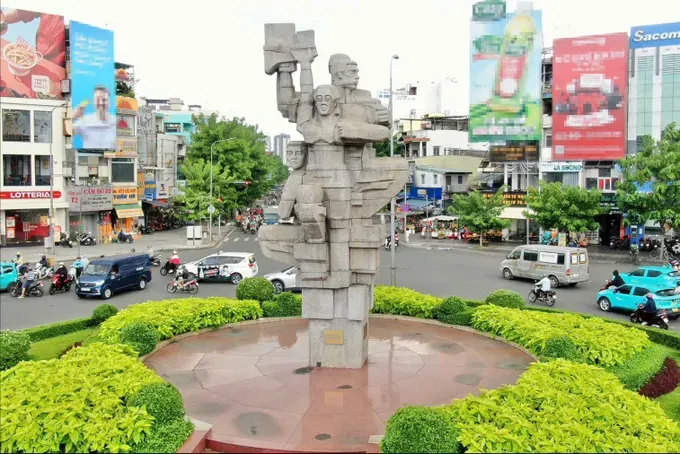
The Tran Hung Dao Monument at Me Linh Square in Saigon Ward has long been associated with the urban memories of generations of Saigon and Ho Chi Minh City residents.
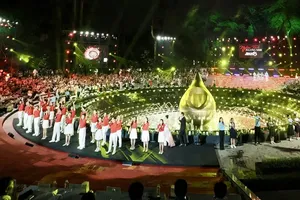
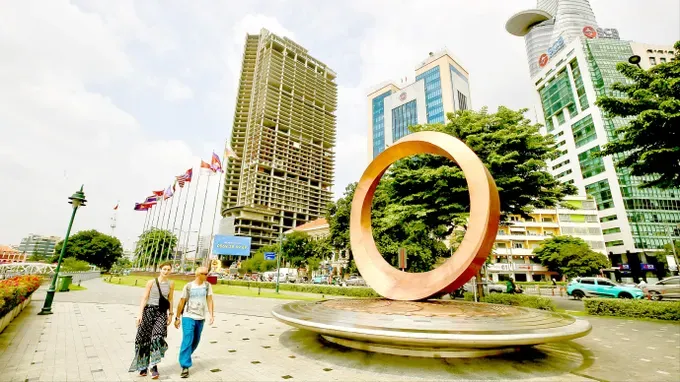
In newer spaces, art continues to help shape the city’s identity. Tam Thang Tower at Tam Thang Square in Vung Tau Ward is gradually becoming a landmark of the coastal city. The Ho Chi Minh City International Friendship Symbol at Ben Bach Dang Park in Saigon Ward enriches the riverside landscape while conveying a message of openness and international integration.
At Ho Chi Minh City Book Street in Saigon Ward, sculptures enhance the experience of readers and visitors, helping transform the space into an attractive cultural destination.
The value of these works lies not only in beautifying the landscape but also in creating “cultural addresses” where residents meet, experience art and form shared memories.
Professor and sculptor Nguyen Xuan Tien, former Chairman of the Ho Chi Minh City Fine Arts Association, said that a sculpture truly comes to life through the relationship between the artist, the artwork and the public.
He noted that an artwork can fully serve its role in cultivating aesthetic awareness, nurturing emotional values and enriching spiritual life only when it is embraced by the public. Integrating art into public spaces therefore allows it to contribute directly to shaping the urban environment and reinforcing the city’s identity.
Ho Chi Minh City has substantial creative resources. Since the establishment of the Gia Dinh School of Drawing in 1913, the city’s fine arts and sculpture sector has developed for more than a century, characterized by openness and continuous innovation.
The city now has more than 200 practicing sculptors, including 103 members of the Ho Chi Minh City Fine Arts Association. Domestic and international sculpture camps have also produced hundreds of artworks of artistic value.
Experts note that Ho Chi Minh City has abundant artistic talent and a wealth of artworks, but lacks comprehensive planning to make public art an integral part of its cultural infrastructure.
Integrating art into urban planning
Ho Chi Minh City is entering a new phase of development with an expanded urban space. Squares, parks, riverside areas, metro stations and new urban developments are gradually taking shape.
This creates favorable conditions for public art but also requires cultural elements to be integrated from the planning stage.
Associate Professor and sculptor Tran Thanh Nam, Chairman of the Ho Chi Minh City Fine Arts Association, said that outdoor sculpture cannot be separated from urban planning.
Artworks should be considered components of architectural spaces rather than additions made after construction is completed. When appropriately positioned, sculptures can help establish the identity of individual areas, improve landscape quality and enhance the use of public spaces.
In many projects, artists are invited to participate only at the final stage, when infrastructure has already been completed. The lack of comprehensive planning, transparent selection mechanisms and stable investment resources means public art mainly appears as individual projects rather than as a connected ecosystem, Mr. Tran Thanh Nam said.
Dr. Vu Ngoc Con, a senior expert at the Ho Chi Minh City University of Culture and former director in charge of technical infrastructure projects in New York City, said that public sculpture can reach its full potential only when it is regarded as part of cultural infrastructure.
According to him, parks, squares, riversides and public transport stations are not merely places for movement but also spaces where art can create distinctive identities and improve residents’ experiences.
New York’s experience shows that investment in public art should not be viewed as an additional expense, but as an investment in urban quality and competitiveness.
Many cities worldwide provide examples. In Chicago, the United States, Cloud Gate has become both an iconic artwork and a major tourist attraction, helping promote the city’s image internationally. Singapore has also integrated public art into urban planning, placing artworks in parks, squares and residential areas to enhance the quality of public spaces.
For Ho Chi Minh City, these experiences provide useful references as it implements Politburo Resolution No. 80-NQ/TW on developing an advanced Vietnamese culture imbued with national identity in the new period, as well as strategies for developing cultural industries.
When public sculpture is integrated into cultural planning, squares, parks and streets can become more than spaces for movement. They can serve as creative spaces that bring communities together, support tourism and add value to the cultural industry ecosystem.
Experience from cities around the world demonstrates that investment in public sculpture is not merely an investment in the arts, but also in the cultural environment experienced by residents in their daily lives in squares, parks and along riverside walkways, Dr. Vu Ngoc Con said.
The city needs a long-term strategy to integrate art into urban development planning. Once this connection is established, public sculpture can move beyond its decorative function to become an integral part of cultural infrastructure, preserving collective memories, reinforcing urban identity and contributing to the sustainable vitality of a modern city, he added.