Known locally as the “Russian Village,” the neighborhood stands as a living symbol of the enduring friendship between Vietnam and Russia.
“Russian Village” is the affectionate name given by local residents to the Russian community residing in Sub-zone 1 of the Vietsovpetro Vietnam–Russia Joint Venture housing complex on Nguyen Thai Hoc Street in Tam Thang Ward. More than just a place to live, work and study, the community has become a second homeland for generations of Russian experts and their families.
Covering nearly 10 hectares, the residential area feels like a small piece of Russia nestled within the coastal cityscape of eastern Ho Chi Minh City. Separated from the Vietnamese residential quarter by only an internal road, the neighborhood has, for over 40 years, served as a testament to the friendship and cooperation between the two nations.
For Chekmarev Maksim, a 30-year-old interpreter at the Vietsovpetro Executive Office, Vietnam has become a second home after seven years of living and working in the country.
During a trip to Vietnam, his family visited Vung Tau and immediately fell in love with the place, he said; all members wanted to return and build lives here.
In 2019, he joined Vietsovpetro and moved to the Russian Village with his wife and children. The living and working environment in eastern Ho Chi Minh City is wonderful. The climate is pleasant, and his colleagues are friendly. He enjoys many Vietnamese dishes. Most of all, I love Vietnamese coffee for its rich flavor and aroma, he said.
His wife, Chekmareva Nataliia, shared similar sentiments. When she followed her husband to Vietnam, she quickly fell in love with life in the Russian Village. She does not have many friends here, but Vietnamese people have always been sincere and kind. Given the choice again, all would still choose this place to build life and raise a family.
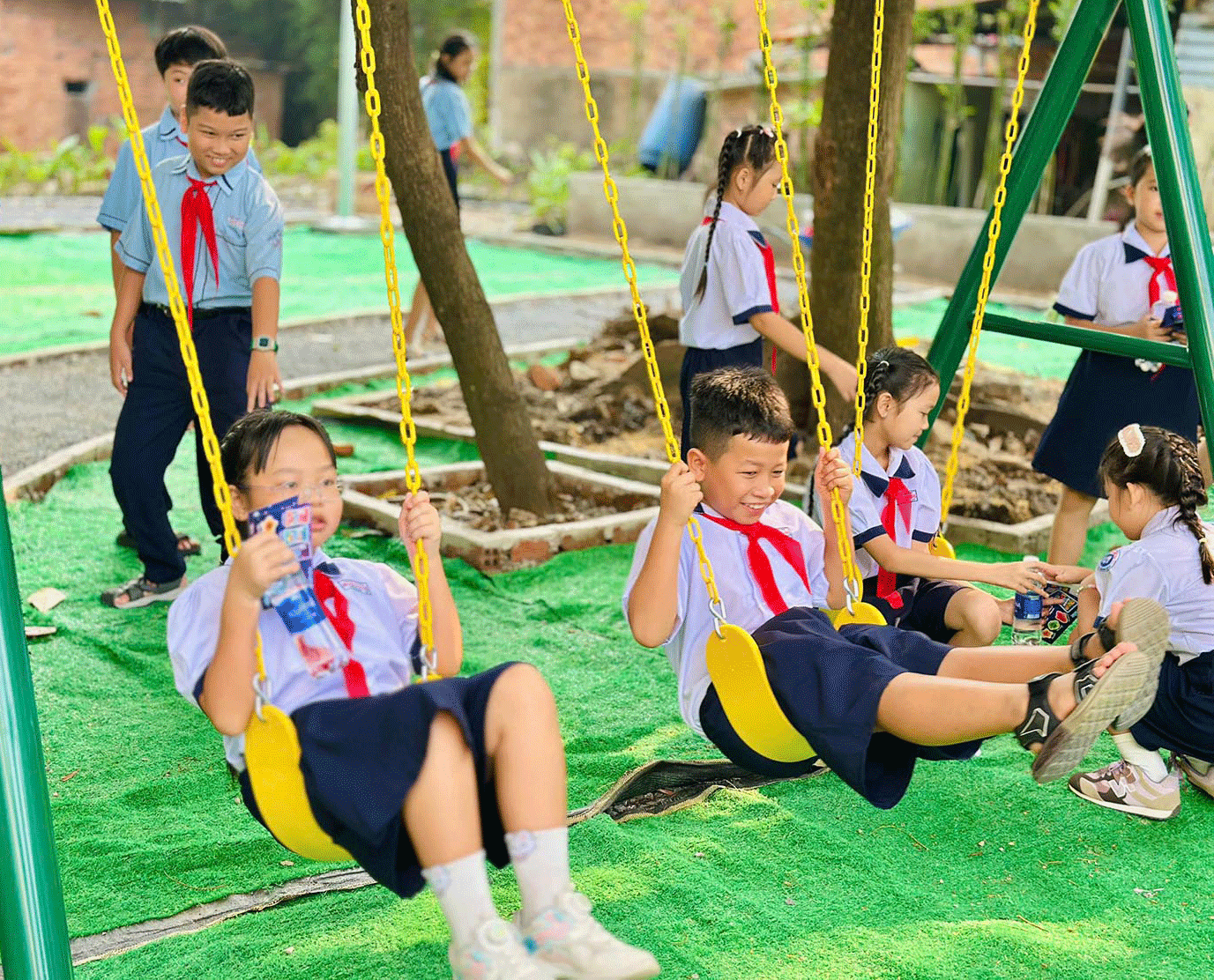
On weekday mornings, most Russian experts leave early for work aboard company shuttle buses. However, the Russian school located within the residential complex remains bustling with activity.
Bespalova Anastasia, a 10th-grade student, has lived in Vietnam for a decade and attended the school throughout that time. The curriculum here is very similar to what students study in Russia, she said, the school receives educational materials promptly, making learning convenient. Besides Russian classmates, she has also made Vietnamese friends, which makes school life even more enjoyable.
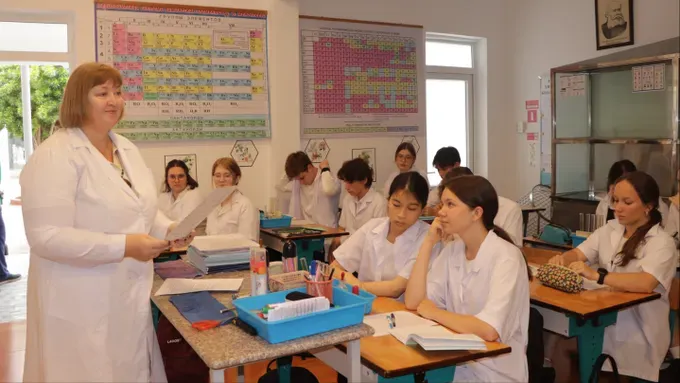
According to Principal Ershov Dmitrii, the school currently serves 260 students across 11 classes. Lessons follow the standards of Russia’s Ministry of Education and include mathematics, Russian language, history, biology, geography, chemistry, physics, information technology, astronomy and social studies. In addition to Russian, students study English and German and participate in various cultural and sporting activities.
A symbol of Vietnam–Russia friendship
According to Vietsovpetro, around 2,000 Russian citizens were living and working in Vung Tau during the early 1990s. Initially housed in apartments within the Lam Son Oil and Gas Service Complex, Soviet specialists were later relocated to a dedicated residential area developed specifically for experts working in Vietnam.
In 1985, Vietsovpetro built Sub-zone A of the five-story apartment complex in Sub-zone 1, covering more than 10 hectares, to accommodate Soviet specialists, now Russian experts. A school was also established within the complex to meet the educational needs of their children.
Mr. Saliev Alexey, Chairman of the Russian Trade Union at Vietsovpetro, said that nearly 400 Russian experts currently live in the community, part of a broader Russian population of nearly 1,000 people residing and working in the area.
All Russian experts are provided with apartments where they can live with their families, he said, Vietsovpetro creates favorable conditions for Russian specialists in both their professional and daily lives, helping them feel secure and committed to long-term work in Vietnam.
The Russian Village also features a range of facilities, including a shopping center, medical clinic, kindergarten, volleyball and football courts, tennis and badminton courts, a sports hall, exhibition center and utility infrastructure.
Over the years, cooperation between Vietnam and Russia has extended beyond professional collaboration. Cultural exchanges, sporting events and community activities have helped strengthen mutual understanding and foster lasting bonds between the two peoples.
Today, the Russian Village remains a unique cultural enclave and a vivid example of how a foreign land can become home.