Many communes in Ho Chi Minh City are emerging as bright spots for digital transformation in agriculture. From production and traceability to e-commerce, new models are helping to increase the value of agricultural products, expand markets, and create momentum for economic development.
Smart technology powers profits for farmers on HCMC’s outskirts
In Hung Long Commune, the civet breeding model of Nguyen Van Duc in Hamlet 32 is yielding high economic efficiency thanks to the application of technology. During the rearing process, the farmer invested in an automatic water supply system and a semi-automatic cleaning system, ensuring a clean water supply, limiting disease, and reducing cleaning time by approximately 80 percent compared to manual methods. As a result, the breeding environment remains dry and airy, creating favorable conditions for the civet population to thrive.
At the beginning of 2026, transitioning from an individual household, farmer Nguyen Van Duc supported and called for the participation of five other households to form a civet breeding cooperative group. To date, the total herd has grown to 200 breeding pairs.
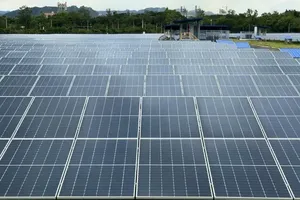
More than 10 kilometers away from Hung Long, the apricot garden model applying solar energy combined with IoT (Internet of Things) belonging to Bui Ngoc Duc, owner of Huu Duc Apricot Garden, No. 852 Vuon Thom Road, Hamlet 3, Binh Loi Commune, is another local model for digital transformation. The IoT system helps reduce labor by 90 percent, saves 20 percent to 70 percent of water, and optimizes the flower care process.
Additionally, owner Bui Ngoc Duc invested in a solar power system combined with smart sensors to monitor and control the care of the apricot trees, tracking humidity, temperature, irrigation levels, and the growth status of the plants. He revealed that the garden currently has over 20,000 apricot trees. Applying technology to production helps me save over VND100 million (US$3,800) per hectare annually, while significantly reducing labor and water costs.
During the Tet holiday, he uses Facebook and TikTok to livestream and sell products. This method helps expand the customer base, increase interaction with buyers, and lower promotional costs. Consequently, the garden sells over 1,000 apricot trees annually.
Digital farmers' clubs drive smart agriculture across the city
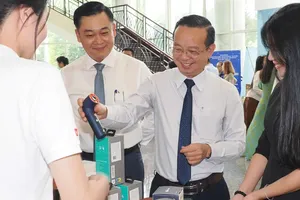
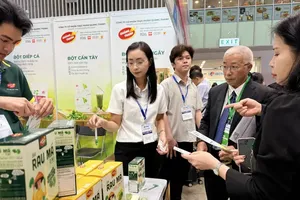
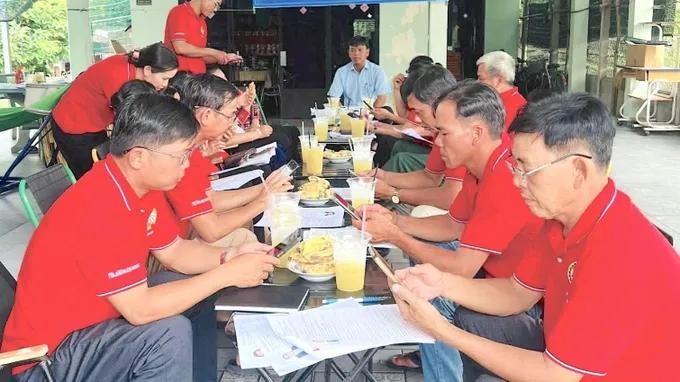
In An Nhon Tay Commune, farmers' conversations over morning coffee, which previously revolved around weather or fertilizer prices, have changed significantly. At the "Digital Farmers' Club," members discuss scanning QR codes, livestreaming sales, and installing the Farmers' Association app; they share experiences in product digitization, traceability, anti-counterfeiting, and bringing agricultural, forestry, and aquatic products to e-commerce platforms to improve economic efficiency.
Chairman Pham Phu Cung of the An Nhon Tay Commune Farmers' Association said that through the "Digital Farmers' Club" model, the association has implemented many programs such as developing organic vegetable gardens, encouraging "green-clean-beautiful" models, creating high-quality products, organizing training and introductions for typical agricultural products, and connecting farmers with cooperatives and enterprises to develop production linkages. They are also forming cooperative groups and orienting toward the development of riverside eco-tourism.
According to the Ho Chi Minh City Cooperative Alliance, the city currently has 425 cooperatives, two cooperative unions, and 1,232 registered cooperative groups. By 2030, the city aims to expand the sector to 815 cooperatives, 12 cooperative unions, and 900 cooperative groups, while developing approximately 13,700 hectares of cultivation and more than 133 hectares of high-tech aquaculture.
The Alliance said its key priority in the coming years is to support individual households, cooperative groups, and cooperatives in accelerating the shift toward modern urban agriculture, with high technology, digital transformation, and sustainable development serving as the main drivers for maximizing land-use efficiency amid shrinking agricultural space.
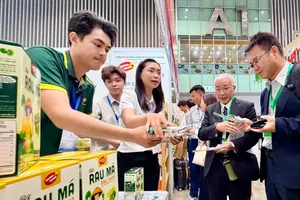
According to Chairman Nguyen Van Nhao of the Hung Long Commune Farmers' Association, besides the civet breeding model of Nguyen Van Duc, many farmers in the commune are actively applying technology to production and sharing their knowledge with others, especially regarding the use of QR codes for product traceability. Products such as organic ST25 rice, OCOP clean guava, livestock, and safe vegetables are all tagged with QR codes, helping consumers easily look up information about the production process, from the seed and care regimen to the harvest time and production facility. This practice also contributes to building brand reputation and increasing the value of local agricultural products.
From An Nhon Tay and Hung Long communes to many other localities, digital transformation is fostering stronger connections among farmers, creating a collaborative community that learns, innovates, and expands market opportunities together.
Through Digital Farmers' Clubs, cooperative groups, and cooperatives, residents exchange knowledge on technology adoption, production integration, and brand development, enabling agricultural products to reach consumers more effectively. These initiatives provide a vital foundation for building a grassroots digital economic ecosystem that supports sustainable agricultural growth and rural development.