The Vietnamese delegation prepared relief packages containing essential supplies, with priority given to the most urgent needs of disaster-affected residents, including face masks, toilet paper, food ration bars, canned meat, and instant noodles.
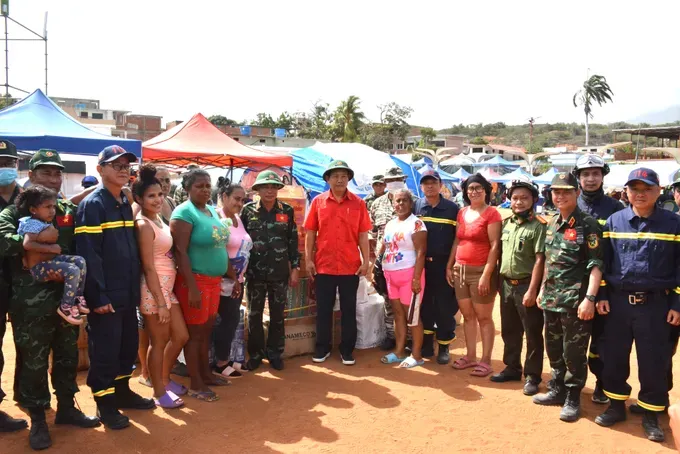
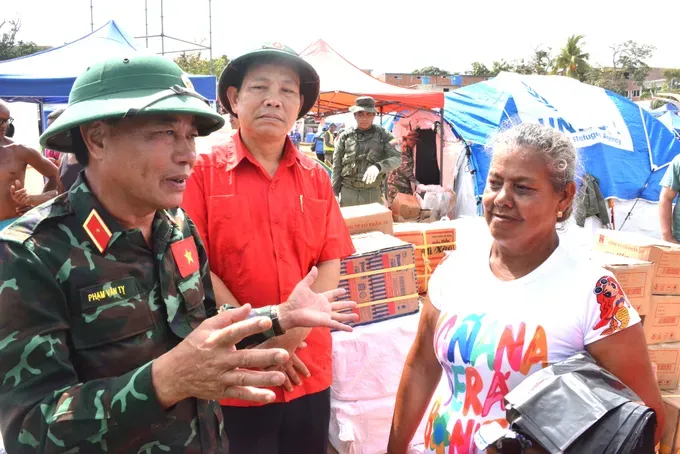
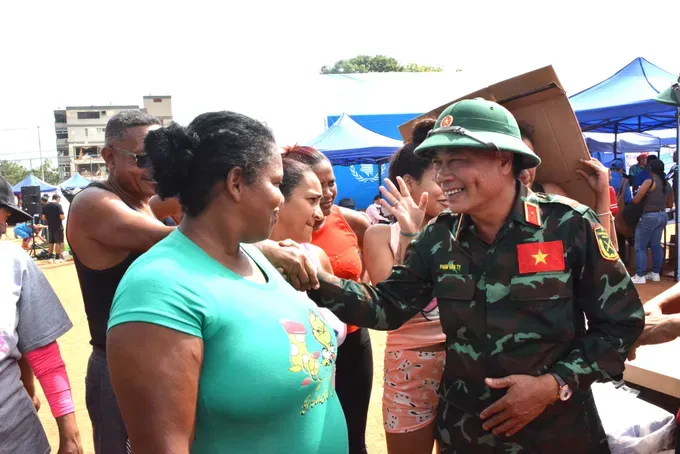
According to the Ministry of National Defence, on July 5 (local time), the Vietnamese rescue and relief team assisting with earthquake recovery efforts in Venezuela undertook a special outreach mission. The delegation visited temporary shelters in the Playa Grande area of La Guaira State to deliver humanitarian aid packages to residents who had been severely affected by the disaster.
To ensure the relief supplies could be delivered to local people as soon as possible, members of the Vietnamese rescue and relief team spent their evenings—after long days of field operations—sorting and packing the aid. Each package was carefully assembled, with priority given to essential and urgently needed items for disaster victims.
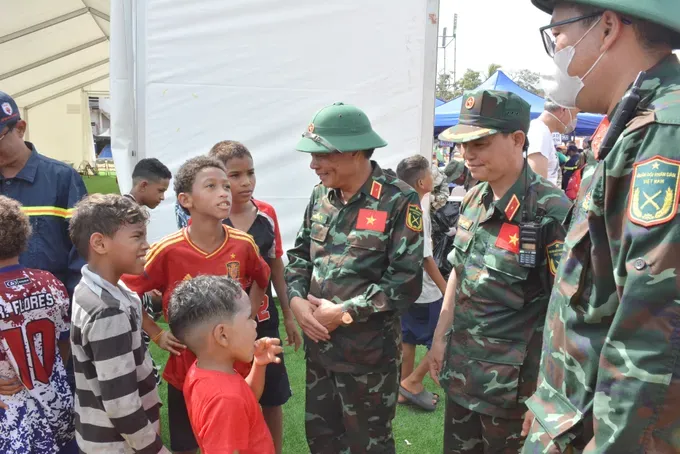
Major General Pham Van Ty, Deputy Director of the Rescue and Salvage Department under the General Staff of the Vietnam People's Army (VPA), said that Vietnam extends the deepest sympathies to the people of Venezuela for the tremendous losses they have suffered. These modest gifts represent the heartfelt support of the Vietnamese delegation. Having endured many hardships ourselves, the Vietnamese people understand the challenges you are facing. It is believed that the people of Venezuela will overcome this difficult period with resilience and determination.
According to the Ministry of National Defence, as of July 5, after five days of carrying out rescue operations in Venezuela, the Vietnamese rescue and relief team had recovered 54 victims' bodies from the rubble and handed them over to the Venezuelan authorities. This achievement reflects the team's tireless efforts, including the significant contribution of its military working dogs—its “four-legged warriors".
Despite the challenging conditions at the disaster site, the Border Guard Command's military working dogs used their keen sense of smell to detect signs of victims, helping identify potential locations beneath the debris. This enabled engineer units to narrow the search area, select the most appropriate access methods, and concentrate personnel and equipment on excavation efforts.