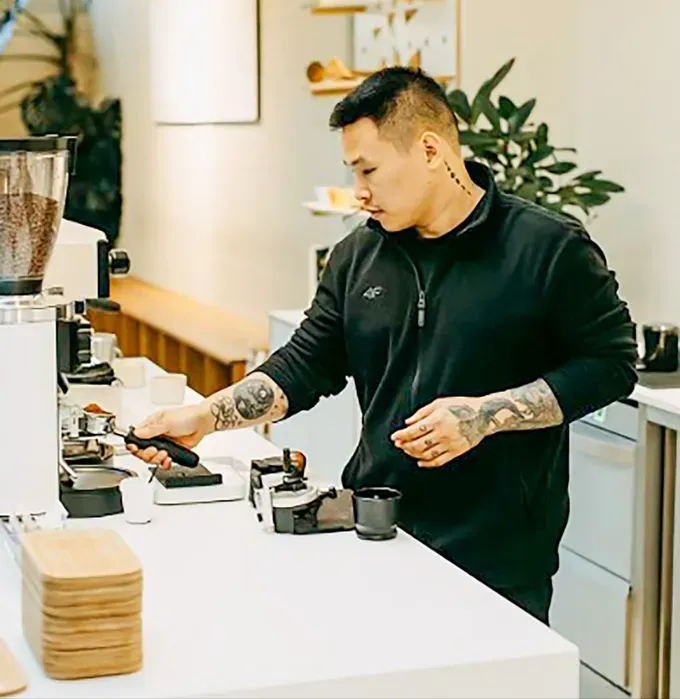
From instant coffee sachets to premium geisha lots, one of the rarest and most expensive arabica varieties, Tran Anh Thang has crafted a compelling story of preserving Vietnamese coffee identity abroad.
Raised in a Vietnamese family in the Czech Republic, Tran Anh Thang, known as Jackie Tran Anh, was surrounded by the familiar presence of instant coffee, a robusta blend with sugar and powdered milk, always ready for a quick, creamy cup. Ground robusta beans were equally a staple in his household, shaping his early connection to Vietnamese coffee culture.
According to Thang, Vietnamese coffee is typically associated with robusta beans, known for their bold, low-acidity profile, well suited to milk-based and more creative beverages. In contrast, specialty arabica stands out for its fruit-forward notes, bright acidity and complex flavor structure.
Thang views each type of coffee as belonging to its own context and style of enjoyment. What matters most, he emphasizes, is understanding both the beverage and the reason for drinking it. This philosophy underpins his approach: rather than replacing Vietnamese coffee with specialty varieties, he seeks to build a bridge between the two traditions.
Vietnamese coffee is strong and full-bodied, while arabica emphasizes the interplay of natural factors such as climate, soil, altitude, as well as precision in roasting and brewing. By combining these elements, Thang aims to preserve Vietnamese character while elevating quality through better ingredients and more refined processes.
His outlook was shaped early on by his family’s long-standing involvement in the food industry.
As reported by the Czech daily iDNES.cz, Vietnamese pho restaurants, beginning with his family's establishment, have played a significant role in igniting a wider appreciation for Vietnamese cuisine throughout the Czech Republic. However, Thang initially showed little inclination to follow his parents' path, opting instead to travel and engage in landscape photography. His original intention was not to establish a coffee shop, but to create a photography gallery.
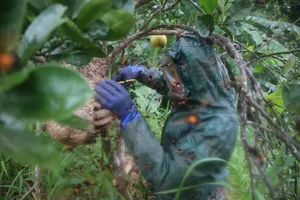
As Thang explains, what customers see is only the finished cup. Behind it lies an extensive process from farming and harvesting to roasting, cupping, developing roast profiles, and managing water quality and extraction on a daily basis. For him, making coffee is not about pursuing absolute perfection, but about responsibility to farmers, to the product, and to customers.