Stepping out of massive shadow
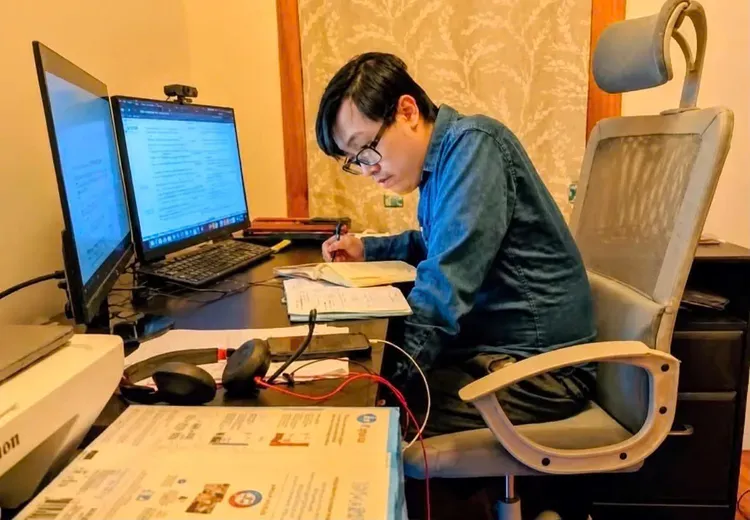
In May 2026, when an email from Washington State University arrived, Dr Hoang Trong Nghia quietly shared the glad tidings with his family. At 39, the young scientist clinched the NSF Career Award from the U.S. National Science Foundation, securing US$600,000 to pursue long-term research. This award is widely regarded as a milestone confirming a researcher can spearhead novel developmental trajectories. The joy rippled through scientific circles, bearing added significance because he is the son of Prof Hoang Van Kiem, a pioneer of Computer Science and Artificial Intelligence (AI) in Vietnam.
Born in 1987 in HCMC, Hoang Trong Nghia belongs to the inaugural generation that witnessed Vietnam’s digital boom. Inside his childhood home, the personal computer was intrinsically linked to logical thinking and a fervent passion for research. His father delved into Informatics when the entire nation possessed only a single Minsk-22 computer. That bygone generation deciphered algorithms entirely in their heads and programmed on paper before entering the server room.
Nghia grew up in a starkly different era, when AI radically transformed how humans learn. The inheritance he received from his father was an unwavering scientific spirit. He graduated in Computer Science at the University of Science (Vietnam National University – Ho Chi Minh City) before defending his doctoral dissertation at the National University of Singapore. Nghia humbly stated his journey is a process of persistent accumulation. For him, the toughest hurdle isn’t discovering the solution, but pinpointing the exact problem to vigorously pursue through countless difficult trials.
After successfully defending his PhD thesis, he continued research at premier scientific hubs like MIT, the MIT-IBM Watson AI Lab, and Amazon Web Services AI Labs. Those profound experiences brought him closer to the paramount question of modern AI: how to ensure AI doesn’t just churn out answers, but possesses the capacity to independently evaluate its own reliability. That’s a research avenue he’s currently tracking down at WSU, focusing heavily on building systems capable of quantifying uncertainty to amplify safety in medicine, science, and automated frameworks.
Another domain of his is federated learning, a sophisticated method allowing for the training of AI models using distributed data without aggregating everything into a single hub. His research has proposed novel methodologies enabling machine learning systems to operate efficiently even when data is fragmented.
Furthermore, Dr Hoang Trong Nghia has made contributions to black-box optimization, applying advanced algorithms to solve tricky problems across sectors like new material design, microchip optimization, and complex biological data analysis.
The trailblazer
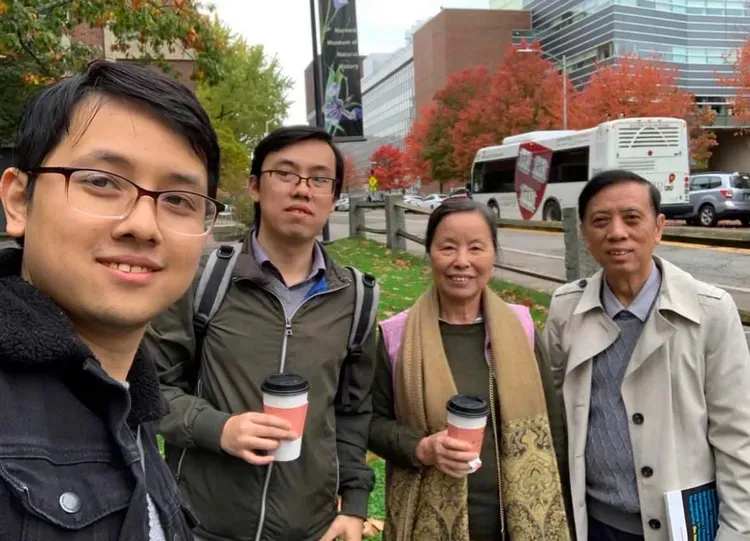
Moving to the story of the father, the life of Prof D.Sc Hoang Van Kiem resembles a cinematic script. Despite passing as valedictorian of his math class, he wasn’t permitted to enroll due to his family background. For months, he peeled onions and cut corks. Thanks to the intervention by Minister of Higher and Secondary Specialized Education Ta Quang Buu at the time, he returned to school.
Pursuing Abstract Mathematics at Hanoi University, Hoang Van Kiem wrapped up the curriculum in three years. In 1969, when the university launched its Computer Science department, he was handpicked for supplementary studies, becoming one of the very first computer science students when this field was alien in Vietnam. His work traversed fields from agriculture and healthcare to remote sensing and AI. He was the first to adopt remote sensing informatics in Vietnam, emerging as an architect to lay the AI foundation and propose IT integration into education in the 1980s.
Prof Hoang Van Kiem relocated to HCMC to advance the nation’s IT sector, teaching at HCMC University (now HCMC University of Science under Vietnam National University–HCM). He was instrumental in establishing the IT faculty and served as the inaugural president of HCMC University of Information Technology (Vietnam National University-HCM).
Professionals dub him the man of firsts. Generations of students remember his unyielding spirit of sharing knowledge. From drafting the first textbooks on electronic computers, remote sensing, and AI, he forged the inaugural cohort of professionals for Vietnam’s informatics industry. He regularly dispenses his vast knowledge to the community.
“Every era will invariably present its own distinct set of problems, but the crucial takeaway is that succeeding generations must always preserve the burning desire to chase answers to the very end.”
Prof D.Sc Hoang Van Khiem on the shift in generations
Continuation within the current of knowledge
Throughout Vietnam’s history, there are numerous lineages rich in academic traditions, where an ardent love for learning is meticulously preserved. Professor Hoang Van Kiem's family stands as a contemporary model of such continuity within the era’s pinnacle domain of AI.
Looking at the parallel journeys of Prof Hoang Van Kiem and Dr Hoang Trong Nghia is akin to witnessing a flowing current of profound knowledge. One came of age amidst the ravages of war, learning on the sole computer available in the entire country. The other conducts cutting-edge science inside elite AI laboratories. The common denominator isn’t merely bloodlines, but that both have opted to dive deeply into foundational issues. Prof Kiem belongs to the trailblazing generation, whereas Dr Nghia actively participates in constructing fundamental principles for the next generation of AI.
From grave circumstances, they forged the foundation for Vietnam’s informatics sector. Today, Vietnamese minds actively steer new trajectories for global science. The temporal gap spans a half-century, yet they share a resolute willpower. From wartime server rooms to global AI hubs, the Vietnamese boldly transitioned to trailblazers. The saga of Prof Hoang Van Kiem and his son vividly reflects the odyssey of Vietnamese science. On his professional journey, Nghia cemented a consistent viewpoint of prioritizing sustainable trajectories over short-term outcomes, closely mirroring his father’s enduring academic legacy for future generations of scientists.