Regional development is not a novel concept. Yet, for various reasons, the role of regions in the national development process has remained somewhat faint. Recognizing this, in 2022, the Party Central Committee issued a series of resolutions restructuring the country’s seven economic regions into six, namely the Southeast, the Red River Delta, the North Central and Central Coast, the Central Highlands, the Mekong Delta, and the Northern Midlands and Mountains.
To institutionalize this orientation, the Government issued Resolution No.138/NQ-CP, while the National Assembly passed Resolution No.81/2023/QH15 on the National Master Plan for the 2021-2030 period, with a vision to 2050, clearly defining the legal order and regional development space.
The most significant shift appears to be the consolidation of the North Central and the South Central Coast into a single region, called the North Central and Central Coast. Streamlining from seven to six regions has created a seamless coastal connection; it increases regional market scale, providing the Central region with ample space to arrange complementary industrial clusters rather than engaging in direct, fratricidal competition over deep-water seaports.
Managing larger regions also facilitates better handling of cross-provincial water security and natural disaster issues. This is a strategic step to restructure the entire economy based on natural strengths and integration potential.
The core philosophy here is to erase the administrative boundaries of economic space. An economic space must be a unified entity, undivided by provincial administrative lines.
Reality shows that despite strides in provincial-level innovation, regional thinking has yet to truly break through. Provinces still tend toward “self-sufficiency” in infrastructure, with each wanting its own airport and seaport, leading to a failure to leverage the nation’s overall strengths. Regional development is the solution to end this fragmentation, bringing localities together within a shared ecosystem.
Regional linkage increases value-added products and market regulation. Currently, Vietnam exports raw coffee from the Central Highlands for quick cash, lacking price leverage despite its high global rank. Correctly steered regional development enables investment in deep processing, transforming regions into price regulation hubs.
This compels producers to link up, replacing fragmented models with large-scale production. It is the key to lifting Vietnamese goods out of the trap of selling raw materials for spare change, effectively ensuring the economy moves beyond simple production to command higher value on the global market.
Regional development is not about copying each other’s models but must be based on distinctiveness and specificity. Each region needs to be planned as a complete ecosystem serving its core strengths.
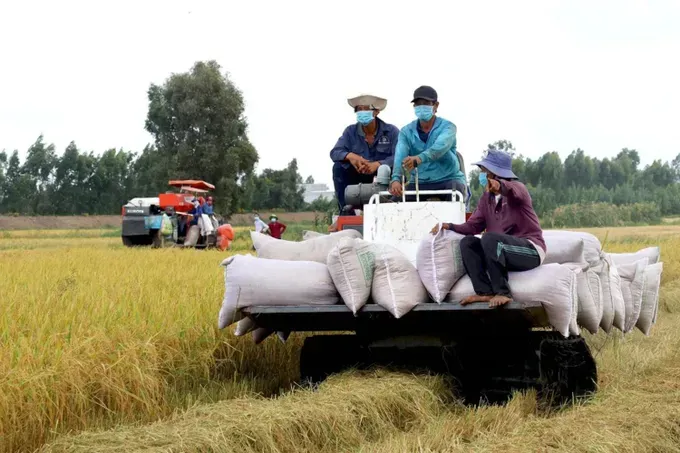
For instance, if the Mekong Delta is identified as a rice region, every resource, from irrigation, power systems, and supporting industries to commerce, must serve rice production. There may even be a need to replan residential areas to apply modern technology like drones in production without affecting residents’ lives.
Similarly, the Southeast region, with a focus on developing financial and service centers, needs to shift simple industries to neighboring provinces. Clearly defining the “economic identity” of each region will help optimize resources and avoid overlapping investments and unhealthy competition among localities in the same area.
The current evaluation method also needs to change. For example, imposing economic growth targets on every locality is unreasonable when provinces within a region have been “assigned roles.” A border province like Tuyen Quang should be tasked primarily with holding the land, keeping the population stable, and preserving culture, not pursuing economic growth at all costs. The evaluation of local officials must also follow suit, based on the completion of specific assigned tasks within the overall regional plan.
Developing regions requires moving beyond slogans to enacting specific legislation, like a Law on Southeast Region Development. These laws act as “tailor-made suits,” clearly defining land rights and ministerial responsibilities.
Crucially, it is needed to amend the Law on Promulgation of Legal Documents to mandate cross-regional impact assessments. Every major investment, particularly airports or seaports, must be evaluated for its effect on neighboring provinces.
This rigorous approach prevents wasteful duplication, exemplified by the unnecessarily close proximity of Chan May and Lien Chieu ports. It ensures that infrastructure complements rather than competes, thereby optimizing resources and preserving vital development space for the entire region’s long-term growth.
Another critical issue is establishing a “conductor” mechanism to run the region. Although mentioned for a long time, regional linkage remains less effective than desired due to the lack of a competent decision-making level above the interests of individual localities.
It’s possible consider a Regional Committee model headed by a Politburo member. This body would use the Party’s existing apparatus to provide consistent economic direction, ensuring regional committee resolutions are institutionalized into the resolutions of provincial People’s Councils.
The regional “conductor” would decide controversial issues such as which province builds a seaport or which focuses on industry, avoiding the situation where every province wants to build a seaport, expressway, or airport. Instead of building plans based on what the country has, it’s necessary to solve the reverse problem, starting from the target results to find solutions for each region and economic sector.
In short, regional economic development is not just an economic solution but a revolution in national governance thinking. By legislating regional policies, establishing centralized operating mechanisms through “conductors” with real power, and changing how development efficiency is evaluated, Vietnam can maximize its still-vast growth headroom.
This is the inevitable path for Vietnam to elevate its position on the international stage, shifting from a small, scattered production economy to a green, digital, and high-value-added economy in the new era.