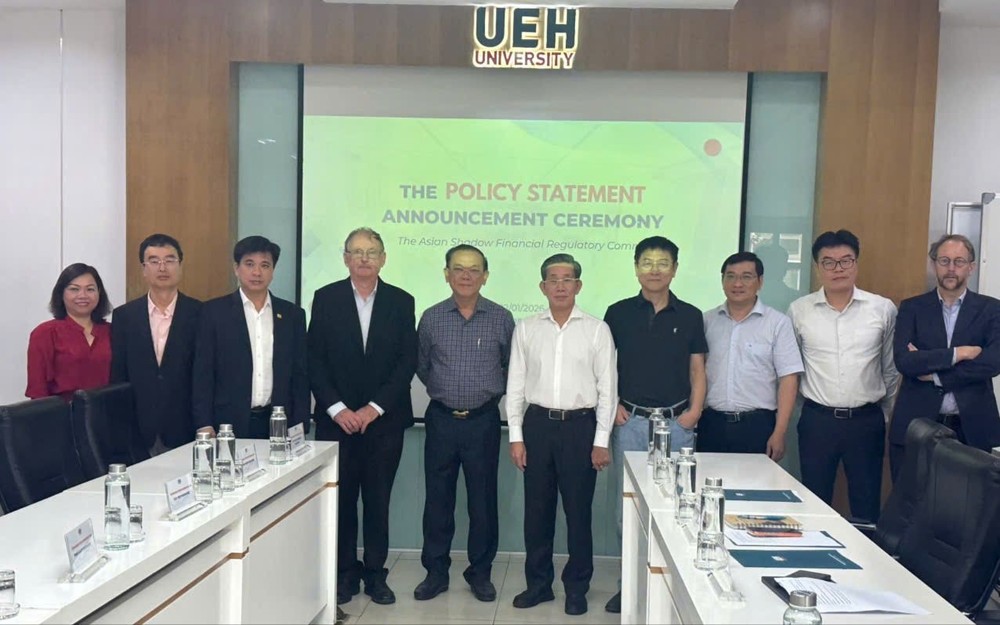
Stablecoins—cryptocurrencies designed to maintain a fixed value, typically pegged to sovereign currencies such as the US dollar—are emerging as a notable instrument within the digital finance ecosystem. The Asian Shadow Financial Regulatory Committee (ASFRC) experts highlighted that Stablecoins could offer significant practical benefits to Vietnam’s economy. The country ranks among the world’s largest recipients of remittances, with inflows nearing US$20 billion annually, while simultaneously posting export turnover equivalent to more than 200 percent of GDP.
Against that backdrop, Stablecoins could sharply reduce remittance costs and help small and medium-sized enterprises conduct cross-border trade more efficiently by minimizing payment delays, foreign exchange fees, and credit frictions. Wider adoption would also pressure the banking system to innovate, accelerating digital transformation and modernizing financial services.
ASFRC, therefore, urged Vietnam to adopt a cautious but proactive regulatory roadmap. The committee recommended piloting VND-pegged Stablecoins issued solely by licensed institutions, backed by 100 percent reserve assets, and subject to independent audits. It also called for a blanket ban on algorithmic Stablecoins—whose value mechanisms have proven vulnerable—and strict limits on access to non-compliant foreign Stablecoins, particularly for retail investors.
Speaking at the event, Prof. Dr. Vo Xuan Vinh, Director of UEH’s Institute for Business Research, noted that Vietnam is entering a critical phase of financial innovation. He emphasized that institutional preparations are already under way. The National Assembly has approved the 2025 Digital Technology Industry Law, while the Government has issued Resolution 05/2025/NQ-CP authorizing pilot operations in the domestic digital asset market. The objective, he said, is to create a legal foundation for digital assets, attract investment, and mitigate systemic risks.
“By 2025, International Financial Centers were officially established in Ho Chi Minh City and Da Nang, alongside pilot licensing of digital asset exchanges,” Prof. Dr. Vo Xuan Vinh added. “ASFRC’s recommendations give policymakers a head start—enabling digital assets to develop under an orderly legal regime while safeguarding monetary security and financial stability.”
ASFRC is an independent institution composed of leading economic and financial experts across the Asia-Pacific region. Its global network and analytical influence have positioned it as a respected academic and policy forum shaping financial governance and regulatory trends across the region.