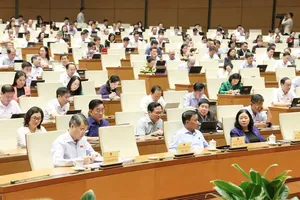
"National Assembly deputies at the morning sitting on April 24 (Photo: SGGP)")
The Resolution will serve as a crucial legal foundation for national development over the next five years, laying a solid groundwork for a subsequent phase of rapid and sustainable growth.
In line with the overarching objectives and key targets for the 2026–2030 period, Vietnam strives to achieve an average GDP growth rate of 10 percent or higher per year. Looking ahead to 2030, the country aims to become a developing nation with modern industry and upper-middle income status, ranking among the world’s 30 largest economies by GDP. This development model is oriented toward rapid and sustainable growth, closely associated with maintaining macroeconomic stability, controlling inflation, and protecting the environment.
The resolution sets out key measures to further refine institutions, including shifting the governance approach from ex-ante control to ex-post supervision. It targets placing Vietnam’s business environment among the top three in ASEAN and within the world’s top 30 by 2028. The year 2026 is designated as the “Year of enhancing the quality of grassroots-level officials.”
The resolution also identifies science and technology, innovation, and digital transformation as the primary drivers of development. It proposes more flexible policies on rice land quotas—transitioning from rigid acreage regulations to adaptive management of less efficient areas—while still ensuring national food security. Priority will be given to developing the domestic capital market to reduce reliance on bank credit and to upgrading the status of the stock market.
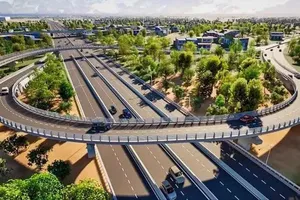
By 2030, the target is to put into operation more than 5,000 kilometers of expressways nationwide. Priority will be given to key projects, including the North–South high-speed railway, international transshipment seaports, and digital infrastructure such as big data and 5G networks.
The resolution also envisions the establishment of next-generation special economic zones and the development of growth poles with regional competitiveness.

In the fields of education and culture, the resolution aims to make English a second language in schools while universalizing digital skills and artificial intelligence (AI) education from the preschool level. It also promotes the development of cultural industries, the heritage economy, and a digital cultural ecosystem.
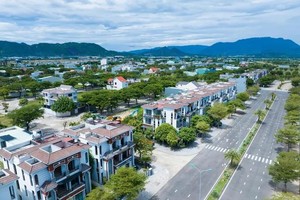
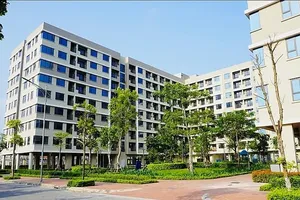
In the coming years, efforts will focus on establishing and effectively operating a National Housing Fund, accelerating the development of social housing and affordable commercial housing. Priority will also be given to resolving long-standing, stalled projects and addressing pollution and urban flooding in major cities such as Hanoi and Ho Chi Minh City. At the same time, the resolution calls for building an equitable and modern healthcare system alongside developing a carbon credit market.
Regarding implementation, local authorities at all levels, the Supreme People’s Court, the Supreme People’s Procuracy, and the State Audit Office shall, within their assigned mandates and responsibilities, formulate tenure-based action programs and annual plans and ensure the effective implementation of this Resolution.