To sustain export growth of 15–16 percent and push total trade beyond US$1 trillion in 2026, Vietnam is shifting its trade promotion strategy from taking businesses overseas to bringing global buyers directly to Vietnamese factories and production hubs.
A new approach to trade promotion
Although export growth has expanded beyond traditional key sectors to electronics, machinery, textiles, footwear and agricultural, forestry and fishery products, the Ministry of Industry and Trade acknowledged that achieving its 15–16 percent export growth target in 2026 will remain challenging.
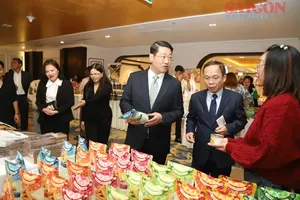
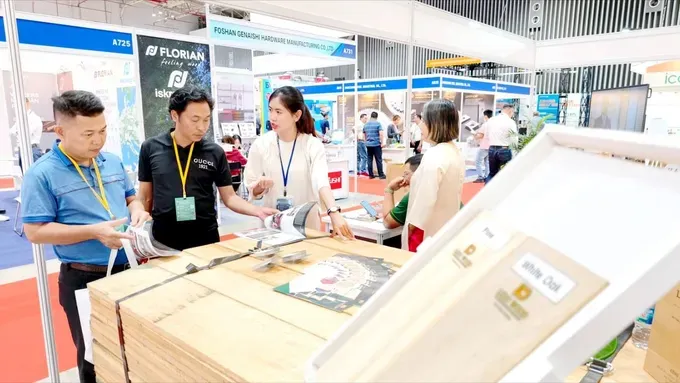
To address this, Vietnam is overhauling its trade promotion strategy by focusing on the concrete needs of international buyers. Rather than simply showcasing products at overseas exhibitions, the new model emphasizes identifying qualified buyers, matching them with suitable Vietnamese suppliers and enabling both sides to assess business potential through direct engagement.
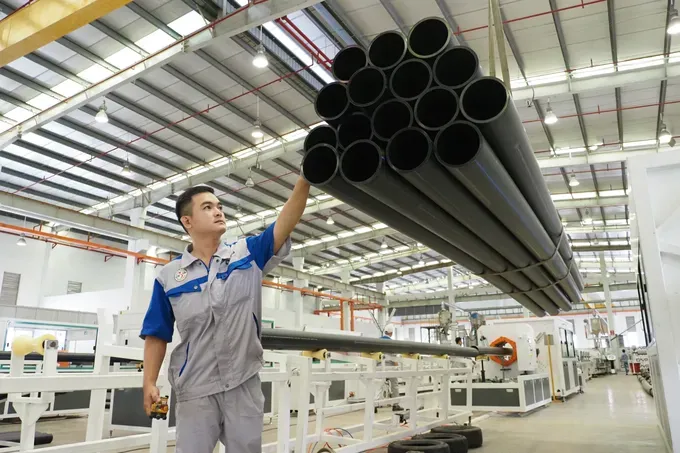
Vu Ba Phu, Director General of the Trade Promotion Agency under the Ministry of Industry and Trade, noted that Vietnam's overseas trade offices have evolved from market information providers into strategic facilitators. They are responsible for identifying demand, evaluating potential partners, connecting global buyers with Vietnamese enterprises and organizing on-site assessments of production capacity.
The new strategy emphasizes early preparation and direct evaluation. Months before international buyers arrive, Vietnamese enterprises participate in online business matching programs to demonstrate their production capabilities, global certifications and supply chain readiness.
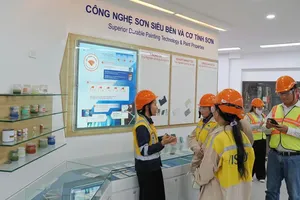
Upon arrival, buyers are given opportunities to verify products firsthand, inspect manufacturing facilities, examine raw material sources and assess end-to-end supply chain capabilities before establishing purchasing relationships.
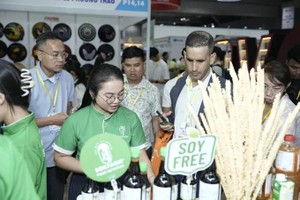
Reflecting this new approach, around 400 international purchasing delegations from more than 60 countries and territories are expected to join trade promotion programs in Vietnam from August to September 2026, with Vietnam International Sourcing 2026 serving as the key event.
More than 3,000 business-to-business (B2B) meetings are expected to take place not only at exhibition venues but also at factories, production centers and raw material areas across the country.
Adapting to increasingly stringent global standards
The Ministry of Industry and Trade believes that the greatest challenge facing Vietnamese exporters is complying with increasingly diverse and stringent regulations imposed by individual markets, particularly in Europe.
Vo Thi Ngoc Diep, Vietnam's Trade Counselor in the Netherlands, said that although exports to the Dutch market have maintained double-digit growth during the first months of 2026, the competitive advantage provided by the EU–Vietnam Free Trade Agreement (EVFTA) is gradually shifting toward compliance capability.
In addition to EVFTA, the European Union has introduced the Carbon Border Adjustment Mechanism (CBAM), the EU Deforestation Regulation (EUDR) and a range of measures under the European Green Deal. These policies require exporters to demonstrate full product traceability, covering raw material origins, carbon emissions, labor conditions and environmental responsibility throughout the production process.
The United States, meanwhile, is tightening import oversight through data-driven risk management.
According to Do Ngoc Hung, Vietnam's Trade Counselor in the United States, requirements related to product traceability, rules of origin, forced labor prevention and supply chain transparency continue to become more rigorous.
He noted that the emerging concept of a "product passport" is becoming an important regulatory tool, enabling authorities to track every stage of a product's lifecycle before it reaches U.S. ports.
The tightening of technical barriers extends well beyond major markets.
Ngo Xuan Nam, Deputy Director of Vietnam's SPS Notification Authority and Enquiry Point under the Ministry of Agriculture and Environment, said that as of July 31, members of the World Trade Organization (WTO) had issued numerous new sanitary and phytosanitary (SPS) notifications affecting Vietnam's principal export destinations, including the EU, the United States, Japan, South Korea, Brazil, Israel, Canada and Morocco.
The trend indicates that food safety, quarantine measures, product traceability, environmental protection and supply chain transparency have become universal requirements rather than standards limited to a handful of developed markets.
Vo Tri Thanh, former Vice President of the Central Institute for Economic Management (CIEM), said that Vietnam's credit policy should move beyond traditional collateral-based lending toward evaluating businesses based on future cash flows, export contracts and participation in supply chains.
He proposed dedicated credit packages for exporters, expanded credit guarantee mechanisms and stronger risk-sharing arrangements among banks, guarantee funds and leading enterprises. He also called for wider adoption of supply chain finance instruments, including factoring, invoice discounting and contract-based financing.
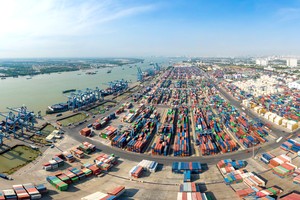
Speaking at a forum on growth solutions for Ho Chi Minh City, Professor Vu Minh Khuong of the Lee Kuan Yew School of Public Policy at the National University of Singapore emphasized the need to channel investment into foundational infrastructure projects such as modern logistics systems, renewable energy and data centers.
He said these investments would strengthen the competitiveness of Vietnam's export supply chains while accelerating the country's green transition, digital transformation and long-term expansion in global markets.