The Cai Mep Ha Free Trade Zone (FTZ) is expected not only to streamline cargo circulation but also to attract global capital flows, technology enterprises, financial services, and high-spending tourists, according to experts and regulatory officials speaking to Sai Gon Giai Phong (SGGP) Newspaper.
Experts noted that seamless connectivity between seaports, airports, financial centers, and service complexes will serve as a critical catalyst in forging a high-value-added economic ecosystem.

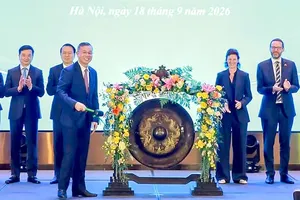
Assoc. Prof. Dr. Nguyen Huu Huan, Vice President of the the Executive Authority of the Vietnam International Financial Center in Ho Chi Minh City (VIFC-HCMC), emphasized that the Free Trade Zone and the Vietnam International Financial Center in Ho Chi Minh City are two complementary components within the same ecosystem. While the FTZ focuses on the movement of goods, logistics, and international trade, VIFC-HCMC provides supporting financial services.
Specifically, VIFC-HCMC serves as a bridge to mobilize long-term capital from investment funds and international banks for logistics infrastructure, seaports, warehousing, and high technology within the FTZ, thereby lowering capital costs. This synergy also fosters a modern supply chain finance ecosystem, facilitating order financing, factoring, and real-time cross-border payments.
In the long run, the FTZ and VIFC-HCMC are expected to generate a spillover effect, attracting multinational corporations, investment banks and funds, logistics firms, and tech companies. This will help transition Ho Chi Minh City toward a growth model driven by finance, high-value-added services, and innovation.
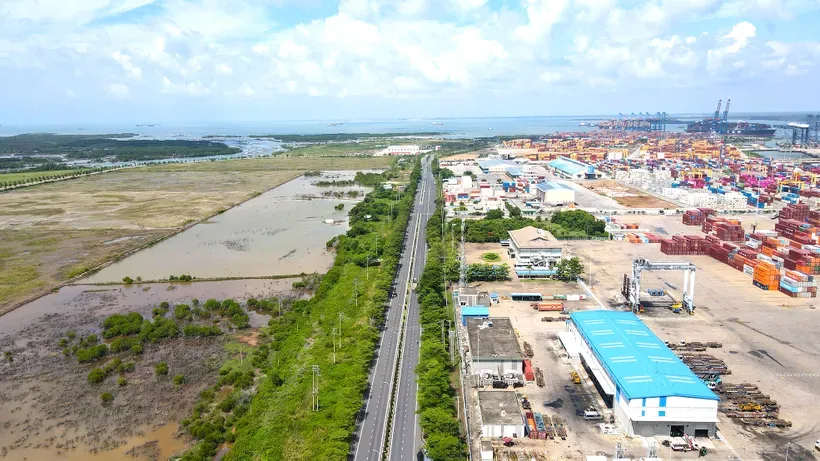
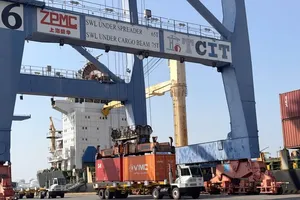
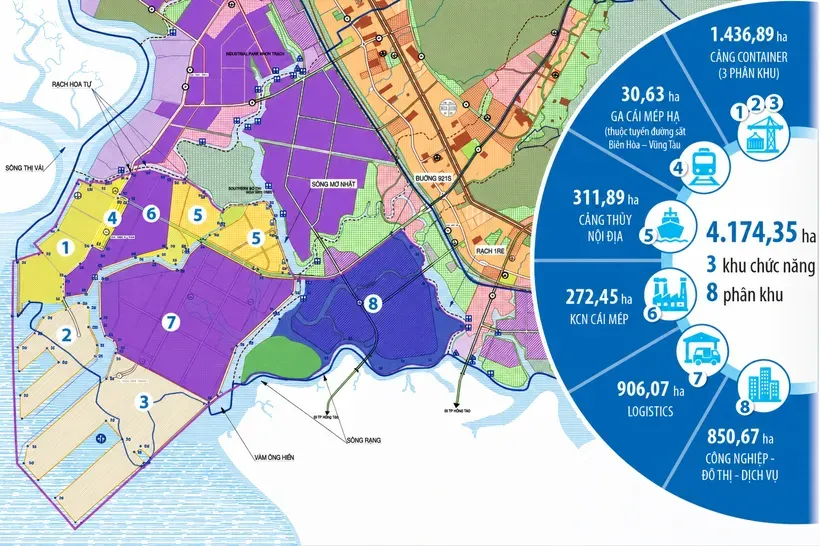
Under the planning layout, the Cai Mep Ha FTZ features the Cai Mep seaport system to the right of the inter-port road, with the Cai Mep Ha Logistics Center situated on the opposite side.
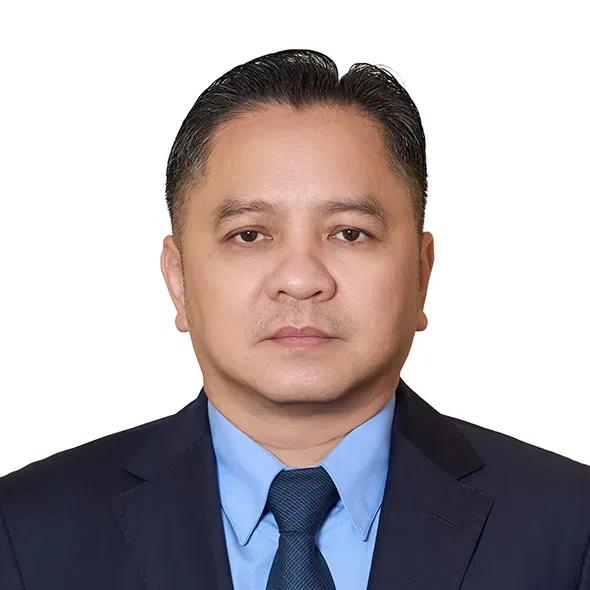
According to Director of the Ho Chi Minh City Department of Tourism, Pham Huy Binh, the implementation of the FTZ will provide fresh momentum for the tourism and service sectors, strengthening links between growth poles and contributing to the formation of a multi-polar development space for the city. Coupled with an increasingly complete transport infrastructure network, the FTZ is expected to attract experts, investors, and high-spending tourists.
Positioning to capture this opportunity, the city's tourism sector will shift decisively from extensive to intensive growth, prioritizing green tourism while effectively leveraging marine, island, and cultural heritage resources integrated with a high-end commercial, entertainment, and service ecosystem. This will serve as the foundation to extend visitors' length of stay, boost average tourist spending, and progressively establish Ho Chi Minh City as a premier tourism hub in Asia.

According to CEO of Imex Pan Pacific Group (IPPG), Le Hong Thuy Tien, the decisive factor for an FTZ's success lies in its ability to attract both visitor traffic and spending flows. Globally, there are more than 5,400 special economic zones, yet the majority operate below expectations. While models limited strictly to ports and warehousing often fail to generate widespread economic impact, successful FTZs typically integrate trade with tourism, shopping, and entertainment.
Drawing from international experience, Ho Chi Minh City could pilot 72-to-144-hour transit visa waivers via Long Thanh and Tan Son Nhat international airports, alongside group visa exemptions for cruise passengers. The city should also expedite investment in the Vung Tau International Passenger Port and resume cruise ship reception at Cai Mep.
Additionally, authorities could consider allocating land within the urban-service subzone to build world-class shopping, entertainment, and resort complexes, while piloting duty-free shopping policies upon exiting the FTZ. This strategy would transform Cai Mep Ha into both a cargo gateway and a spending magnet.
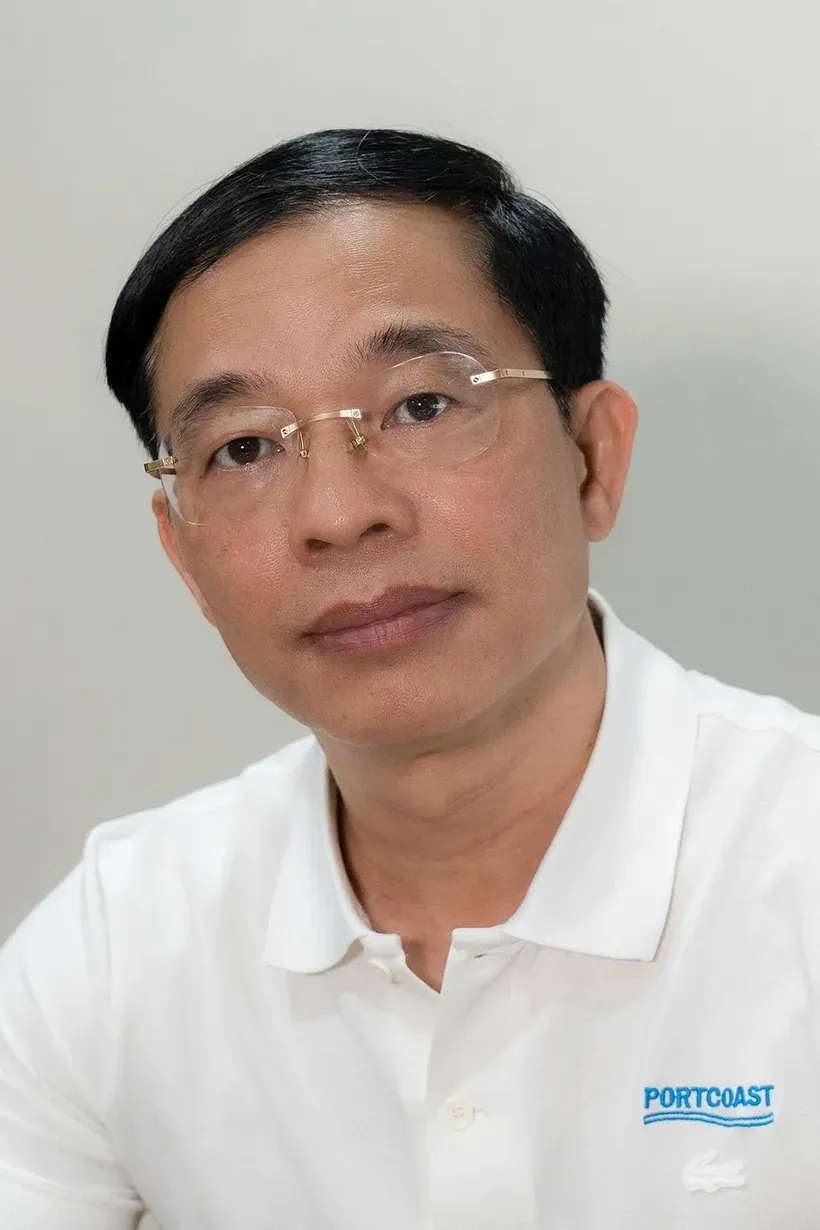
General Director of Portcoast Consultant Corporation, Pham Anh Tuan, noted that the Cai Mep Ha FTZ serves as a bridge connecting hard infrastructure, comprising the Cai Mep deep-water port and Long Thanh International Airport, with soft infrastructure, namely the Vietnam International Financial Center in Ho Chi Minh City, forming a modern logistics and financial ecosystem.
Equipped with tailored mechanisms and breakthrough policies, the FTZ is well-positioned to attract global shipping lines and international logistics conglomerates, gradually establishing a regional cargo transshipment hub while enabling Vietnam to transition from a low-cost manufacturing base to a higher-value node in the global supply chain.
The FTZ is also set to serve as a magnet for high-quality Foreign Direct Investment (FDI) in semiconductors, electronics, advanced technology, and the green economy. As international trade and cargo traffic expand, demand for cross-border payments, insurance, trade finance, and related financial services will surge accordingly.