The Ministry of Finance has sent an official letter to the State Bank of Vietnam on coordinating the management of State Treasury deposits at commercial banks.
The ministry said temporarily idle state funds are used to support the central government's financing needs, reducing borrowing costs as government bond issuance faces headwinds.
Since the start of 2026, the central government has borrowed about VND262 trillion (US$9.9 billion) from temporarily idle state funds and is expected to borrow another VND220 trillion-VND280 trillion (US$8.3 billion- US$10.6 billion) by the end of the year.
The Ministry of Finance also deploys idle state funds through term deposits at commercial banks and government bond repurchase (repo) transactions.
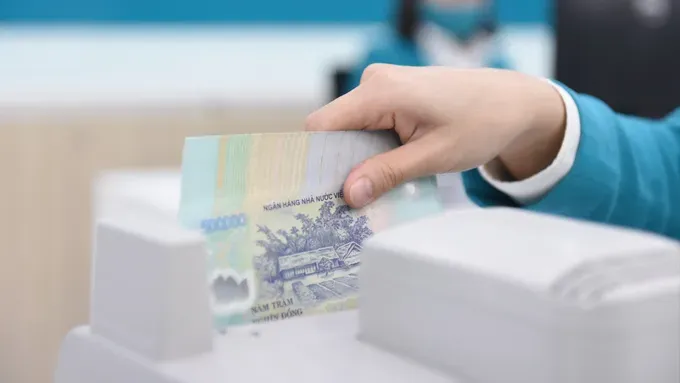
State Treasury term deposits at commercial banks currently stand at about VND740 trillion (US$28 billion), up more than VND250 trillion (US$9.5 billion) since the beginning of the year. Outstanding government bond repo transactions total about VND40 trillion (US$1.5 billion).
Combined, these operations have made around VND780 trillion (US$29.5 billion) available to the market, supporting liquidity in the banking system and the broader money market.
The ministry is reviewing amendments to Decree No. 24/2016/ND-CP to provide greater flexibility in setting limits for State Treasury term deposits, replacing the current fixed cap. The revised regulations are expected to be submitted to the Government and take effect on January 1, 2027.
The Ministry of Finance said that it will continue coordinating with the State Bank of Vietnam to manage state funds efficiently, support banking system liquidity and maintain macroeconomic stability.
The State Bank recently issued Decision No. 1743/2026, raising the proportion of State Treasury term deposits that commercial banks can count as mobilized funds from 20 percent to 50 percent when calculating their loan-to-deposit ratio.
The measure will remain in effect for two years, from August 1, 2026, through July 31, 2028, as the banking system faces growing funding pressures.